<?xml version="1.0" encoding="utf-8"?>
<feed version="0.3" xmlns="http://purl.org/atom/ns#" xmlns:dc="http://purl.org/dc/elements/1.1/" xml:lang="en">
<title>What About Paris?</title>
<link rel="alternate" type="text/html" href="http://www.whataboutclients.com/" />
<modified>2013-06-19T05:13:59Z</modified>
<tagline>On Doing Business Globally. A/k/a &quot;What About Clients?&quot; Law. Trade. Politics. Courts. New Ideas. Old Verities. Heroes. The World.        </tagline>
<id>tag:,2013:/1</id>
<generator url="http://www.movabletype.org/" version="3.15">Movable Type</generator>
<copyright>Copyright (c) 2013, Holden Oliver (Kitzbühel Desk)</copyright>
<entry>
<title>Oran, Algeria:  &quot;Our citizens work hard.&quot;</title>
<link rel="alternate" type="text/html" href="http://www.whataboutclients.com/archives/2013/06/the_deal_in_ora.html" />
<modified>2013-06-19T05:13:59Z</modified>
<issued>2013-06-20T04:58:59Z</issued>
<id>tag:,2013:/1.2799</id>
<created>2013-06-20T04:58:59Z</created>
<summary type="text/plain"> Our citizens work hard. Their chief interest is in commerce, and their chief aim in life is, as they call it, &quot;doing business&quot;. --Narrator describing Oran in opening pages of The Plague (1947), by Albert Camus...</summary>
<author>
<name>Holden Oliver (Kitzbühel Desk)</name>

<email>holiver@hullmcguire.com</email>
</author>
<dc:subject>International Business</dc:subject>
<content type="text/html" mode="escaped" xml:lang="en" xml:base="http://www.whataboutclients.com/">
<![CDATA[<blockquote>

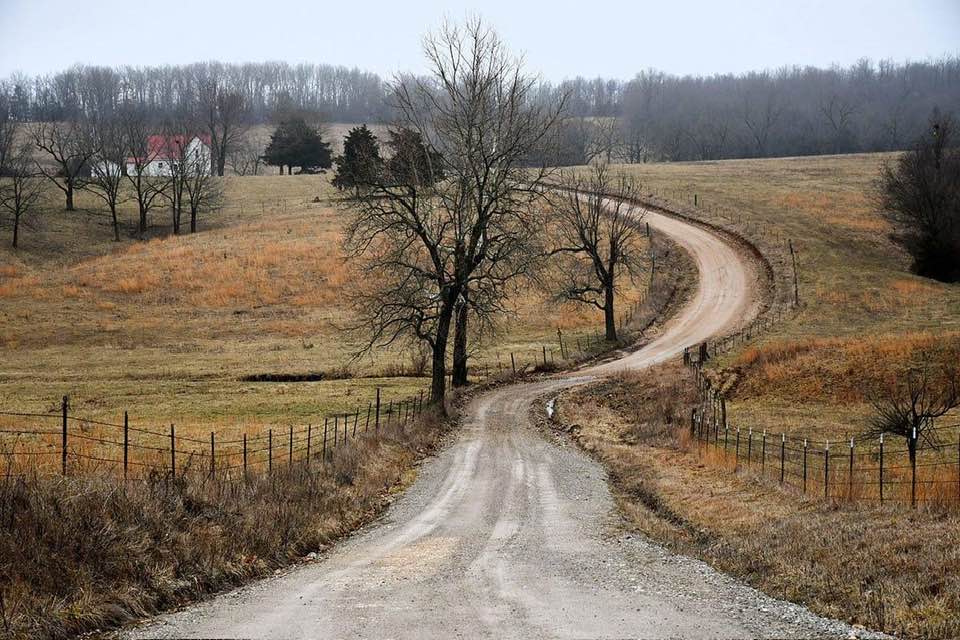
<p>Our citizens work hard. Their chief interest is in commerce, and their chief aim in life is, as they call it, "doing business".</p>

<p>--Narrator describing <a href="http://www.visitoran.com/city/about.asp">Oran</a> in opening pages of <em>The Plague</em> (1947), by <a href="http://nobelprize.org/nobel_prizes/literature/laureates/1957/">Albert Camus</a></p>

</blockquote> 

<p><img alt="145.jpg" src="http://www.whataboutclients.com/archives/145.jpg" width="300" height="256" /></p>]]>

</content>
</entry>
<entry>
<title>June 16, 1904:  Bloomsday All Week. Everywhere.</title>
<link rel="alternate" type="text/html" href="http://www.whataboutclients.com/archives/2013/06/bloomsday_all_w.html" />
<modified>2013-06-16T11:35:42Z</modified>
<issued>2013-06-17T04:59:59Z</issued>
<id>tag:,2013:/1.3511</id>
<created>2013-06-17T04:59:59Z</created>
<summary type="text/plain"> The day you meet your wife can be its own world. June 16th will mark the 109th Bloomsday, honoring James Joyce and recreating the events of his novel Ulysses, all of which take place on June 16, 1904 in...</summary>
<author>
<name>Holden Oliver (Kitzbühel Desk)</name>

<email>holiver@hullmcguire.com</email>
</author>
<dc:subject>Real Heroes</dc:subject>
<content type="text/html" mode="escaped" xml:lang="en" xml:base="http://www.whataboutclients.com/">
<![CDATA[<p><strong> The <a href="http://www.afoolintheforest.com/2010/06/bialystock-and-Bloomsday.html">day</a> you meet your wife can be its own world.</strong> June 16th will mark the 109th <a href="http://www.jamesjoyce.ie/listing.asp?id=36">Bloomsday</a>, honoring James Joyce and recreating the events of his novel <em>Ulysses</em>, all of which  take place on June 16, 1904 in Dublin.  It's celebrated dutifully in Dublin, New York City, Paris and every city, village and hamlet on the planet with pluck, verve, and a spring in its stagger or step. </p>

<p><img alt="SylviaBeachJamesJoyce.jpg" src="http://www.whataboutclients.com/archives/SylviaBeachJamesJoyce.jpg" width="339" height="496" /></p>]]>

</content>
</entry>
<entry>
<title>Dr. Johnson on Habits.</title>
<link rel="alternate" type="text/html" href="http://www.whataboutclients.com/archives/2013/06/habits.html" />
<modified>2013-06-16T05:51:47Z</modified>
<issued>2013-06-15T05:59:57Z</issued>
<id>tag:,2013:/1.3069</id>
<created>2013-06-15T05:59:57Z</created>
<summary type="text/plain"> What we hope ever to do with ease, we must learn first to do with diligence. --Samuel Johnson (1709-1784)...</summary>
<author>
<name>JD Hull</name>
<url>http://www.hullmcguire.com</url>
<email>jdhull@hullmcguire.com</email>
</author>
<dc:subject>How The World Works</dc:subject>
<content type="text/html" mode="escaped" xml:lang="en" xml:base="http://www.whataboutclients.com/">
<![CDATA[<blockquote>

<p>What we hope ever to do with ease, we must learn first to do with diligence.</p>

<p>--<a href="http://www.gutenberg.org/browse/authors/j#a297">Samuel Johnson</a>  (1709-1784)</p>

</blockquote>

<p><img alt="boswell1-1.jpg" src="http://www.whataboutclients.com/archives/boswell1-1.jpg" width="230" height="340" /></p>]]>

</content>
</entry>
<entry>
<title>Law:  The Ultimate Backstage Pass.</title>
<link rel="alternate" type="text/html" href="http://www.whataboutclients.com/archives/2013/06/buck_up_pards.html" />
<modified>2013-06-12T19:35:05Z</modified>
<issued>2013-06-13T04:08:46Z</issued>
<id>tag:,2013:/1.2995</id>
<created>2013-06-13T04:08:46Z</created>
<summary type="text/plain"> Law is the ultimate backstage pass. It&apos;s the new priesthood. --John Milton/Satan (Al Pacino), in L’Associé du Diable (1997)...</summary>
<author>
<name>Holden Oliver (Kitzbühel Desk)</name>

<email>holiver@hullmcguire.com</email>
</author>
<dc:subject>Writing Well</dc:subject>
<content type="text/html" mode="escaped" xml:lang="en" xml:base="http://www.whataboutclients.com/">
<![CDATA[<blockquote>

<p>Law is the ultimate backstage pass. It's the new priesthood.</p>

<p>--John Milton/Satan (Al Pacino), in <a href="http://www.imdb.com/title/tt0118971/"><em>L’Associé du Diable</em></a> (1997) </p>

</blockquote>

<p><img alt="milton.jpg" src="http://www.whataboutclients.com/archives/milton.jpg" width="240" height="355" /></p>]]>

</content>
</entry>
<entry>
<title>The Press.</title>
<link rel="alternate" type="text/html" href="http://www.whataboutclients.com/archives/2013/06/the_press.html" />
<modified>2013-06-09T00:41:43Z</modified>
<issued>2013-06-08T12:59:59Z</issued>
<id>tag:,2013:/1.2534</id>
<created>2013-06-08T12:59:59Z</created>
<summary type="text/plain"> Yonder sits the Fourth Estate--and they are more important than them all. --Edmund Burke (1730-1797), likely in 1792, looking up at the Press Gallery of the House of Commons....</summary>
<author>
<name>Holden Oliver (Kitzbühel Desk)</name>

<email>holiver@hullmcguire.com</email>
</author>
<dc:subject>How The World Works</dc:subject>
<content type="text/html" mode="escaped" xml:lang="en" xml:base="http://www.whataboutclients.com/">
<![CDATA[<blockquote>

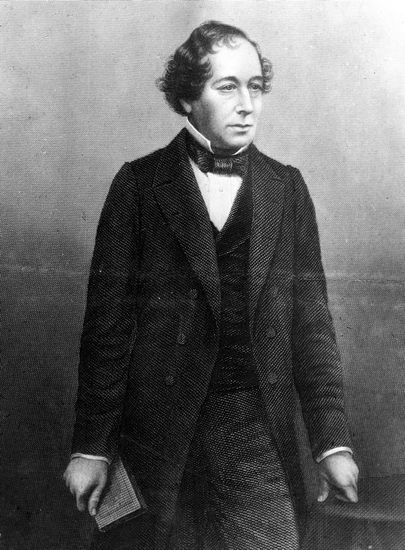
<p>Yonder sits the Fourth Estate--and they are more important than them all.  </p>

<p>--<a href="http://plato.stanford.edu/entries/burke/">Edmund Burke</a> (1730-1797), likely in 1792, looking up at the Press Gallery of the House of Commons.</p>

</blockquote>

<p><img alt="EdmundBurke.jpg" src="http://www.whataboutclients.com/archives/EdmundBurke.jpg" width="210" height="350" /></p>]]>

</content>
</entry>
<entry>
<title>Turgenev&apos;s &quot;Fathers and Sons&quot;.</title>
<link rel="alternate" type="text/html" href="http://www.whataboutclients.com/archives/2013/06/turgenevs_fathe.html" />
<modified>2013-06-06T19:46:13Z</modified>
<issued>2013-06-07T04:41:54Z</issued>
<id>tag:,2013:/1.4499</id>
<created>2013-06-07T04:41:54Z</created>
<summary type="text/plain">After about 25 years, I re-read Turgenev&apos;s 1862 novel Fathers and Sons (or &quot;Fathers and Children&quot;) which, in addition to being the best of all stories about generational conflict, has some of the most beautiful conversations between human beings to...</summary>
<author>
<name>JD Hull</name>
<url>http://www.hullmcguire.com</url>
<email>jdhull@hullmcguire.com</email>
</author>
<dc:subject>How The World Works</dc:subject>
<content type="text/html" mode="escaped" xml:lang="en" xml:base="http://www.whataboutclients.com/">
<![CDATA[<p>After about 25 years, I re-read Turgenev's 1862 novel <a href="http://gutenberg.org/ebooks/30723">Fathers and Sons</a> (or "Fathers and Children") which, in addition to being the best of all stories about generational conflict, has some of the most beautiful conversations between human beings to appear in literature. If you work with other people who are profoundly and even hopelessly different from one another--that should mean most of you, hopefully-- do take the time to read it. Bonus for my fellow white-collar semi-literates: it's a Russian work under 250 pages. We can make a big dent in it during commercials.  </p>

<p><img alt="409px-Ivan_Turgenev.jpeg" src="http://www.whataboutclients.com/archives/409px-Ivan_Turgenev.jpeg" width="309" height="480" /></p>

<p>Ivan Sergeevich Turgenev (1818–1883)</p>]]>

</content>
</entry>
<entry>
<title>Marketing: The &quot;Old&quot; Marketing is Stunningly Persuasive and Cheap.</title>
<link rel="alternate" type="text/html" href="http://www.whataboutclients.com/archives/2013/06/rule_six_workin.html" />
<modified>2013-06-04T02:24:08Z</modified>
<issued>2013-06-05T04:20:35Z</issued>
<id>tag:,2013:/1.1121</id>
<created>2013-06-05T04:20:35Z</created>
<summary type="text/plain">From our still-disturbing if elegant 12 Rules of Client Service, Rule 6 is When you work, you are marketing. It&apos;s our favorite. This one presupposes that you love practicing law, and that you want to do repeat work for good...</summary>
<author>
<name>Holden Oliver (Kitzbühel Desk)</name>

<email>holiver@hullmcguire.com</email>
</author>
<dc:subject>Clients:  Getting Them</dc:subject>
<content type="text/html" mode="escaped" xml:lang="en" xml:base="http://www.whataboutclients.com/">
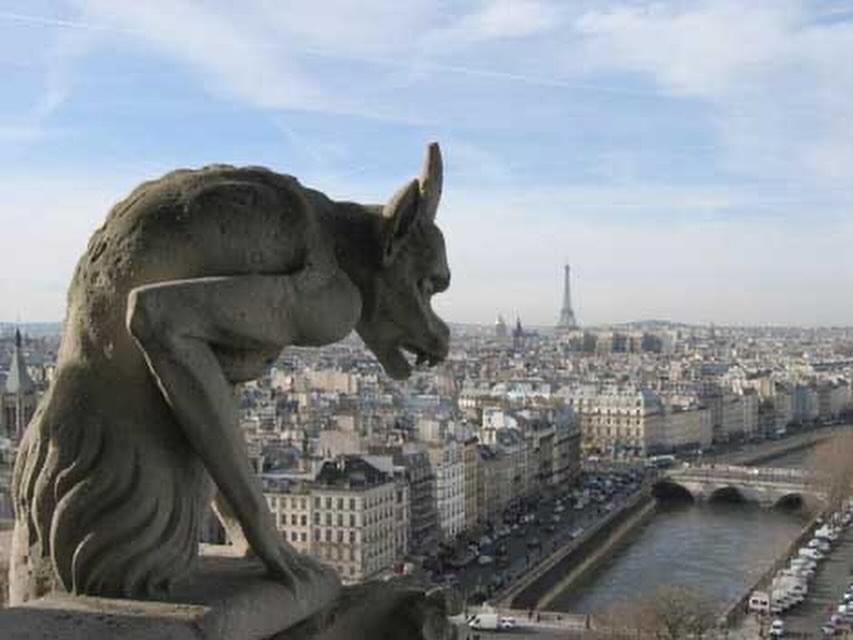
<![CDATA[<p>From our still-disturbing if elegant <a href="http://www.whataboutclients.com/archives/2006/04/the_12_rules_of_1.html">12 Rules of Client Service</a>, Rule 6 is <a href="http://www.whataboutclients.com/archives/2006/01/rule_six_when_y.html">When you work, you are marketing</a>. It's our favorite. This one presupposes that you love practicing law, and that you want to do repeat work for good clients you like. And it's the one that's hardest for lawyers and other service professionals to grasp.  Right now, in June of  2013, do you work for that <em>Fortune</em> 100 or 1000 client you prize with the same passion and at the same level you did in 2003, when you first landed it?</p>

<p><img alt="paris_gargoyle (1).jpg" src="http://www.whataboutclients.com/archives/paris_gargoyle (1).jpg" width="300" height="400" /></p>]]>

</content>
</entry>
<entry>
<title>Les Bouquinistes: &quot;More than a tower or a statue, or an artist&apos;s or soldier&apos;s name on a plaque or post.&quot;</title>
<link rel="alternate" type="text/html" href="http://www.whataboutclients.com/archives/2013/06/les_bouquiniste.html" />
<modified>2013-06-02T03:06:38Z</modified>
<issued>2013-06-01T05:59:00Z</issued>
<id>tag:,2013:/1.2854</id>
<created>2013-06-01T05:59:00Z</created>
<summary type="text/plain"> Paintings and photographs for 400 years: Notre Dame, Les Bouquinistes by Antoine Blanchard (&quot;Marcel Masson&quot;) (1910-1988)...</summary>
<author>
<name>JD Hull</name>
<url>http://www.hullmcguire.com</url>
<email>jdhull@hullmcguire.com</email>
</author>
<dc:subject>Travel</dc:subject>
<content type="text/html" mode="escaped" xml:lang="en" xml:base="http://www.whataboutclients.com/">
<![CDATA[<p><img alt="ndqt1318.0004_tas_iowa_notre_dame_et_les_bouquinistes_wm.jpg" src="http://www.whataboutclients.com/archives/ndqt1318.0004_tas_iowa_notre_dame_et_les_bouquinistes_wm.jpg" width="466" height="360" /></p>

<p><a href="http://www.whataboutclients.com/archives/2011/01/les_bouquiniste_1.html">Paintings and photographs for 400 years</a>: <em>Notre Dame, Les Bouquinistes</em>  by <a href="http://www.antoineblanchard.org/index.html">Antoine Blanchard</a> ("Marcel Masson") (1910-1988) </p>]]>

</content>
</entry>
<entry>
<title>Sainte Genevieve of Paris (422-512):  &apos;I know it, I see it. The Huns will not come&apos;.</title>
<link rel="alternate" type="text/html" href="http://www.whataboutclients.com/archives/2013/05/genevieve_is_st_1.html" />
<modified>2013-05-31T19:30:38Z</modified>
<issued>2013-05-31T05:00:58Z</issued>
<id>tag:,2013:/1.2608</id>
<created>2013-05-31T05:00:58Z</created>
<summary type="text/plain"> I know it, I see it. The Huns will not come. And what or who is your Attila? In 451, Sainte Genevieve (422-512) saved Parisians from the Huns, the legend goes. People had started to flee Paris in anticipation...</summary>
<author>
<name>JD Hull</name>
<url>http://www.hullmcguire.com</url>
<email>jdhull@hullmcguire.com</email>
</author>
<dc:subject>Real Heroes</dc:subject>
<content type="text/html" mode="escaped" xml:lang="en" xml:base="http://www.whataboutclients.com/">
<![CDATA[<blockquote>  

<p>I know it, I see it.  The Huns will not come.</p>

</blockquote>

<p><strong>And what or who is your Attila?</strong> In 451, Sainte Genevieve (422-512) saved Parisians from the Huns, the legend goes.  People had started to flee Paris in anticipation of the invasion led by Attila--but stopped when she told them she had a vision that the Huns would not enter Paris. She became the city's patron saint.  In 1928, a still-grateful Paris erected a statue to her on the Pont de la Tournelle, a bridge now about 400 years old.  <a href="http://upload.wikimedia.org/wikipedia/commons/f/f0/StGenevieve.jpg">Genevieve</a> is facing east, the direction from which the Huns approached. </p>

<p>She is also said to have converted Clovis, king of the pagan Franks, to Christianity.  She hasn't worked that magic on me.  But I visit St. Genevieve in Paris anyway.  You walk in a southwesterly direction--from, say, the Place des Vosges on the Right Bank--to get to the Left Bank, and use that bridge: Pont de la Tournelle. If you do, you walk right under Genevieve, with Notre Dame and Ile Saint Louis on your right.</p>

<p><br />
<img alt="239786654_930865b544.jpg" src="http://www.whataboutclients.com/archives/239786654_930865b544.jpg" width="500" height="375" /></p>]]>

</content>
</entry>
<entry>
<title>Bad Angels, Good Angels:  Celestial Arts of Attitude.</title>
<link rel="alternate" type="text/html" href="http://www.whataboutclients.com/archives/2013/05/bad_angels_good.html" />
<modified>2013-05-30T03:18:23Z</modified>
<issued>2013-05-30T08:59:59Z</issued>
<id>tag:,2013:/1.4052</id>
<created>2013-05-30T08:59:59Z</created>
<summary type="text/plain"> The mind is its own place and in itself, can make a Heaven of Hell, a Hell of Heaven. --John Milton (1608-1674) Bad Angels: Milton, Paradise Lost, Plate 4 by Gustave Doré....</summary>
<author>
<name>JD Hull</name>
<url>http://www.hullmcguire.com</url>
<email>jdhull@hullmcguire.com</email>
</author>
<dc:subject>Real Heroes</dc:subject>
<content type="text/html" mode="escaped" xml:lang="en" xml:base="http://www.whataboutclients.com/">
<![CDATA[<blockquote>

<p>The mind is its own place and in itself, can make a Heaven of Hell, a Hell of Heaven.</p>

<p>--<a href="http://worldcat.org/identities/lccn-n78-95532">John Milton </a> (1608-1674)</p>

</blockquote>

<p><img alt="paradise_lost4.jpg" src="http://www.whataboutclients.com/archives/paradise_lost4.jpg" width="478" height="600" /><br />
Bad Angels: Milton, Paradise Lost, Plate 4 by Gustave Doré.</p>]]>

</content>
</entry>
<entry>
<title>American Discovery and F.R.E. 612:  Why you tell the client rep not to bring her notes to her deposition.</title>
<link rel="alternate" type="text/html" href="http://www.whataboutclients.com/archives/2013/05/redux_depositio.html" />
<modified>2013-05-28T18:33:55Z</modified>
<issued>2013-05-28T05:59:59Z</issued>
<id>tag:,2013:/1.2605</id>
<created>2013-05-28T05:59:59Z</created>
<summary type="text/plain">&quot;So, Professor Quaalude, before coming in here today, what did you read or skim to get ready?&quot; Often the best documents--and certainly often the most interesting ones--are documents that are not formally produced before or during a deposition, like handwritten...</summary>
<author>
<name>JD Hull</name>
<url>http://www.hullmcguire.com</url>
<email>jdhull@hullmcguire.com</email>
</author>
<dc:subject>Litigation: Trials, arbitrations, mediations in US and abroad.</dc:subject>
<content type="text/html" mode="escaped" xml:lang="en" xml:base="http://www.whataboutclients.com/">
<![CDATA[<p><strong>"So, Professor Quaalude, before coming in here today, what did you read or skim to get ready?"</strong> Often the best documents--and certainly often the most interesting ones--are documents that are <u>not</u> formally produced before or during a deposition, like handwritten records that even opposing counsel doesn't know about. <a href="http://www.law.cornell.edu/rules/fre/rules.htm#Rule612">F.R.E. 612</a> provides that if a witness uses a writing "to refresh memory", either while or before testifying, the adverse party is "entitled to have the writing produced at the hearing, to inspect it, to cross-examine the witness" on the document. Even great lawyers overlook that F.R.E. 612 applies to depositions as well as to trials. Federal decisions have applied the rule to depositions taken based upon <a href="http://www.law.cornell.edu/rules/frcp/Rule30.htm">Fed.R.Civ.P. 30(c)</a>. So ask the deponent if he or she looked at documents <em>before</em> the deposition other than those being produced at or in advance of the deposition.  If the answer is "yes", request that they be produced.  You can have them produced during or after the deposition. <br />
</p>]]>

</content>
</entry>
<entry>
<title>Amarcord. &quot;I Remember.&quot;</title>
<link rel="alternate" type="text/html" href="http://www.whataboutclients.com/archives/2013/05/amarcord_i_reme.html" />
<modified>2013-05-26T18:57:57Z</modified>
<issued>2013-05-28T04:59:55Z</issued>
<id>tag:,2013:/1.2110</id>
<created>2013-05-28T04:59:55Z</created>
<summary type="text/plain">Memorial Day. In the U.S. it started as a way to honor Union soldiers who died during the American Civil War, and was expanded after World War I to include all war dead. Many Americans think of it more generally...</summary>
<author>
<name>JD Hull</name>
<url>http://www.hullmcguire.com</url>
<email>jdhull@hullmcguire.com</email>
</author>
<dc:subject>How The World Works</dc:subject>
<content type="text/html" mode="escaped" xml:lang="en" xml:base="http://www.whataboutclients.com/">
<![CDATA[<p>Memorial Day. In the U.S. it started as a way to honor Union soldiers who died during the American Civil War, and was expanded after World War I to include all war dead.  Many Americans think of it more generally as a way to meditate on family and friends who have died. </p>

<p>Me? I use it to remember two generations of Americans who worked too hard--and were way too proud--to over-meditate on concepts like work-life balance and get-a-life.  First, the Founders, designers of the greatest experiment in government our world has yet seen.  Second, my parents' tribe, our WWII "greatest generation", forged in both economic and human suffering.  Both generations were feisty, determined, long-suffering, smart and brave.  They built and rebuilt.  Persistence mixed with resilience, and done well enough, can be an art form.  <br />
 <br />
And to think about Life.  In the U.S. and everywhere, it's moving, painful, wonderful, unfair, funny, sad, silly, magical, profound--and in the end "too important to be taken seriously".  The Italian filmmaker Federico Fellini thought so, too, in his 1973 film <a href="http://www.imdb.com/title/tt0071129/">Amarcord</a> ("I Remember"), about growing up in small-town Italy.</p>

<p><br />
<img alt="amarcord_ver4_xlg.jpg" src="http://www.whataboutclients.com/archives/amarcord_ver4_xlg.jpg" width="340" height="500" /><br />
</p>]]>

</content>
</entry>
<entry>
<title>Sensitive Litigation Moment: &quot;An objection must be stated concisely in a nonargumentative and nonsuggestive manner.&quot;</title>
<link rel="alternate" type="text/html" href="http://www.whataboutclients.com/archives/2013/05/depositions_rul.html" />
<modified>2013-05-23T20:00:05Z</modified>
<issued>2013-05-23T06:59:50Z</issued>
<id>tag:,2013:/1.3535</id>
<created>2013-05-23T06:59:50Z</created>
<summary type="text/plain"> An objection must be stated concisely in a nonargumentative and nonsuggestive manner. --from Rule 30(c)(2), Fed. R. Civ. P. Lawyers who &quot;testify&quot; during discovery are being bad. But he/she without sin should cast the first stapler. In defending in...</summary>
<author>
<name>Holden Oliver (Kitzbühel Desk)</name>

<email>holiver@hullmcguire.com</email>
</author>
<dc:subject>Sensitive Litigation Moments</dc:subject>
<content type="text/html" mode="escaped" xml:lang="en" xml:base="http://www.whataboutclients.com/">
<![CDATA[<blockquote>

<p>An objection must be stated concisely in a nonargumentative and nonsuggestive manner.</p>

<p>--from <a href="http://www.law.cornell.edu/rules/frcp/Rule30.htm">Rule 30(c)(2)</a>, Fed. R. Civ. P.</p>

</blockquote>

<p><strong>Lawyers who "testify" during discovery are being bad. But he/she without sin should cast the first stapler.</strong>   In defending in a deposition, giving speeches and coaching your witness on the record is "bad" because it may be suggestive of the answer the witness should give. At Evan Shaeffer's  <a href="http://www.illinoistrialpractice.com">The Trial Practice Tips Weblog</a>, see "<a href="http://www.illinoistrialpractice.com/2007/12/depositions-how.html">Depositions: How to Stop Coaching</a>".  We could go on and on and on about this--but you can just read it. Now where's that whistle?</p>

<p><img alt="img0252.jpg" src="http://www.whataboutclients.com/archives/img0252.jpg" width="220" height="320" /><br />
Dang.  Puttin' the hurt on my ears, here. </p>]]>

</content>
</entry>
<entry>
<title>Roman Law:  Ambitious.  Well-Traveled.  Enduring.  </title>
<link rel="alternate" type="text/html" href="http://www.whataboutclients.com/archives/2013/05/roman_law_big_l.html" />
<modified>2013-05-20T22:59:51Z</modified>
<issued>2013-05-21T05:59:59Z</issued>
<id>tag:,2013:/1.1842</id>
<created>2013-05-21T05:59:59Z</created>
<summary type="text/plain"> Roman law not only survived among the Roman population, it was revived and extended to peoples of Northern Europe, and it was then spread by modern colonization to lands beyond the seas of which the Romans had never even...</summary>
<author>
<name>Holden Oliver (Kitzbühel Desk)</name>

<email>holiver@hullmcguire.com</email>
</author>
<dc:subject>How The World Works</dc:subject>
<content type="text/html" mode="escaped" xml:lang="en" xml:base="http://www.whataboutclients.com/">
<![CDATA[<blockquote>

<p><a href="http://web.upmf-grenoble.fr/Haiti/Cours/Ak/">Roman law</a> not only survived among the Roman population, it was revived and extended to peoples of Northern Europe, and it was then spread by modern colonization to lands beyond the seas of which the Romans had never even dreamed, to Quebec and Louisiana, to Spanish America and the Cape of Good Hope.  Not so many years ago an appeal from South Africa to the British Privy Council turned upon an interpretation of a passage in the <em>Digest</em> of <a href="http://www.historyguide.org/ancient/justinian.html">Justinian</a>.</p>

</blockquote>

<p>C. H. Haskins, Ch. VII, <em>The Renaissance of the Twelfth Century</em> (World 1972 ed.) </p>

<p><br />
<img alt="30668.JPG" src="http://www.whataboutclients.com/archives/30668.JPG" width="400" height="270" /></p>]]>

</content>
</entry>
<entry>
<title>Old Armstrong Chapel, 1831.</title>
<link rel="alternate" type="text/html" href="http://www.whataboutclients.com/archives/2013/05/old_armstrong_c_1.html" />
<modified>2013-05-17T22:41:22Z</modified>
<issued>2013-05-18T18:20:43Z</issued>
<id>tag:,2013:/1.4530</id>
<created>2013-05-18T18:20:43Z</created>
<summary type="text/plain"> In Indian Hill, southern Ohio, U.S. A small rectangular church with a prominent front tower. Photo by Greg Hume....</summary>
<author>
<name>JD Hull</name>
<url>http://www.hullmcguire.com</url>
<email>jdhull@hullmcguire.com</email>
</author>
<dc:subject>Travel</dc:subject>
<content type="text/html" mode="escaped" xml:lang="en" xml:base="http://www.whataboutclients.com/">
<![CDATA[<p><img alt="400px-OldArmstrongChapel (1).jpg" src="http://www.whataboutclients.com/archives/400px-OldArmstrongChapel (1).jpg" width="400" height="600" /></p>

<p>In Indian Hill, southern Ohio, U.S. A small rectangular church with a prominent front tower. Photo by Greg Hume.</p>]]>

</content>
</entry>

</feed>