April 25, 2010
$10 million contract: 1 or 3 Arbitrators?

Jennifer Kirby
Herbert Smith LLP - Paris
Not a trick question. How many arbitrators do you need to hear and decide a business-to-business dispute (moderate value and difficulty) n Europe or abroad: one or three? What do most parties generally prefer? Why do they lean that way?
And, even while litigants widely believe that one arbitrator can both cut costs and increase speed, what is the best "default" practice in the abstract? Should "size"--the overall monetary value of the dispute--always drive the parties' decision of the number of arbitrators used?
Finally, are company executives--those who after all pay the salaries and fees of in-house counsel and outside law firms--likely to see this issue differently than the lawyers they employ?
Set aside 15 minutes and hear interview No.88 in the CPR Institute's International Dispute Negotiation series. Three days ago, Italy-based Mike McIlwrath, an in-house lawyer with GE Oil & Gas, interviewed Jennifer Kirby, a Paris partner of London's Herbert Smith.
Between 2002 and 2005, Kirby served as Counsel and eventually Deputy Secretary General of the ICC's Court of International Arbitration in Paris, where she supervised or formally evaluated countless cross-border arbitrations, involving parties and professionals from over 100 jurisdictions. The ICC court has been receiving and managing private commercial disputes to final awards since 1923.
Posted by JD Hull at 04:50 PM | Comments (0)
April 23, 2010
Quit wasting depositions, deposition time, and deposition money.
Why use deposition time to learn things you can learn quickly and inexpensively from phone calls, libraries and even the most rudimentary Google search?
Before you schedule a deposition, do some informal investigation. Next time a new case begins, resist rushing into written discovery and depositions. Step back from the discovery routine--you'll get into that bubble soon enough--and learn a few things on your own.
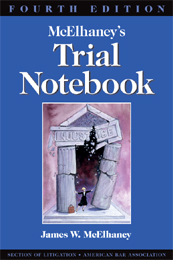
Twenty years ago, James McElhaney, a gifted lawyer, writer and teacher of trial tactics, and the ABA Litigation Section, first published McElhaney's Trial Notebook, now in its fourth edition. Discovery, McElhaney noted, is a good way to learn what a witness will say, or to bind a party or witness to a particular version of the facts.
But it is also "a very inefficient way to get information."
Let us add to that:
Formal discovery can be--and often is--an unimaginative, cookie-cutter, dumb-ass, straight-up lazy, wasteful, and client-unfriendly way to learn much of the background information, and many of the facts, that will frame and flesh out your case.
This is especially true of depositions, and (for that matter) any other live sworn testimony. If you really don't have to "wing it", don't.
Think a bit on your own. Each deposition should suggest a unique set of background questions you can have answered (or partially answered) before you begin.
It's just a matter of curiosity and do-it-yourself "trolling" for information you and yours can get first-hand on your own. At a minimum, you'll have a better outline, a better deposition, and an adversary and deponent who knows you show up "ready to play".
Just as witnesses say unexpected and even startling things when they testify, useful and even surprising facts are available about opposing parties and witnesses through the Internet, court files, published cases, local boards and agencies, social clubs with websites, D&B reports, news archives, business libraries and even phone conversations other humans.
No, don't hire an investigator for this. You and your staff can handle this with a little verve and common sense.
These inexpensive but ignored sources are often inconsistent with information parties will give about themselves in formal discovery.
The upshot?
1. Don't take the deposition at all. You may not need to take that deposition.
2. Take a much better and shorter one--and do much better written discovery requests. If you do take it, you will take a better one. You won't need to waste time asking about things which are easily ascertained beforehand. If you serve written discovery before depositions--you generally should do it before--your interrogatories and requests for documents under Rules 33, 34 and 45 will be much better. (Formal written discovery, in my view, is of even poorer quality and even less informed than most depositions taken.)
3. If you need to, confirm what you have learned with a quick series of leading questions. Anything that you have learned about the deponent from investigation and informal discovery, and that you need to confirm--i.e., work history, education, past events in the news, addresses, past titles, ex-employees, mistresses, ex-wives, published sonnets, tastes in biker bars, and current businesses and business associates? Go over it and confirm quickly at the outset (or at the right interval for that information) with the deponent.
(from previous posts)
Posted by JD Hull at 11:59 PM | Comments (2)
April 10, 2010
Racehorse
I would have won them all if my clients hadn’t kept reloading their gun and firing.
--Richard Haynes, Houston (1927- ) Trial Lawyer. Artist. Seer.
Posted by Holden Oliver (Kitzbühel Desk) at 11:59 PM | Comments (0)
Different folks: Witness demeanor in international disputes.

In international arbitration and mediation, first-language barriers can be the least of your client's difficulties. How does a mediator or arbitrator arrive at a true--and fair--consensus on the meaning of ordinary verbal and non-verbal conduct by a witness? What is the significance of the "delayed answer" to a question? In one culture, delay means hesitancy and evasiveness (e.g., to most Westerners). In another, delay may denote careful consideration of the question--and a sign of respect to the questioner.
In IDN No. 61, GE's in-house counsel Mike McIlwrath interviewed Australian mediator Joanna Kalowski for the second time (see IDN No. 44). Kalowski, who works out of both Australia and Paris, shares how she became a mediator and lessons that come directly from her work. Kalowski has also trained mediators in Australia, New Zealand, India, Singapore, Italy, Thailand and Hong Kong. Their 25-minute discussion, "Public Consensus Across Cultures", taped on February 13, 2009, is part of McIlwrath's award-winning interview series on International Dispute Negotiation sponsored by the International Institute for Conflict Prevention & Resolution, or CPR.
Posted by Holden Oliver (Kitzbühel Desk) at 12:50 AM | Comments (0)
April 07, 2010
Badness in Depositions: "Stop me before I coach again."
An objection must be stated concisely in a nonargumentative and nonsuggestive manner.
--from Rule 30(c)(2), Fed. R. Civ. P.
Defending lawyers who testify are bad. And let he or she without sin cast the first stapler. In defending in a deposition, giving speeches and coaching your witness on the record is "bad" because it may be suggestive of the answer the witness should give.
At Evan Shaeffer's fine and enduring Illinois Trial Practice Weblog, see "Depositions: How to Stop Coaching". We could go on and on and on about this--but we'll just be quiet and let you read it.
(Does this guy ever shut up?)
Posted by JD Hull at 11:59 PM | Comments (0)
March 30, 2010
Is "professionalism" mainly a lawyer-centric ruse?
Reprinted from a 2005 "Law Week edition" of The San Diego Daily Transcript, here's "Professionalism Revisited: What About The Client?". The piece ends with "rules of professionalism"--but from the client's perspective. Excerpts from Rules 1, 5 and 6:
1. We come first. Be nice--but if in doubt, use the rules. If you feel you know the lawyers you are dealing with, we will follow your advice and instincts. If you are in doubt about the lawyers, or if it might compromise us to deviate from the formal procedural rules, please stay close to those rules.
5. If you have, or would like to have, a personal relationship with opposing counsel, that's fine, but don't let the relationship hurt us--the client. We don't care as much as you do about your maintaining or developing collegiality with other lawyers in your jurisdiction; in fact, we could not care less.6. If opposing counsel shows animosity toward you for following the procedural rules and keeping things moving, that is tough. This is not about the lawyers. We hired you to represent us. We would like you to get this done. Again, as your client, we seldom think that aggression and persistence are "unprofessional".
Posted by Holden Oliver (Kitzbühel Desk) at 11:59 PM | Comments (1)
March 28, 2010
ADR Risings
For lawyers, depositions are like CAT Scans. It seems you can never be faulted for doing one too many.
If we can ever get international arbitration and mediation away from litigators like me, and over to the true "resolvers", it may work as it was intended, and as many GCs still want it to work. In the meantime, do read "Changes In Legal Practice And The Use Of ADR" by Richard Webb at his Healthcare Neutral ADR. Excerpts:
Since entering the ADR field, I have wondered about the inherent conflict between the interests of the lawyer engaged on an hourly fee basis and the interests of the client in achieving the most economically efficient result.
Most lawyers operating in the traditional legal model are like most doctors practicing in a traditional, healthcare setting with fully insured patients. When a patient presents with a complaint, the doctor deploys whatever resources are at his or her disposal to diagnose and cure the problem.
Whether it is consultations with specialists, diagnostic tests and procedures, medications, surgeries or other therapies, the limits of modern medicine are the only constraint. For lawyers, depositions are like CAT Scans. It seems you can never be faulted for doing one too many.
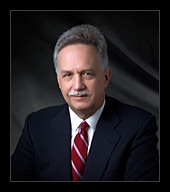
Rich Webb of Healthcare Neutral, LLC
Posted by JD Hull at 11:59 PM | Comments (0)
For clues, try Tennessee.
What does it take be a great trial lawyer, anyway?
Tennessee's John Day may have the answer. No surprise to us that fellow Midwesterner Day ended up here. Tennessee is the warrior-breeding Volunteer State. It hatches, and attracts, both brawlers and serious students of war. Record numbers of Tennessee men stepped up to fight in the 1812 and Mexican wars. Alvin York, World War I's most decorated American soldier, came from Pall Mall, near the Kentucky border.
And so John just had to move to Nashville. Read either John's fine Day on Torts, or his cover article in the November 2008 issue of the Tennessee Bar Journal.

Posted by JD Hull at 12:59 AM | Comments (0)
March 27, 2010
Storytelling
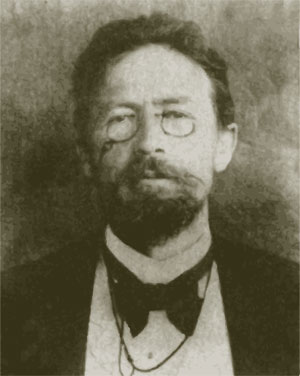
Don't tell me the moon is shining; show me the glint of light on broken glass.
--Anton Chekhov (1860-1904)
Posted by Rob Bodine at 11:59 PM | Comments (0)
March 24, 2010
Litigation budgets.
War is the last of all things to go according to schedule.
-- Thucydides (460 BC - 395 BC) in The History of the Peloponnesian War.
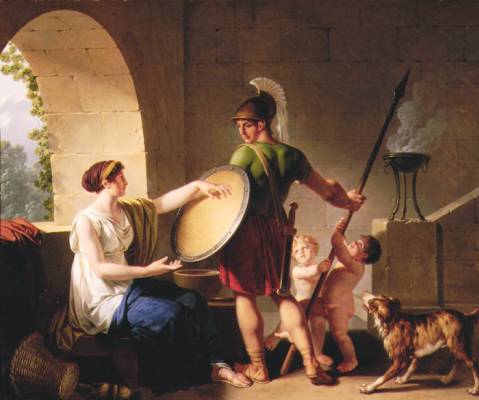
"Spartan Woman Giving a Shield to Her Son", 1805, Jean-Jacques-François Le Barbier. In the lore and legend of Sparta, when a son left home for the armed forces, his mother said: "Fight well and fairly. Return with your shield or on it. Do not charge for faxes".
Posted by JD Hull at 03:59 AM | Comments (0)
March 23, 2010
Litigation: Depositions should get the "Badness" out there.

One of our writers working with Montagnard troops, Cambodia, 1968.
Get The Badness in your case out in the open. Hostile witnesses. Non-hostile witnesses. The above quote is from a 2008 article by Chicago trial lawyer Stewart Weltman that we love and apparently cannot live without: "The Two Most Important Questions to Ask During A Discovery Deposition-Part I". Excerpt:
There is a reason why it is called discovery. Invite the other side's witnesses to tell you everything they possibly can about why your side should lose. Revel in these "bad" answers---don't cringe. Make sure that you carefully dissect every part or premise of a "bad" answer.
(Photo: Paramount Pictures)
Posted by Rob Bodine at 11:59 PM | Comments (0)
March 19, 2010
Some key FRCP deadlines changed in big ways on December 1, 2009.
Be serious. The 10-day post-trial deadline is now 28 days? While the work of the Judicial Conference's five Advisory Committees never really stops, big changes to federal court rules, including the Federal Rules of Civil Procedure (FRCP), don't occur that often. The newest amendments are "technical amendments"--but the changes are anything but technical.
Two years in the making, the changes were signed into law (H.R. 1626) by the President on May 7, 2009, and became effective December 1, 2009. There are also significant changes to some of the time triggers in the appellate, criminal and bankruptcy rules. All are part of the Judicial Conference's "Time-Computation Project".
FRCP. Rule 6, FRCP, the general "time counting" provision, and post-trial Rules 50, 52, and 59, are among the rules changed. Gone forever in Rule 6 is the much relied-upon (and, for many, much beloved) "11-day rule" in subdivision 6(a) adopted in 1985. It was designed to take the hardship out of 10-day post trial deadlines, i.e., don't count weekends and holidays for deadlines of 10 days or less.
But you no longer even need the 11-day rule that was in subdivision (a) of Rule 6.
In the new provisions, the Advisory Committee on Rules of Civil Procedure gave litigants more time (a lot more) to file motions for judgment, or for a new trial, under Rules 50 and 59. Beginning on December 1, the time to file after entry of judgment was 28 days rather than 10 days.
Sources. The D.C office of Chicago-based Mayer Brown published an advisory to the in-house community on November 30, 2009. It summarizes changes to the civil and appellate rules. See also the April 2009 summary at Smart Rules. The popular Cornell Law School site on the federal rules put up all the FRCP changes by December 1, but is still working on getting the Advisory Committee Notes into it.
The most complete Advisory Committee history and Congressional legislative history of the amendments are at the federal rulemaking section of the U.S. Courts website.
(from a December 16, 2009 post)
Posted by Holden Oliver (Kitzbühel Desk) at 04:59 AM | Comments (0)
March 13, 2010
UPDATED: CPR's Interview of Richard Susskind: "The End of Lawyers?"
If you haven't read him yet, you've probably heard of Richard Susskind, of Susskind's latest book--or at least of the idea that looms in its title that might even keep you from buying and reading it. Last month, in-house lawyer Mike McIlwrath, in a two-part discussion on February 19th and February 26, interviewed Susskind, author of The End of Lawyers? - Rethinking the Nature of Legal Services. Rather than angst, what emerged was a fountain of ideas and opportunities for lawyers who serve higher-end clients.
And technology--if in the hands of seasoned corporate lawyers--will be a major facilitator.
As clients and the profession continue to change before our eyes, only a few have made it a full-time job to think through the fallout and discuss solutions. Susskind is a expert in legal technology who, in the mid-1980s, studied and obtained a post-graduate degree in computers and law. In the next 25 years, he wrote, lectured, and authored two other books, as well as countless columns on law for The Times of London.
Much of his work concerns the effects technology is having on corporate law practice globally. A popular speaker these days, Susskind teaches in Glasgow and London and, since 1998, has been IT Adviser to the Lord Chief Justice of England.
"More for less" as the new regime. Susskind has long predicted IT-driven changes in the relationships between in-house departments and firms. How work will get done, and paid for, Susskind has argued, is about to change, radically and in the long term. Moreover, those changes, while threatening at first, are likely to make lawyering more enjoyable--or at least more fun for the handful of us drones who actually liked it in the first place.
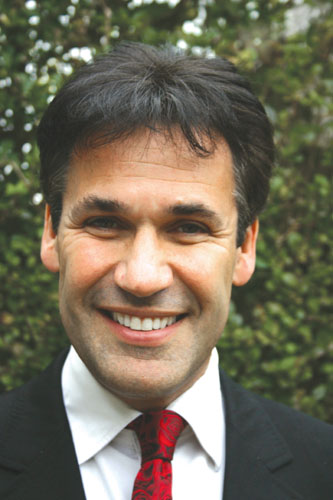
Richard Susskind
McIlwrath, who interviews Susskind, is host of the International Dispute Negotiation series sponsored by the CPR Institute--short for the International Institute for Conflict Prevention & Resolution. He is Senior Counsel-Litigation, GE Oil & Gas, and works out of Florence, Italy. In 2008, the IDN series earned both McIlwrath (pictured above) and New York-based CPR Institute an award for ADR excellence from CEDR, a dispute resolution group in London.
Don't miss hearing these--divided into Efficiency Strategy (IDN No. 85) and Collaboration Strategy (IDN No. 86). A main theme of this blog--how legal services can be delivered, and not just how they are paid for--runs through the two Susskind-McIlwrath discussions.
Posted by JD Hull at 11:59 PM | Comments (1)
March 08, 2010
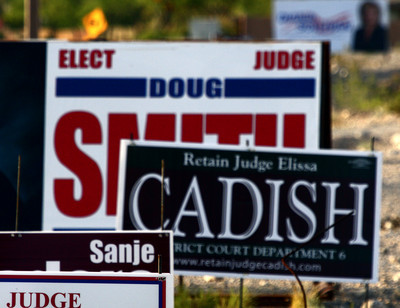
Who says popular election of state judges is "Fishy"?
How rude. Not giving money to sitting judges and would-be judges for their campaigns? Next thing you know, lawyers will no longer be the main event--with clients calling some of the shots. See at Choose Judges on Merit, a site by the renegade Pennsylvanians for Modern Courts, "Electing Judges is 'Fishy'". Dang. Where will it all end?
Posted by Holden Oliver (Kitzbühel Desk) at 11:59 PM | Comments (0)
March 02, 2010
Thinking Warriors.
There has been no illustrious captain who did not possess taste and a feeling for the heritage of the human mind. At the root of Alexander's victories one will always find Aristotle.
--Charles de Gaulle, Army of the Future (1934)

Alexander the Great was out there. He was well-educated, persistent, confident, smart--and a brilliant commander and politician. A warrior's warrior. Alexander was also wild and self-destructive. His men, who loved him, sometimes mutinied.
Alexander worried his fellow Macedonians back home, as he bullied and charmed his way through the then-known world. Many texts say that his off-the-charts political and personal excesses greatly also worried his teacher, Aristotle, the measured and cautious academic. Alexander was, in fact, a student of Aristotle at his school in Mieza.
Aristotle's mentor, of course, was Plato, who was himself mystical, poetic, and aristocratic. Plato was more like Alexander in background and personality--perhaps a better teacher-student match for the young Alexander.
But Plato died when Alexander was 8, and when Aristotle was only 37.
Hey, don't stop reading. Lawyers, students, politicians and business leaders--and especially trial lawyers--should know about these guys.
And their ideas.
We should know something about all of them. Know about ancient and not-so-ancient peoples who have passed on, as well as the events and ideas they gave us.
But most of us don't know. And we are less effective for it.
In the olden days, before we all lapsed into being mechanics, technicians, pseudo-strategists, and outright "law cattle", we did know the greats, and their ideas. We needed to know. These guys (and women) were and are us.
You really think you are "educated"? "Twenty years of schooling" and...what? What did you really get? A job?
That's really sad, Jack. You are lost. So go play a video game. What's on bad television tonight? Go eat something. Get bigger, maybe. Of course, never exercise (you need to 3 times a week, by the way, and it will help you to read more).
Waste more time. Go buy a bad "self-improvement" book. Completely silly and dumbed-down versions of Sun Tzu's The Art of War are very popular these days. Or maybe "Who Made Off With My Cheese?"
It's all there. People worked very hard--and often died--for the last 2500 years to collect this stuff for you. Become alive. If you are even reading this, you are one of the lucky ones with a start at your education. Finish it. Finish your education. Keep growing. Become at least culturally semi-literate. Read the newspaper. A good one. Read European ones in English. You can access things so much more quickly now than even 5 years ago.
The Classics? The Classics are you, too. If you have never read any the great books (nothing by Flaubert, no Cicero, no Heaney, no Van Doren, no Kerouac, no Durant?) or reveled in the great ideas, your life--your relationships, your family's education, and you--are going to be less.
Have some aspirations.
And you get General de Gaulle's idea. If you want to evaluate a politician, or a leader, or a business person, or a lawyer, or a warrior, ask what he or she knows about (a) world history, and about (b) the old verities that people from Plato and Aristotle to Emerson and Ken Wilbur have offered us. If your adversaries--or the guy next door--know little or nothing about the West, Western history and civilization, and what got us here, you have the upper hand.
And don't gloat. Feel lucky in Life. And exploit it in Work.
Posted by JD Hull at 12:59 AM | Comments (0)
February 22, 2010
"Is that an elected county judge in your pocket?"

"Or are you just hugely happy to see me?"
Even our finest popularly-elected state judges are steeped in a taint.
Think of it like this: Good Crops, Motherhood, the Flag, Andy Griffith, puppies, selflessness, courage (Mae West, above, had lots of it), beauty, truth, a thin Marie Osmond, sweetness, light, replacing state judicial elections with merit-based selection in 39 American states.
As NYC trial lawyer Scott Greenfield and maybe others worry that writers at this site are getting soft and even, well, flitty, we will reach and try here to be frank, and forthright:
Popular election of state judges is beneath: (a) you, (b) your law firm, (c) your family's dog, and (d) especially your clients, and especially if you act for businesses who trade nationally or globally.
That institution, favored in a vast majority of states in some form, makes states that still conduct them appear insular and potentially unfair to both American litigants and to non-Americans and their businesses abroad.
Finally, with each election cycle campaign donations are driving up the costs. This is, of course, wasteful and inefficient. See "The New Politics of Judicial Elections in the Great Lakes States, 2000–2008" by Justice at Stake. More importantly, the very existence of state laws regulating campaign contributions to candidates running for judicial office send two unintended but lousy messages:
1. Judges, like mayors and congressmen, have "constituents".
2. Justice, like real estate or widgets, is "for sale".
We appreciate that many of the some 10,000 elected American judges were excellent lawyers, and that as jurists they do first-rate, honest, exemplary, and often inspiring work. We have indeed stayed loose and open-minded on this subject. Three or four of our friends are former elected state judges. We say hello to them in public--and once even had one to dinner. We would probably not object too strongly if one of our sons or daughters very briefly dated one.
But elected benches are by nature glaringly "fishy" (i.e., "...dang, Nadine, the campaign money to the judge last year...just don't seem right...the dog don't hunt...") to even the most casual observer in the Midwest or South, and wherever else American horse sense abounds.
Merit-based selection is not perfect. However, it has worked very well for two centuries in American federal courts with a minimum of bad appointments and embarrassments--even if you adjust for the fact that state judges outnumber federal judges (who are appointed for life) by a factor of over 10 to 1.
It's time for the States to grow up, and adopt systems of merit-based appointment....
So quick and dirty re: elected state judges and campaign money.
Since 1996, persistently, and for nine years before we started this blog, Hull McGuire has written about this issue. More recently, we've followed and written a lot on the U.S. Supreme Court case about a popularly elected state supreme court judge, and campaign money recipient, who failed to disqualify himself in arguably suspect circumstances.
In that closely-watched case, see slip opinion in Caperton v. Massey Coal Company (June 8, 2009), the Court ruled last year that a West Virginia judge should indeed have disqualified himself from hearing an appeal of a $50 million jury verdict against an a coal company because its CEO had been a major campaign donor.
So the popular election of state judges--permitted in some aspect in a clear majority of the states--gives the appearance of justice being "for sale." Elected judges can be especially "bad" for good clients who do business all over the U.S. and the world. Even when elected judges are "good"--and, to be fair, there are some great ones--state systems of popularly-elected judiciary will never inspire much confidence. Elected jurists who hear and decide business disputes are steeped in a taint.
The point: Judges should not have "constituents," i.e. law firms, and their clients, who make campaign contributions. Right now, in most American states, they do. And there is no way to dress that up.
Generally county-based, American litigation at a state level is already frustratingly local and provincial for "outsider defendants"--businesses from other U.S. states and other nations sued in local state courts--who cannot remove to federal courts, the forums where federal judges can and should protect them from local prejudice.*
American states that still hang on to electoral systems look increasingly provincial, classless, and silly from a global perspective. Merit selection is not perfect--and also poses risks--but it is far better than what most American states currently have in place. It's time for American states to grow up. See our many past posts over the last four years on this subject in our category on the right side of this site: Federal Courts.
*One reason that federal diversity jurisdiction was created in the first place was because of the framers’ concern that prejudices of state judges toward out-of-state persons would unfairly affect outcomes in trial courts. Erwin Griswold, Law and Lawyers in the United States, 65 (Cambridge, Harv. Press 1964). Over 200 years later, our current systems in the states make that local prejudice almost inevitable. See also, the interview of General Electric's Mike McIlwrath in July 2009 of Prof. Geoffrey Hazard of Hastings Law School, who addresses why European business really fear U.S. state courts.
Posted by JD Hull at 02:40 AM | Comments (0)
January 26, 2010
Patrick Lamb: Sane writing serves clients.
Here's another good piece on writing for lawyers. Visit our friend Chicago trial lawyer Patrick Lamb at his enduring and pioneering In Search of Perfect Client Service. Read "Writing Plainly Is Good Client Service". Come to think of it, Pat Lamb and his colleagues have a lot of good client-centered ideas.

Posted by JD Hull at 11:14 PM | Comments (0)
December 16, 2009
New FRCP deadlines effective December 1, 2009.
While the work of the Judicial Conference's five Advisory Committees never really stops, big changes to federal court rules, including the Federal Rules of Civil Procedure (FRCP), don't occur that often. The newest amendments are "technical amendments"--but the changes are anything but technical.
Two years in the making, the changes were signed into law (H.R. 1626) by the President on May 7, 2009, and became effective December 1, 2009. There are also significant changes to some of the time triggers in the appellate, criminal and bankruptcy rules. All are part of the Judicial Conference's "Time-Computation Project".
FRCP. Rule 6, FRCP, the general "time counting" provision, and post-trial Rules 50, 52, and 59, are among the rules changed. Gone forever in Rule 6 is the much relied-upon (and, for many, much beloved) "11-day rule" adopted in 1985. It was designed to take the hardship out of 10-day post trial deadlines, i.e., don't count weekends and holidays for deadlines of 10 days or less.
But you no longer need it. In the new provisions, the Advisory Committee on Rules of Civil Procedure gave litigants more time (a lot more) to file motions for judgment, or for a new trial, under Rules 50 and 59. Beginning on December 1, the time to file after entry of judgment was 28 days rather than 10 days.
Sources. The D.C office of Chicago-based Mayer Brown published an advisory to the in-house community on November 30, 2009. It summarizes changes to the civil and appellate rules. See also the April 2009 summary at Smart Rules. The popular Cornell Law School site on the federal rules put up all the FRCP changes by December 1, but is still working on getting the Advisory Committee Notes into it.
The most complete Advisory Committee history and Congressional legislative history of the amendments are at the federal rulemaking section of the U.S. Courts website.
Posted by JD Hull at 07:28 PM | Comments (0)
December 02, 2009
The Overstatement.
When you overstate, readers will be instantly on guard, and everything that has preceded your overstatement as well as everything that follows it will be suspect in their minds because they have lost confidence in your judgment or your poise.
Do see "The Only Writing Tip That Really Matters", quoting The Elements of Style, by William Strunk, Jr. and E.B. White, at Evan Schaeffer's The Trial Practice Tips Weblog.

Blarney Castle, near Cork, Ireland
Posted by Rob Bodine at 11:59 PM | Comments (0)
December 01, 2009
Redux: The GC as Wartime Consigliere.
(From a June 1, 2009 JDH post)
"I don't like violence, Tom. I'm a businessman. Blood is a big expense. "
In May of this year, over at his well-regarded Law Department Management, Rees Morrison, one of the smarter, sager and more experienced lawyer-consultants out there, had asked "Does a General Counsel Make All That Much Difference?" Our two cents is still the same for a working formula for "the right GC." And it's still a no-brainer: Get thee a philosopher-warrior. Be safe, and feel safe, friends.

The Wrong Stuff: Tom Hagen (Paramount Pictures)
And Morrison had gone a bit farther, inspired in part by May's Atlantic piece "Do CEOs Matter?, by Harris Collingwood. A Morrison excerpt:
Other researchers have found that CEO leadership matters relatively less in constrained industries, such as electrical utility industries, than in hotly competitive, fast-changing industries. A similar conclusion probably applies to general counsel: legal/business calls are tougher and more frequent in roiling industries so the top lawyer has more opportunity to make a difference.
(Emphasis added.) Do we ever agree--as did the wonderfully warlike trial lawyer Scott Greenfield, when he picked up on our original post back on June 1 singing the virtues of the "tough-guy" inside counsel--that "GC warriors" are worth their weight in gold bow-ties and silver spats.
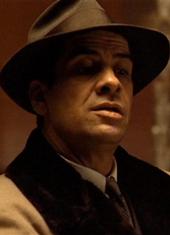
Virgil 'The Turk' Sollozo. "I don't like violence, Tom. I'm a businessman. Blood is a big expense." (Paramount Pictures)
As Morrison suggests, it's just a business fact--especially in changing industries--that General Counsel do make a difference. So your corporate client might as well demand the "right" package:
A. She should be broad-gauged, intellectual, scholarly, take-charge, organized, preventive, resourceful--and warlike at heart.
B. Hates war as expensive ("blood" one Godfather character noted, "is a big expense")--but likes, and even revels in, a fight.
C. Tells management what to do--and not a tentative, qualified "what you can do."
Note: See also our May 15 post, "Proctor & Gamble's Lafley: Look to the Meaningful Outside", on the must-read thoughts of A.G. Lafley, P&G's then outgoing CEO, about CEO uniqueness in May's Harvard Business Review. In many respects, you can adapt Lafley's notion--i.e., the most effective top inside lawyers should "look to the outside"--to law departments at great companies.

The Right Stuff: Rees Morrison
Posted by Rob Bodine at 12:00 AM | Comments (0)
November 28, 2009
Practice tip: Do timely object to hand grenades.

Diane Arbus, Central Park, 1962
Even without notice, you can let some stuff slide a little when it slips into defense counsel closings: photos, videos, a few power point slides, and maybe blow-ups of handwriting samples. No reason to object. But you never know about those wild cards: firearms, working chain saws, certain munitions, live-looking grenades, those sorts of things. So do pipe up--even if you think you're winning big with the jury in an "I-can't-lose-here" jurisdiction. See at ABA Journal "Lawyer Under Fire for Using Dud Grenade in Closing".
There was no objection and the presiding judge simply asked that Kepfield remove the grenade from the table.
Kepfield's client was convicted following 15 minutes of jury deliberations, according to the Hutchinson News.
The grenade closing prop was used in a demonstration of a "real" imminent threat. A complaining witness claimed that one co-defendant in the case threatened "to kill her dog and harm her daughter" if she would not assist in the forgery of stolen checks. No timely objection to the grenade. But here the winning prosecution apparently could have it both ways:
District Attorney Keith Schroeder intends to also alert the Kansas attorney general's office.
"Clearly, I'm concerned about the situation and the safety of my employees, and I'm concerned about the way the jury's treated," Schroeder said.
Posted by Rob Bodine at 12:00 AM | Comments (0)
November 16, 2009
'Professionalism': A Lawyer-Centric Ruse?
Reprinted from a 2005 "Law Week edition" of The San Diego Daily Transcript, here's "Professionalism Revisited: What About The Client?", written by one of our spunkier U.S. trial lawyers. Note that the piece ends with "rules of professionalism"--but from the client's perspective. Excerpts from Rules 1, 5 and 6:
1. We come first. Be nice--but if in doubt, use the rules. If you feel you know the lawyers you are dealing with, we will follow your advice and instincts. If you are in doubt about the lawyers, or if it might compromise us to deviate from the formal procedural rules, please stay close to those rules.
5. If you have, or would like to have, a personal relationship with opposing counsel, that's fine, but don't let the relationship hurt us--the client. We don't care as much as you do about your maintaining or developing collegiality with other lawyers in your jurisdiction; in fact, we could not care less.6. If opposing counsel shows animosity toward you for following the procedural rules and keeping things moving, that is tough. This is not about the lawyers. We hired you to represent us. We would like you to get this done. Again, as your client, we seldom think that aggression and persistence are "unprofessional".
Posted by JD Hull at 12:31 AM | Comments (0)
November 03, 2009
On voting for judges.
That a popularly-elected state judge in your pocket?

Judges should not have "constituents." But in most American states, they still do. And there is no way to dress that up.
Election Day Reminder: If you can vote at the polls for a state judiciary candidate today, please don't. Raise your aspirations. Go to the track, play pinball, drink Ripple, watch Gong Show reruns, or visit that "Leather World" alternative lifestyle clothing-and-book store on Route 73 you've always wondered about. From past WAC? posts:
Quick and dirty re: elected state judges and campaign money. We've followed and written a lot on the U.S. Supreme Court case about a popularly elected state supreme court judge, and campaign money recipient, who failed to disqualify himself in arguably suspect circumstances. The Court ruled in June of this year that a West Virginia judge should indeed have disqualified himself from hearing an appeal of a $50 million jury verdict against an a coal company because its CEO had been a major campaign donor. See slip opinion in Caperton v. Massey Coal Company (June 8, 2009).
The popular election of state judges--permitted in some aspect in a clear majority of the states--gives the appearance of justice being "for sale." Elected judges can be especially "bad" for good clients who do business all over the U.S. and the world. Even when elected judges are "good"--and, to be fair, there are some great ones--state systems of popularly-elected judiciary will never inspire much confidence. Elected jurists who hear and decide business disputes are steeped in a taint.
The point: Judges should not have "constituents," i.e. law firms, and their clients, who make campaign contributions. Right now, in most American states, they do. And there is no way to dress that up.
Generally county-based, American litigation at a state level is already frustratingly local and provincial for "outsider defendants"--businesses from other U.S. states and other nations sued in local state courts--who cannot remove to federal courts, the forums where federal judges can and should protect them from local prejudice.*
American states that still hang on to electoral systems look increasingly provincial, classless, and silly from a global perspective. Merit selection is not perfect--and also poses risks--but it is far better than what most American states currently have in place. It's time for American states to grow up. See our many past posts over the last four years on this subject in our category on the right side of this site: Federal Courts.
*One reason that federal diversity jurisdiction was created in the first place was because of the framers’ concern that prejudices of state judges toward out-of-state persons would unfairly affect outcomes in trial courts. Erwin Griswold, Law and Lawyers in the United States, 65 (Cambridge, Harv. Press 1964). Over 200 years later, our current systems in the states make that local prejudice almost inevitable. See also, the interview by General Electric's Mike McIlwrath in July 2009 of Prof. Geoffrey Hazard of Hastings Law School, who addresses why European business really fear U.S. state courts.
Posted by JD Hull at 11:59 PM | Comments (0)
October 31, 2009
"Slick Lawyer Answers" to "Lazy Lawyer Interrogatories".
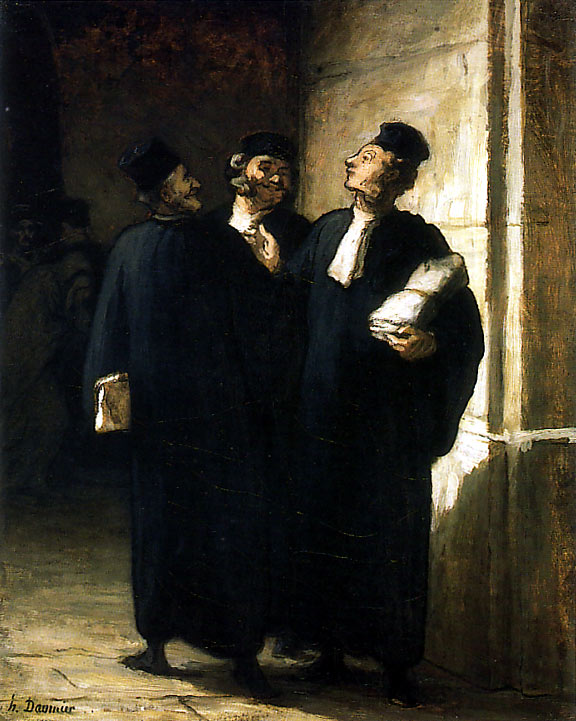
"The Lawyers", circa 1855, Honoré Daumier (1808-1879)
Our new associate. Nice guy, smart guy, and I really liked him--I still do. I always make it a point to take his cab whenever I'm in Flint.
Written discovery practice shouldn't be a joke. Not that many years ago, in Manhattan's fabled Southern District, a fed-up federal judge, throwing up his hands during arguments by lawyers on a motion to compel discovery responses, referred to certain answers to interrogatories in the dispute as "slick lawyer answers to lazy lawyer interrogatories".
We do feel his pain. Feel free to color this all quite silly, and annoying, if you want--but we love and respect written discovery during the pretrial process in American federal courts.
About ten years ago, and for a brief period of time, a fundamentally talented second year associate with the makings of a very good trial lawyer worked in our Pittsburgh office, after having spent one year at another firm. One day, he complained to me that we were putting too much thought and effort into a set of interrogatories under Rule 33, Fed. R. Civ. P.
I listened very carefully.
(from previous JDH posts)
The new hire very patiently, calmly and slowly--so I could digest and embrace a great truth he'd discovered (and one that of course had escaped me)--explained to me that "the exercise" of serving interrogatories and other written discovery upon counsel for plaintiff was merely a "routine".
In reality, he went on, written discovery was "simply a way for lawyers to bill time so they could make money". Nothing more, he said.
He was certain and even adamant about it, too.
Nice guy, smart guy, and I really liked him--I still do. So I always make it a point to take his cab whenever I'm in Flint.
Complex and hard-fought civil cases really do turn in large measure on the quality and honesty of the discovery questions and requests, including deposition questions, and the responses to them. And well-thought out and strategically-timed written discovery is the best way there is to prepare great depositions--and get ready for trial.
Posted by Rob Bodine at 12:01 AM | Comments (0)
October 15, 2009
Juries That Work: Simple Rules.
And from the Milwaukee-Texas axis. Here's a gem we missed featuring two of our favorite students of the Science, Art and Holy Surprise of 'Twelve Good Men and True'. See Anne Reed's August 21 piece at her Deliberations and the discussion of Mark Bennett's "Simple Rules for Better Jury Selection", which Bennett continues to update, at Defending People. For excitement, brightness and a little color--and to make this item longer--we offer an illustration from a past WAC? piece about how federal and state jurors in the same metropolitan area can differ from each other in unexpected but exotic ways. Below is one who will take more than his share of notes.

Tom Wolfe, NYC, state court juror, sharp dressed man.
Posted by JD Hull at 02:24 AM | Comments (2)
October 08, 2009
"Play it again, Mike": Prof. Hazard on U.S. courts seen abroad.
(from a July 30, 2009 post)
If you have European clients, you already know that in-house lawyers across the Atlantic do not like to have their company's commercial disputes heard and decided by American courts (even by our most efficient and respected U.S. district courts). Their reasons, however, turn on more than the obvious and commonly-given ones: lengthy and expensive proceedings, juries hearing civil disputes, and the fear of large damages awards, including punitive damages.
One more reason is the perception abroad of the extraordinary "localism" (generally county-based) of judges and juries in the state systems. Still another is the effect that contingency fee arrangements can have on the litigation process.
There are several more reasons. And every one of them can be troubling to both non-U.S. and American in-house lawyers.
At the podcast series of the International Institute for Conflict Prevention & Resolution (CPR), do not miss the interview by Mike McIlwrath, an in-house lawyer with General Electric in Europe, of Geoffrey C. Hazard, Jr., now at Hastings College of Law in San Francisco, in "American Exceptionalism: U.S. Civil Justice v. the Rest of the World". The July 17 interview is No. 75 in CPR's International Dispute Negotiation series. Hearing the Hazard interview is a "non-billable must" for any American business lawyer (in-house or outside firm) acting for clients in more than one jurisdiction, within or outside of the U.S.
Geoffrey Hazard is a well-known American law professor and author in the areas of civil procedure, federal jurisdiction and ethics. He has also taught law at Boalt, the University of Chicago, Yale, and Penn Law. One of his former students--and his research assistant when Hazard taught at Yale--is U.S. Supreme Court Justice Samuel Alito. Mike McIlwrath is Senior Counsel, Litigation for GE Infrastructure-Oil & Gas, and works out of Florence, Italy. Last year, the IDN series earned both McIlwrath and New York-based CPR an award for ADR excellence from CEDR, an ADR group in London.
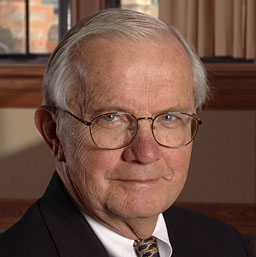
Geoffrey Hazard
Posted by JD Hull at 12:47 AM | Comments (0)
September 21, 2009
Two years ago at WAC?: "How much time will the Deacon give us for discovery?"
Will someone please send one of the law clerks to the Church of the Final Thunder down the street and Shepardize a passage from the Book of Amos? Chapter 3, Verse 4, Jackson 5. This minute--or I'll sack the lot of you.
No comment needed. Our blog and firm have writers of several different faiths and spiritual persuasions--including one lapsed Episcopal-Belfast Protestant with a taste for religious art. But this news item blew us away two years ago. Click on the two links. Do see "Rule 38". We did not make this up:
Bible-based ADR? This one is from David Lat at wonderfully secular Above The Law. WAC? may either begin drinking or attending services again. Maybe both at once. Rule 38 of the Institute for Christian Conciliation is: "Legal or Scriptural Briefs. The arbitrators may request or consider briefs or position papers that set forth the parties' understandings of the legal, factual, or scriptural issues."
Posted by JD Hull at 10:59 PM | Comments (0)
September 18, 2009
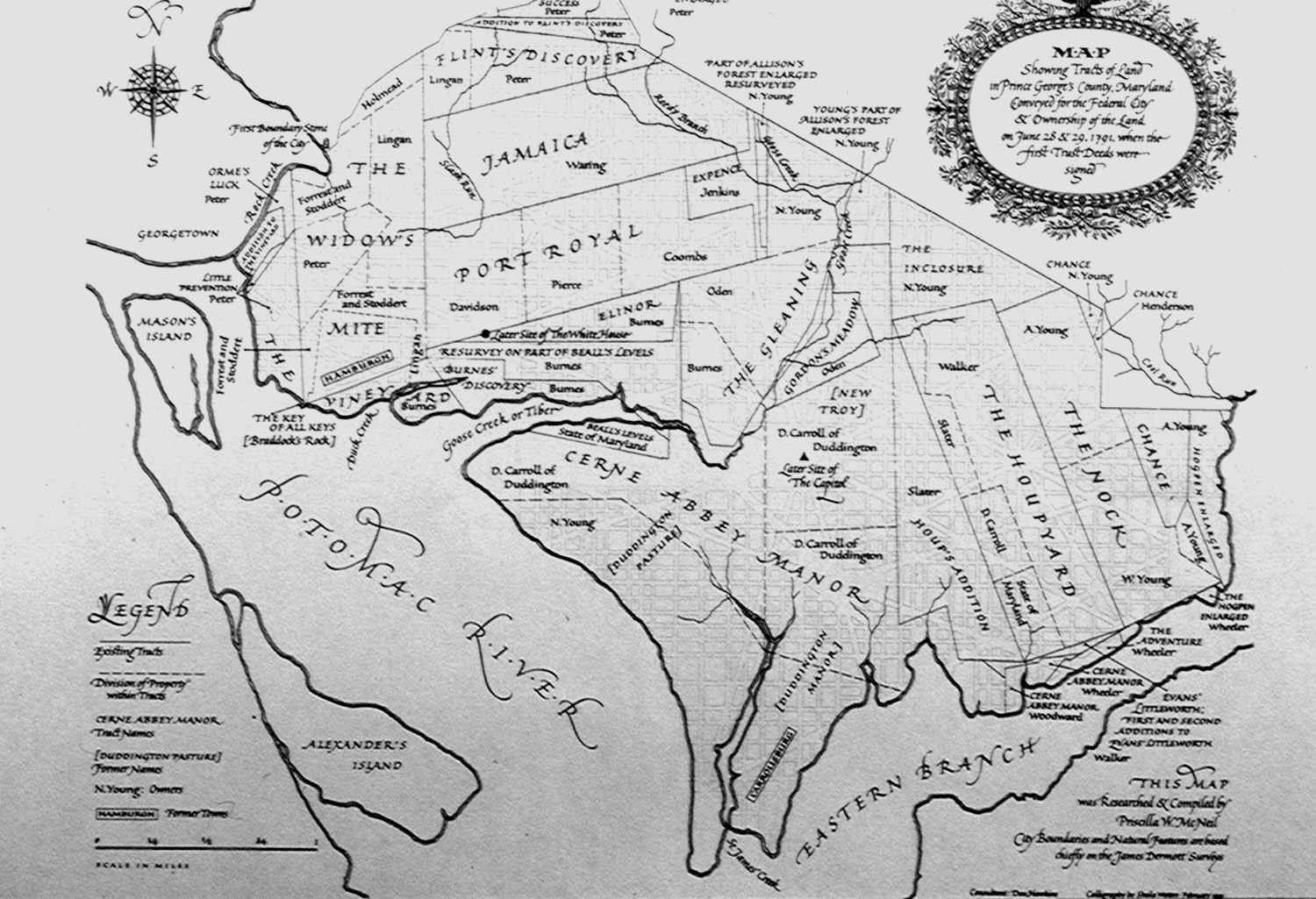
L'Enfant: Build it up on Jenkins Hill.
Law is the ultimate backstage pass. It's the new priesthood.
--John Milton/Satan (Al Pacino), in L’Associé du Diable (1997)
Never merely a technician, a good Washington, D.C. lawyer is a thinker, doer, creator, planner, problem-solver, consiligere and true trusted adviser. And no lover of routine. His or her firm is not just a shop--but a laboratory for new ideas. Not for law cattle practicing cookie-cutter law. You won't meet better lawyers. Or people.
"Aggressive", generally, is a good thing here. "Professionalism" means putting clients first--not wimpy cocktail party civility that is "all about the lawyers" and local bar association.
Lawyers are everywhere here; it's not enough just to be one. No one cares you're lawyer. They ask themselves--and the bolder ones will even ask you directly--this question: how good a lawyer are you really? Pecking order is complex, nuanced and important. Talented and feisty folks choose to move to Washington; they are not "stuck" here, or here by default. The city brims over with energy and personality. A rich library of people with moxie and talent.
Posted by JD Hull at 11:18 PM | Comments (2)
September 09, 2009
Using litigation: Put out the client's lingering fires--permanently. Do that before you respond to the complaint.
Long-term, you're not hired--as outside counsel or a GC--to have a good defense, or a "good case". You are hired to have: (1) no future issue, (2) no investigation (3), no dispute and/or (4) no lawsuit.
The opportunities are endless--for both GCs and outside counsel--and you see them in every dispute filed.
Our former co-writer Holden Oliver wrote a piece in late 2006 we love called "The Art of 'Subsequent Remedial' Advice".
The Point: if you are outside counsel, or even inside counsel, and "do" litigation, you are presented with all manner of improvements and changes a good client can and should make to its operations right away.
Like now.

(The famous Black & Decker Auto Wrench)
Now, before the next order is received, before the next shipment is made, before the next employee termination, before the next disposal of that residual waste from day-to-day operations.
But how many of us--outside counsel, and even GCs in litigation management and oversight--don't say or do anything, or simply put it off, because we think it's not part of our "litigation" job?
Or we think it's a problem we'll mention to the polite transactional and tax lawyers down the hall--the ones the client has used to plan and grow for decades--when and if we get around to it? But we never do take action on it. It becomes a well-meaning "things-to-do" note made in the excitement of the beginning of a fight.
Litigation often hands you the chance to add long-term value immediately--and solve an operations problem before you finish the barest outline of the Answer or Rule 12 Motion.
Examples: Lame or muddy contract language inherited from a predecessor. Confusing or poorly drafted choice of law or ADR provisions, which always seem to get litigated preliminarily in an expensive opening sideshow that delays focus on the merits. Or waste storage or handling methods which "comply"--but just barely--and makes a state or federal agency or private citizen look a little too hard and long at your client's facility next Spring.
My favorite after terms and conditions in contract language is always this: Bad HR practices, or the repeated "un-classy" firing--a termination which is legal but brutal and inartful and will get you sued. You win handily--but fees to obtain summary judgment exceed $100,000.
How handy is that? At what price glory?
Long-term, you're not hired--as outside counsel or a GC--to have a good defense, or a "good case". You are hired to have: (1) no future issue, (2) no investigation (3), no dispute and/or (4) no lawsuit.
The opportunities are endless--for both GCs and outside counsel--and you see them in every dispute filed.
Posted by JD Hull at 11:59 PM | Comments (2)
Litigation: Two Ways of the Trial Notebook.
Originally posted September 8, 2008 from Amsterdam:
From the Amsterdam Airport Schiphol, where there are Old Ones and Young Ones in their dark Monday suits: Men of all ages with shaved heads who look a lot like Moby, in different sizes. Two guys who resemble the late Hunter Thompson, only calmer. And tall trilingual Nordic women, many beautiful, none serene today, with serious faces, clutching open cell phones and tiny red laptops.
All prepare for battle this week in the mostly-down markets of the West.
Grasshopper, when you get back to the States, it's trial time again. ADR, with its frequent moments of sanity, is over. Change gears to U.S. courts. For business trials, or non-business trials, bench or jury, see for starters the outlines for Trial Notebooks, either One or Two, at Evan Schaeffer's Illinois Trial Practice. We like the latter, but please mix and match. Utilize your barely-used brain. Both sides of it.
And be advised. As Tom Hanks, or someone, once said: "There is no boilerplate in baseball". Each client, each problem to solve, each transaction, and each trial: each is wonderfully unique, and Different From The Other, whether your firm does "cookie-cutter" work or not.
(Photo: Warner Bros.)
Posted by JD Hull at 11:50 PM | Comments (0)
August 18, 2009
Litigation: If you bill by the hour, why not bill twice a month?
Billing twice a month keeps the client more attuned in real-time to the actual economic demands of the project--and helps the client plan.
When things get fast and intense, invoice the client twice a month--just ask first. Hopefully, ideas included in this blog benefit both the client and firms. One theme is we can move from goofy "adversarial" (see this blog's first post in August 2005) and one-night stand relationships many lawyers seem have with clients to true partnerships with clients--by doing things the right way for clients we all "like".
Here's one idea that's unusual but effective. I got it from my Pittsburgh partner Julie McGuire, who does transactional work, and it really seems to work for intense or "fast-moving" projects.
If a new or existing client has litigation or a transaction which is particularly intense and time-consuming--especially in the initial stages--depart from your fee agreement or usual practice with that client and at least temporarily invoice the client every two weeks.
Obviously, you should check with the client and get permission; this could be balked at as an administrative burden or misunderstood as an insult if the client isn't on board.
But even a gung-ho sophisticated corporate client or GC you've serviced for years--which is accustomed to seeing over and over again monthly bills for day-to-day work in the, say, $5000 to $10,000 range--experiences a kind of sticker shock when the bill goes suddenly to $20,000, $40,000 or much higher, even if it's only for a short time.
Billing twice a month does two things: (1) keeps the client more attuned in real-time to the actual economic demands of the project (and lets the client plan) and, (2) assuming that the GC or other client rep is seeing work descriptions on bills that show value, effort and the range of things necessary to perform the litigation or deal, the details and intensity of the work are more "present-to-mind", better understood and more fully appreciated.
In other words, the invoice becomes more of a tool to impart a running report on what you and the client are doing together--and a better picture of your real value to the client on that project.
(from past posts)
Posted by JD Hull at 01:49 AM | Comments (0)
August 13, 2009
Litigation: The Miracle, Salvation, and Holy Surprise of Rule 56(f), Fed. R. Civ. P.
(f) When Affidavits Are Unavailable.
If a party opposing the motion shows by affidavit that, for specified reasons, it cannot present facts essential to justify its opposition, the court may:
(1) deny the motion;
(2) order a continuance to enable affidavits to be obtained, depositions to be taken, or other discovery to be undertaken; or
(3) issue any other just order.
Another WAC? Sensitive Litigation Moment. Trial lawyers know that Rule 56 of the Federal Rules of Civil Procedure, or summary judgment, gives a litigant an opportunity to win on its claims or dispose of the opponent's claims relatively quickly and without trial. Accompanied by sworn affidavits, and most often discovery responses, a Rule 56 motion tries to show that there is no real dispute about key facts and that the movant is entitled to judgment under the law.
If the trial court grants it, the movant wins on those claims.
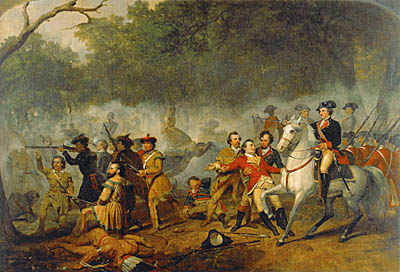
Disruptive as Hell: The "early-in-case" Rule 56 motion (note well-dressed Brit GC after taking a bullet here).
But what if a summary judgment motion is brought against your client--suddenly and out of the blue--and the local rules (or local folkways and practices) of the district court don't give you much time to develop and prepare an opposition. After all, Rule 56 lets a party who has brought a claim file for summary judgment after 20 days, and defendants can file "at any time".
In contentious, high stakes litigation, a quick summary judgment motion right after the commencement of a lawsuit can be extraordinarily disruptive--no matter how it is resolved by the district court. It will fluster even the most battle-hardened-been-there-seen-that GC or in-house counsel.
And it's an expensive little sideshow, too.
Subdivision (f) of Rule 56, "When Affidavits are Unavailable", provides a safeguard against premature grants of SJ. Lots of good lawyers seem either to not know about--or to not use--subdivision (f) of Rule 56.
In short, you file your own motion and affidavit--there are weighty sanctions if you misuse the rule, so be careful--stating affidavits by persons with knowledge needed to oppose the motion are "not available", and stating why.
The district court can then (1) deny the request and make you oppose the motion, (2) refuse to grant the motion for SJ OR do what you really want it to do: (3) grant a continuance so that you can "obtain" affidavits and, better yet, take depositions or conduct other discovery.
Granted, it's a delay-oriented rule, but if used correctly, Rule 56(f) can give you the breathing room and time you need to develop the client's case, and avoid the granting of summary judgment against it.
Note: Some months ago our friend John Day--a Tennessee trial lawyer recently honored by his peers, and a man who thinks it's a privilege to practice law--responded to an earlier and similar post we published, and he made this comment, which we wish we'd written:
Another tactic is promptly serving notices to take appropriate depositions before the Rule 56 response deadline (if you already have enough information to take a good deposition in the case). The opponent almost always objects to the timing of the deposition--and thus you can put the unavailability of a witness and/or counsel in your affidavit while at the same time illustrating your commitment to move the case forward.
A judge may well decline to give more time to gather evidence if no effort has been made to conduct discovery while the case has been pending. This is yet another reason to have a discovery plan in place very early in the litigation (and if you're the plaintiff before suit is filed) and promptly serve written discovery/take depositions/do discovery under Rule 45 [non-party] in a sequence appropriate for that case.
Posted by JD Hull at 11:20 PM | Comments (2)
August 06, 2009
Can "professionalism" be a smokescreen for mediocre lawyering?
"Professionalism"--like good crops, the flag and motherhood--is indeed hard to criticize. It is also tough to define. Is it always good for clients? Or can it even hurt?
It's not about the lawyers anymore. In litigation, and in other contentious projects, does the practice of routinely and without question granting extensions, expanding deadlines, and saying "yes" to an adversary's requests for an accommodation really help clients? Or are such courtesies merely effete and provincial folkways that take the focus off the main event: solving problems for clients? See "Professionalism Revisited: What About the Client?" in San Diego's The Daily Transcript of April 29, 2005. Has anything changed in five years?
Posted by Rob Bodine at 09:04 PM | Comments (0)
August 05, 2009
Speaking and Writing Well: The Overstatement.
If you're wonderfully but spectacularly Irish, like WAC?, and you try cases, you should also take notes here. And then take a year off from work. Just to study your notes and practice your speaking and writing.
Well, maybe take off two or three years. Think of it as an extended rehab for those who chew more than they bite off.
See at The Trial Practice Tips Weblog "The Only Writing Tip That Really Matters", which quotes William Strunk, Jr. and E.B. White's The Elements of Style:
When you overstate, readers will be instantly on guard, and everything that has preceded your overstatement as well as everything that follows it will be suspect in their minds because they have lost confidence in your judgment or your poise.
Blarney Castle, near Cork, Ireland, housing the Stone of Eloquence.
Posted by Rob Bodine at 11:59 PM | Comments (3)
July 30, 2009
Geoffrey Hazard: How U.S. civil litigation is viewed abroad.
If you have European clients, you already know that in-house lawyers across the Atlantic do not like to have their company's commercial disputes heard and decided by American courts (even by our most efficient and respected U.S. district courts). Their reasons, however, turn on more than the obvious and commonly-given ones: lengthy and expensive proceedings, juries hearing civil disputes, and the fear of large damages awards, including punitive damages.
One more reason is the perception abroad of the extraordinary "localism" (generally county-based) of judges and juries in the state systems. Still another is the effect that contingency fee arrangements can have on the litigation process.
There are several more reasons. And every one of them can be troubling to both non-U.S. and American in-house lawyers.
At the podcast series of the International Institute for Conflict Prevention & Resolution (CPR), do not miss the interview by Mike McIlwrath, an in-house lawyer with General Electric in Europe, of Geoffrey C. Hazard, Jr., now at Hastings College of Law in San Francisco, in "American Exceptionalism: U.S. Civil Justice v. the Rest of the World". The July 17 interview is No. 75 in CPR's International Dispute Negotiation series. Hearing the Hazard interview is a "non-billable must" for any American business lawyer (in-house or outside firm) acting for clients in more than one jurisdiction, within or outside of the U.S.
Geoffrey Hazard is a well-known American law professor and author in the areas of civil procedure, federal jurisdiction and ethics. He has also taught law at Boalt, the University of Chicago, Yale, and Penn Law. One of his former students--and his research assistant when Hazard taught at Yale--is U.S. Supreme Court Justice Samuel Alito. Mike McIlwrath is Senior Counsel, Litigation for GE Infrastructure-Oil & Gas, and works out of Florence, Italy. Last year, the IDN series earned both McIlwrath and New York-based CPR an award for ADR excellence from CEDR, an ADR group in London.
Geoffrey Hazard
Posted by JD Hull at 12:30 AM | Comments (3)
July 08, 2009
Motions: Using "Declarations" rather than Affidavits.
The rule is very handy here: Your three resident notaries--Nadine, Crystal and Raphael the Librarian--are in the office every day without fail, together with their notary kits, except the exact few days each year you need them to notarize something.
Not exciting. Just useful. In October of 1976, Congress passed a barely-noticed housekeeping addition to Title 28, the wide-ranging tome inside the U.S. Code governing federal courts, the Justice Department, jurisdiction, venue, procedure and, ultimately, virtually all types of evidence. 28 U.S.C. Section 1746 is curiously entitled "Unsworn declarations under penalty of perjury".
It allows a federal court affiant or witness to prepare and execute a "declaration"--in lieu of a conventional affidavit--and do that without appearing before a notary. Under Section 1746, the declaration has the same force and effect of a notarized affidavit. Read the 160 word provision--but in most cases it's simple. At a minimum, the witness at the conclusion of her statement needs to do this:
"I declare (or certify, verify, or state) under penalty of perjury that the foregoing is true and correct. Executed on (date). (Signature)”.
A "unsworn" declaration with the oath required by section 1746 can be used almost any time you need an affidavit, e.g., an affidavit supporting (or opposing) a summary judgment motion.
Many lawyers who practice in federal courts don't know about the existence of Section 1746, (probably because so many of us practice primarily in state courts, and we stick to comfortable state practices and folkways). I wouldn't have known about it either; a Justice Department lawyer clued me in on it 15 years ago.
Federal judges understand and accept it. It saves clients, witnesses and lawyers the time, cost and aggravation of getting client statements notarized. Your three notaries--Nadine, Crystal and Raphael the Librarian, together with their notary kits--are in the office like clockwork, except, of course, the very days you need to have them witness and notarize a document. So it's a useful and convenient provision. Not exciting--but it is one of the few efficient, and reliable, moments anyone sees in the trial process.
Posted by JD Hull at 12:16 AM | Comments (4)
June 23, 2009
Hello. City Desk? Get me rewrite, doll. This is Juror No. 8.

And stop the presses. Here's something you don't see every day--but then you wonder why more jurors aren't taken to task for texting, tweeting, phoning, blogging and otherwise messaging. Milwaukee's Anne Reed at Deliberations has this one from March we almost missed, and there's nothing stale about it: "The Fourth Circuit And The Juror Who Called The Press". And see U.S. v. Basham, the Fourth Circuit's March 30 opinion reviewing claims of errors in the grisly 2004 murder trial of a defendant sentenced to death.
It starts out when a producer from a Greenville, South Carolina television station contacted the district court judge right after the verdict came; he told the judge that during deliberations a juror had called to inquire why the station was not reporting on the trial, and to offer a few observations on the proceeding. No big deal, maybe, right? But then, as Anne Reed notes:
When the phone records came out, there was even more. "Wilson [the jury foreperson] made a six-minute call to WSPA, two one-minute calls and a four-minute call to WHNS Asheville, a two-minute call to WYFF in Greenville, a two-minute call to the Greenville News, and a one-minute call to the Spartanburg Herald. These latter two calls to newspapers had not been reported by Wilson during her initial testimony."
And more: "seventy-one calls between her and two other jurors from September through October 2004," including calls on days of critical testimony.
Read Anne's post to learn the Fourth Circuit's take on the foreperson's misconduct, and whether a new trial was warranted.
Posted by Rob Bodine at 11:59 PM | Comments (0)
June 09, 2009
Supreme Court's Massey Coal recusal decision: 5-4
Is that an elected state judge in your pocket? Or are you just happy to see me?
Quick and dirty re: elected state judges and campaign money. We've followed and written a lot on this U.S. Supreme Court case about an elected state supreme court judge and campaign money recipient who failed to disqualify himself in arguably suspect circumstances. The Court ruled on Monday that a West Virginia judge should indeed have disqualified himself from hearing an appeal of a $50 million jury verdict against an a coal company because its CEO had been a major campaign donor. WAC? thinks that the popular election of state judges--permitted in some aspect in a clear majority of the states--give the appearance of justice being "for sale". Elected judges can be especially for "bad" for good clients who do business all over the U.S. and the world.
And, of course, for business defendants who have no substantial ties to a state forum, and no jurisdictional recourse to a federal court. We are genuinely concerned about the issue--and often write about it with a mix of frustration and optimism. We simply believe that state systems that select judges via popular elections are something America outgrew over a century ago--and that such regimes, in the states that have them, set a bad example for the rest of the world. Although WAC? likes the result in Massey Coal, we're a bit surprised the vote was 5-4 to require recusal of the judge in question. More when we can get to it. In the meantime, see the Slip Opinion in the June 8 decision in Caperton v. Massey Coal, Inc. See also WSJ Law Blog, which cheered us up in yesterday's "Massey Coal Ruling Getting Thumbs Up in Judicial Circles".
Posted by JD Hull at 11:59 PM | Comments (2)
June 02, 2009
Jurywork
Don't tell me the moon is shining; show me the glint of light on broken glass.
--Anton Chekhov (1860-1904)
Posted by JD Hull at 12:59 AM | Comments (0)
June 01, 2009
Part II--"Wartime Consigliere": Bunnies with JDs are nice but...
A Warrior knows how to make peace. A Scared Bunny will never know how to win a war.
--Scott Greenfield. Trial Lawyer. Philosopher. Planner. Aggressive Human. [upper case in mid-sentence by WAC? for emphasis]
"Worse still, a scared bunny will do everything in his power to avoid a war." Bunny GCs and Bunny outside lawyers, if you think about it, may be in the majority.
That's okay. Not every lawyer needs to be a take-charge, overbearing, fire-breathing litigator. Or a "mean person" who is demanding and aggressive, God forbid. But you do need a couple of nasty folks like that in your camp.
Lawyers. Most of us like puppy dog tails, canned jokes that only CPAs and bank employees would laugh at, "Lassie" movies, Sweetness, Light and Get-a-Life conferences during a Recession.
(Note: I can't get over the ugly and embarrassing reality of such a gathering. If anyone said I had attended--even in jest--I would hire a certain lawyer at a Cleveland-based DC shop and sue for defamation, and under the Lanham Act, in a heartbeat. How about a "Get-a-Pair" conference?)
And we are a reasonably intelligent, gentle folk. We don't raise our voices. Are risk-averse. Don't like to run things. Don't market. Don't yell, swear or bully. Tom Hagen was a "nice" guy. (And worthless except for that fun LA horse head thing; you can have him.)
And we are "nice guys" not because we are "moral" or "professional" or "deliberate" or "smart"--that's all a crock. It's because we just don't like violence. It's so, well, icky. Not in our nature. Most of us don't fight. Even for clients--and I see this every day. We are lawyer-centric. Club Dweeb. The Bunny Bund. Face it.
But you DO want a few non-Bunnies around you and yours, occupying certain positions of trust and importance in your company, or law firms. Yes. You do. Trust us.
So be extra nice to a few mean people today. See this one at Simple Justice: "A Wartime Consigliere".

A Hagen Bunny at work: "Hey, can't we just keep talking?"
Posted by JD Hull at 11:55 PM | Comments (0)
Yes--and your GC should be a "Wartime Consigliere".
The Wrong Stuff: Thomas "Tom" Feargal Hagen (Paramount Pictures)
It's not a Godfather thing, not a macho thing, not a litigation thing. It's just a business fact, especially in changing industries. And especially now. General Counsel at corporations do make a difference:
1. She should be broad-gauged, intellectual, take-charge, organized, preventive, resourceful--and War-like at heart.
2. Hates war as expensive--but likes and even revels in a fight.
3. Tells management what to do--and not a tentative, qualified "what you can do".
At his well-regarded Law Department Management, Rees Morrison, by far one of the smarter, sager and more experienced lawyer-consultants out there, just asked "Does a General Counsel Make All That Much Difference?" Our two cents is in the WAC? post title above. The right GC? Get thee a philosopher-warrior. Be safe and feel safe, friends.
Morrison goes a bit farther, inspired in part by this month's Atlantic piece "Do CEOs Matter?, by Harris Collingwood. See also our short recent post, "Proctor & Gamble's Lafley: Look to the meaningful outside", on CEO A.G. Lafley's recent thoughts about CEO uniqueness in May's Harvard Business Review.
Morrison excerpt:
Other researchers have found that CEO leadership matters relatively less in constrained industries, such as electrical utility industries, than in hotly competitive, fast-changing industries.
A similar conclusion probably applies to general counsel: legal/business calls are tougher and more frequent in roiling industries so the top lawyer has more opportunity to make a difference.
Expert on The Right Stuff: Rees Morrison
Posted by JD Hull at 12:20 AM | Comments (1)
May 27, 2009
But, Olympia, is there an even better qualified "Not-Woman"?
Sen. Olympia Snowe, R-Maine, a moderate Republican, congratulated Obama for "nominating a well qualified woman."
WSJ: "Senate GOP Reaction Guarded To Sotomayor High Court Pick". We like Olympia Snowe a lot--and remember her as a 31-year-old freshman Representative in the Longworth Building: smart, earnest and attractive, and so young-looking she often was mistaken for staff. She's come far. WAC? likes her ideas. We'd like her ideas if she were a Man. Or a Gazelle. Or a Chipmunk. But, assuming she is trying to be supportive, and not just hedging her bets for the press, surely she can do better than the above. Update: More Sotomayor at Legal Blog Watch. She's everywhere.

Olympia Jean Bouchles Snowe, circa 1985
Posted by JD Hull at 12:50 AM | Comments (0)
May 19, 2009
Discovery: The Miracle of Rule 56(f), Fed. R. Civ. P.
(f) When Affidavits Are Unavailable.
If a party opposing the motion shows by affidavit that, for specified reasons, it cannot present facts essential to justify its opposition, the court may:
(1) deny the motion;
(2) order a continuance to enable affidavits to be obtained, depositions to be taken, or other discovery to be undertaken; or
(3) issue any other just order.
Trial lawyers know that Rule 56 of the Federal Rules of Civil Procedure, or summary judgment, gives a litigant an opportunity to win on its claims or dispose of the opponent's claims relatively quickly and without trial. Accompanied by sworn affidavits and often discovery responses, a Rule 56 motion tries to show that there is no real dispute about key facts and that the movant is entitled to judgment under the law. If granted, the movant wins.
Disruptive: The "early-in-case" Rule 56 motion.
But what if a summary judgment motion is brought against your client--suddenly and out of the blue--and the local rules (or local folkways and practices) of the district court don't give you much time to develop and prepare an opposition. After all, Rule 56 lets a party who has brought a claim file for summary judgment after 20 days, and defendants can file "at any time". In contentious, high stakes litigation, a quick summary judgment motion right after the commencement of a lawsuit can be extraordinarily disruptive.
It will fluster even the most battle-hardened been-there seen-that GC or in-house counsel.
Subdivision (f) of Rule 56, "When Affidavits are Unavailable", provides a safeguard against premature grants of SJ. Lots of good lawyers seem either to not know about, or to not use, subdivision (f) of Rule 56.
In short, you file your own motion and affidavit--there are weighty sanctions if you misuse the rule, so be careful--stating affidavits by persons with knowledge needed to oppose the motion are "not available", and stating why. The district court can then (1) deny the request and make you oppose the motion, (2) refuse to grant the motion for SJ OR do what you really want it to do: (3) grant a continuance so that you can "obtain" affidavits and, better yet, take depositions or conduct other discovery. It's a delay-oriented rule, but if used correctly, Rule 56(f) can give you the breathing room and time you need to develop the client's case, and avoid the granting of SJ against it.
Note: During the course of today, John Day, Tennessee trial lawyer, and a man who--just like me--thinks it's a real privilege to practice law, has been just a few blocks from both my old D.C. work and residence neighborhoods, with a hotel about two blocks from our current D.C. office. Some months ago, responding to an earlier post very similar to this one, John made this fine comment, which I wish I had written:
Another tactic is promptly serving notices to take appropriate depositions before the Rule 56 response deadline (if you already have enough information to take a good deposition in the case). The opponent almost always objects to the timing of the deposition - and thus you can put the unavailability of a witness and / or counsel in your affidavit while at the same time illustrating your commitment to move the case forward.
A judge may well decline to give more time to gather evidence if no effort has been made to conduct discovery while the case has been pending. This is yet another reason to have a discovery plan in place very early in the litigation (and if you're the plaintiff before suit is filed) and promptly serve written discovery / take depositions / do discovery under Rule 45 in a sequence appropriate for that case.
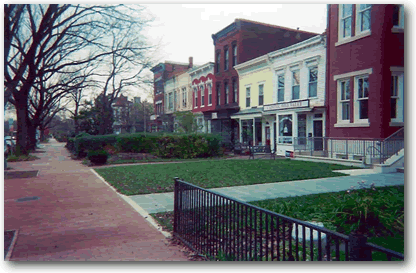
East Capitol Street: Beloved former WAC? "living area", about four blocks from SCOTUS.
Posted by JD Hull at 11:11 PM | Comments (0)
May 01, 2009
Spring Break: Justice Souter exits in June.
A judge's judge heads back to New Hampshire. So says the NYT and 850 other sources. WAC?'s three best bets for replacement: Yale's Harold Koh, Massachusetts Governor Deval Patrick, and 7th Circuit Judge Diane Wood--all youngsters under 55, and each for very different Barack Obama reasons. But we are wrong a lot.
Posted by JD Hull at 11:59 PM | Comments (0)
April 29, 2009
To jurors, do your associates and paralegals seem like stone creeps?

Juries are not dumb and miss little. Jurors watch you and yours in the courtroom, the back of the courtroom, hallways, restrooms, parking lots, restaurants. Whether or not you think the people you bring to trial with you are capable of looking or acting like stone "creeps" at any moment during the roller-coaster ride of a trial, explain to these men and women in advance the importance of "maintaining" a demeanor which appears professional yet likable, amiable, fair and genuinely good-hearted.
Jurors, of course, will always surprise you.
No matter what an expert might tell you, or how hard you've worked at selection, you are always wrong about two or three of them. You've heard that.
Creep Control. Now hear this: don't go out of your way to antagonize jurors with sideshows which have nothing to do with the trial itself. Bring no "creeps" with you to trial. Keep them in the office. If they must show up--even for a moment--teach them to "un-creep" themselves, starting at 60 second intervals, and practicing until they can hold out for five minutes at a stretch. Hint: They pretend they are happy confident people who genuinely like other humans. Breathe in. Breathe out. Repeat. And remember, you seek progress--not perfection. Be gentle at first.
Non-Creeps--and Recovering Creeps Who Under Pressure of Trial May Relapse in Public. Bring to trial no "non-creeps" capable of any snide, "mean" or creepy gesture, facial expression or body language glitch lasting more than one half-second. Instruct your non-creeps to read this post to be on the safe side. Reformed creeps--you spotted them early and sent them to rehab but they are ultimately powerless over they way they look or act--need pep talks, and brief courtroom appearances. See above.
A Note on Nerds. In doses, however, a few generic dweebs and law weenies running in and out of the courtroom carrying a huge box of documents, a phone message from your wife about Nantucket next summer with the Bloors, a good luck note from your mistress, your lucky bow-tie, your spats, your black cape with red lining, or your reserve pair of Bass Weejuns--the kind of people you routinely made fun of in high school--is okay. Jurors expect that. You're a lawyer. You live in a world where nerds are almost normal. Jurors get and tolerate that.
But jurors don't like self-important "assisting creeps". That's personal.
Let us explain more.
In 1997, after a two-and-a-half week trial, we won a jury defense verdict in a breach of contract and fraud trial involving three established companies and a super-nail biter which no one could call. Everyone had "bad" facts to deal with. All counsel and most witnesses did a fine job. An honest, fair, bright and even-tempered judge presided.
So we interviewed some jurors right after the trial--and were told by all but one of them that they were seriously annoyed by some of the sneers, body language, guffaws and antics of the fire-breathing "let's kick some ass" associates and paralegals in the firms helping the plaintiff and the co-defendant in and out of the courtroom. This seemed to happen a lot with two younger lawyers (I knew them both--nice people, usually...) in the same firm who sat together in the court room smirking and cockily approaching counsel's table bearing a note or message with an attitude that said: "take that" and "your sufferings will be legendary, chumps"--that kind of thing.
Harmless macho stuff--just a bit higher-pitched than the usual young lawyer nerd-dweeb-weenie style.
And in our interviews, some of the jurors used words like "creeps", "jerks" and worse to describe these people. The law firm's culprits were just over-jazzed, over-confident, over-macho and young (and they lost.) But their behavior, even subtle things, may have tipped the balance.
Don't screw up hard work and a client's chances at trial with mean-spirited sideshows confirming what many jurors thought about many lawyers anyway. Jurors are watching you, your attending GC, client representative and/or your witnesses AND your associates and paralegals like hawks: in and out of session, in the halls, in the back of the courtroom, restrooms, parking lots, restaurants. Very little is missed.
Whether or not you think your trial people (men or women) are capable of looking or acting like "creeps" and robots of war at any moment during the roller-coaster ride of a trial, explain to them in advance the importance of "maintaining" a demeanor which appears professional yet fair, friendly, amiable and genuinely good-hearted. Better yet, hire only those people to help you present your case to a jury.
From a Dan Hull piece WAC? published in 2007.
Posted by Holden Oliver (Kitzbühel Desk) at 12:40 AM | Comments (0)
April 20, 2009
Discovery: Who to depose, and how to get ready.
It’s supposed to be hard. That’s what makes baseball great.
--Tom Hanks, in a movie.
Even for "minimalists", intelligent discovery in a complex business case is hard, especially in its early stages, where you may be working a bit in the dark in the first few depositions. You need planning--which trial lawyers do not always love (planning is distasteful to us, like reading the directions, or inspecting a rental car)--and not just great instincts. For that reason, we liked this two-part article by Chicago's Stewart Weltman when it came out last year: "Deciding Who To Depose", Part I and Part II. For early case discovery, see this short WAC? piece: "Informal discovery: save time, save money, get better results". How do you make each of the first few depositions a fact-finding and case-building triumph? And accomplish that without "feeding the monster"? Even when things go well, litigation is expensive and disruptive in unexpected ways.

Hey. Wait a second. Do we even need to take this deposition?
Posted by JD Hull at 11:59 PM | Comments (0)
April 06, 2009
Pre-trial.
Caravaggio's The Cardsharps (c. 1594)
Posted by Holden Oliver (Kitzbühel Desk) at 11:59 PM | Comments (0)
March 30, 2009
Redux: Lawyering and Overstatement.
Going with Fergus. Here's something you can use, starting today. If you're spectacularly Irish--you guys know who you are--you should also take notes. Then take a year off work just to practice. See at The Trial Practice Tips Weblog "The Only Writing Tip That Really Matters", which quotes William Strunk, Jr. and E.B. White's The Elements of Style:
When you overstate, readers will be instantly on guard, and everything that has preceded your overstatement as well as everything that follows it will be suspect in their minds because they have lost confidence in your judgment or your poise.

Blarney Castle, near Cork, Ireland, housing the Stone of Eloquence.
Posted by Holden Oliver (Kitzbühel Desk) at 07:21 PM | Comments (0)
March 04, 2009
Massey Coal due process-recusal case argued.
Fourteenth Amendment--Due Process Clause--Popularly Elected Judges--$3 Million Campaign Contributions--Overturned $50 Million Verdicts--That Recusal Thing. Caperton v. A.T. Massey Coal Company, Inc. (08-22) was argued before the Supreme Court yesterday. We're on pins, needles and West Virgina wheedles. Via Lyle Denniston at SCOTUS Blog the transcript is here.
Posted by JD Hull at 12:00 AM | Comments (0)
March 03, 2009
Pretrial stage management: The Art of Creep Control.
See Anne Reed's "Looks Can Kill" and our past post "To jurors, do your trial associates and paralegals seem like creeps?*"
Let's face it. Lots of people in law firms, and some of their witnesses at trial, look like stone "creeps". Many of us in the profession are not attractive to begin with--and some of us seem shifty just reading names out of a phone book. A lot of younger lawyers--young males especially, for reasons which are hard to know--seem like hateful, vindictive, sneaky and rat-faced twerps and cretins every second you look at them. They can't help it. Worse, they don't know even know it. No one will tell them (I will, and have, though.)
Juries pick up on and see all of this. Over the period of a two or three week trial, they will miss nothing about anyone at his or her worst. So (a) don't be a creep, (b) don't bring creeps with you, and (c) if you must have creeps as witnesses or help, dress them up and instruct them on how to "un-creep" themselves.
Posted by JD Hull at 11:59 PM | Comments (2)
February 24, 2009
Getting to "cross-culture consensus" in international disputes.
The panel will kindly note she's had several seconds to answer. Nothing further. And I will sit down. In international arbitration and mediation, first-language barriers can be the least of the challenges for your client. Consider, too, subtleties like the meaning of the "delayed answer" to a question. In one culture, delay means hesitancy and evasiveness (e.g., to most Westerners); in another, it may denote careful consideration of the question, and a sign of respect to the questioner.
In IDN No. 61, GE's in-house counsel Mike McIlwrath interviews Australian mediator Joanna Kalowski for the second time (see IDN No. 44). Kalowski, who works out of both Australia and Paris, shares how she became a mediator and lessons that come directly from her work. Kalowski has also trained mediators in Australia, New Zealand, India, Singapore, Italy, Thailand and Hong Kong.
Their 25-minute discussion, "Public Consensus Across Cultures", just taped on February 13, is part of McIlwrath's award-winning interview series on International Dispute Negotiation sponsored by the International Institute for Conflict Prevention & Resolution, or CPR.
Posted by JD Hull at 11:59 PM | Comments (0)
Is that an elected state judge in your pocket?
Or you just hugely happy? In The National Law Journal by Marcia Coyle: "Study finds strong relationship between campaign contributions and decisions by state Supreme Court judges". Who would have thought it? You'll see lots of coverage on this issue as the time nears for U.S. Supreme Court to hear arguments in the Massey Coal case on March 3.
Posted by Holden Oliver (Kitzbühel Desk) at 03:59 PM | Comments (2)
February 18, 2009
You think?
It would be personally and judicially disrespectful to the United States Supreme Court and its justices for me to proceed in this or any other matter involving Massey.
--West Virginia Chief Justice Brent Benjamin
Okay, be hard on yourself, if you must. We almost missed this one on an issue that interests us, and should interest you, too. Especially if, like us, you'd rather spend your time reading the five cases cited in your brief than picking out a really boss Mickey Mouse tie on the morning of your next appearance before a popularly elected state court jurist. The Associated Press reported on February 2 that "West Virginia Justice Bows Out Of Massey Cases Amid Scrutiny".
Apparently, Brent Benjamin's memo announcing the "bowing out" was dated January 30, 2009. In mid-November of last year, the U.S. Supreme Court granted certiorari on whether Benjamin's past refusal to recuse himself from a Massey case, after Massey's CEO had contributed $3 million to Benjamin's successful election campaign in 2004, violated the Due Process Clause of the Fourteenth Amendment. In that West Virginia case, Benjamin had voted with the majority to overturn a $50 million jury verdict against Massey. Reform, anyone?
Posted by Holden Oliver (Kitzbühel Desk) at 11:35 PM | Comments (0)
February 16, 2009
Pre-trial
Paul Cezanne, Les joueurs de carte, 1890-1892
Posted by JD Hull at 01:10 AM | Comments (0)
February 14, 2009
Charon QC's Podcast 100: Lawyers, Yanks and Banks.
But who's interviewing whom? London's Charon QC does his 100th Podcast, interviewing WAC?, an annoying Type-A morning person who interrupts for sport, in their third talk together. One subject nervously covered was Britain's GeekLawyer. The very idea of next month's sequel to the barrister's Blawg Review#166 has entire Midwestern U.S. communities shuddering, carrying small crosses, and keeping garlic at work. GL is said to be in Canada, and poised for U.S. entry.

Posted by Holden Oliver (Kitzbühel Desk) at 12:33 AM | Comments (0)
February 10, 2009
The one-stop e-Discovery shop?
Cases are won or lost at trial on discovery. So in between projects we've had an eye out for a "one-stop" e-discovery resource for business and law. You know, something competent, vigilant and complete perched out there in all the digital clutter? See Gabe’s Guide to the e-Discovery Universe, started in March 2008. This may be it--we are not sure yet--if it can cover and link to: (1) developments in the discovery and e-discovery rules, (2) new cases under Rules 26, 34 and 37, and (3) the better e-discovery sites popping up at the larger firms (some of which are excellent). Not easy but we'd love D.C.'s Gabe Acevedo to try. Gabe's Guide now includes as topics Discovery News, Second Requests in M&A, Foreign Corrupt Practice Act, Subprime Litigation, Technology, and Outsourcing and Offshoring.
Posted by JD Hull at 10:24 PM | Comments (1)
February 02, 2009
Brit King of Media interviews California ADR Vixen.
Howard, Oprah and now Charon QC. Mayfair's playful pundit. London's Charlie Rose. Albion's first Rioja Ranger. Charon (pronounced "Karen") just aired podcast No. 94, an interview with famous West Coast ADR princess Vicki Pynchon. Yanks who listened were pleased and grateful that Ms. Pynchon, who lives near Malibu, minimized expressions like "totally", "most heinous" and "some really tasty waves, dude".
Posted by JD Hull at 10:07 AM | Comments (0)
January 31, 2009
The Real Paris
Lots of large international cities have mimes, street people and street theater. But if you live for a long while in DC or Paris, and then you move, you sense something special is missing. You don't know what. One day you're at lunch and you think: "Wait a minute. There's not even one demonstration every day in downtown Louisville?" See at ParisDailyPhoto "Capitalism: The French Nightmare" via The Paris Blog. Eric of ParisDailyPhoto writes:
There were several big demonstrations in France today and the largest one, as always, took place in Paris. It ended up at the Opera house where I took this photo. I thought it was pretty funny to take an anti-capitalist billboard in front of two shiny adverts for Rolex and Commerzbank in the background! FYI, the billboard roughly says: 'Unrestricted capitalism equals people in danger'.
That's what I'm talking about.

ParisDailyPhoto
Posted by JD Hull at 11:59 PM | Comments (2)
January 30, 2009
Nino Does Duke.
But can he do that reverse pretzel thing? Alumni and students alike speak of "The Duke Experience" in reverent and hushed tones. And Justice Scalia, whether you love him or not, has Moxie. So can we get that smooth little genius to do a pole dance in downtown Durham over at the Re-Lax Parlor? When I lived all those years on East Capitol, Scalia and I used to pass each other on The Mall while jogging. He stays in pretty good shape. See Duke Daily Chronicle: "Justice Scalia Pays Visit to School of Law". Excerpt:
Scalia responded with humor to one question concerning the free speech of exotic dancing.
"I like it," he joked, adding that it does not fall under the protection of the First Amendment. "I draw a line there, I don't think that means communication."

Posted by JD Hull at 11:08 PM | Comments (0)
January 22, 2009
Cross-cultural mediation: "Don't have a list of do's and don't's."
At the award-winning podcast series sponsored by the International Institute for Conflict Prevention & Resolution (CPR), hear General Electric in-house lawyer Mike McIlwrath interview mediator and author Jenny Beer, who over 25 years ago co-authored the cross-discipline guide, The Mediator's Handbook. The topic: "Setting up the Cross-Cultural Mediation". Negotiators, Beer says, "need a mindset--not a list.” This is program 56 in CPR's International Dispute Negotiation series. The January 9 interview with Beers is here, and follows a longer interview McIlwrath conducted of Beer in September 2008. Based in Florence, Italy, McIlwrath is Senior Counsel, Litigation for GE Infrastructure-Oil & Gas.
Posted by Holden Oliver (Kitzbühel Desk) at 03:04 AM | Comments (1)
January 20, 2009
Discovery: A deposition should get the "badness" out there.
There is a reason why it is called discovery.
This is the time to invite the other side's witnesses to tell you everything they possibly can about why your side should lose. Revel in these "bad" answers - don't cringe. Draw them out and blossom them as fully as the witness is willing to go. Make sure that you carefully dissect every part or premise of a "bad" answer...
From a Stewart Weltman gem: "The Two Most Important Questions to Ask During A Discovery Deposition-Part I".
Drawing a bead: Badness needs to get out in the open.
(Photo TriStar Pictures)
Posted by JD Hull at 08:59 PM | Comments (0)
January 19, 2009
Popular election of state judges in America: are we done yet?
For watchers of American state judiciary systems, on Tuesday, March 3, the U.S. Supreme Court will hear arguments in Caperton v. A.T. Massey Coal Co. (No. 08-22). See summary and list of amicus briefs in West Virginia Business Litigation.
Posted by Holden Oliver (Kitzbühel Desk) at 12:07 AM | Comments (2)
January 15, 2009
Next time: turn off the lights, be very quiet, and lie on the floor.
In other words, pretend it's Halloween at WAC?'s house. See Rule 4 and then "Dropping A Summons And Complaint Outside A Door Makes Good Service" by trial lawyer-author J. Craig Williams at his May It Please the Court. This Ninth Circuit case may be limited to its colorful yet hardly shocking facts. WAC? is experiencing profound paramnesia here. Williams writes:
The process server attempted to serve Brenneke four times, leaving notes and asking Brenneke to contact the process server. On the process server's fifth and last trip to Brenneke's house, Brenneke hid in his house, refusing to answer the door when the process server knocked....
Brenneke responded to the door intercom and acknowledged he was at home, and even looked out a front window at the process server.
Still he failed to answer the door.
Frustrated, the process server held up the summons and complaint to show Brenneke, and said, "You are served."

Posted by Holden Oliver (Kitzbühel Desk) at 12:55 AM | Comments (0)
January 13, 2009
Exotic jurors: the ample, the deaf, the nasty.
Incontinent jurors are different than you and me, Ernestine. Lots of weird jury lore out there this week. The facts range from socially uncomfortable to spectacularly unsavory. Where will it end?
First, Milwaukee's Anne Reed wrote about jurors who are Powerless over Twinkies.
Next, at Simple Justice, our anti-PC comrade Scott Greenfield of New York City writes about "The Politically Correct Jury", inspired by a tragic Ohio drowning case in which a homicide conviction was recently set aside. Reason: a hearing-impaired juror couldn't pick up vocal subtleties in a 911 tape of the defendant, a key bit of evidence. Nor could the Ohio trial court have expected that of her. Greenfield:
What bone in their head compelled a judge to allow a hearing-disabled person to sit on a jury? It's the same bone that allows blind people, non-English speaking, non-fluent-English speaking, incontinent, people with attention deficit with or without hyperactivity, and a variety of others to sit on a jury. It's the bone that makes them believe that pigs may indeed be capable of flight and people should not be defined by their challenges in every situation.
I abhor discrimination against people who are disabled. But I similarly recognize that there is a reason why they are called disabilities. There are some things that they cannot do well. It's not their fault, and they should not suffer for being disabled. But they similarly should not be placed in situations where their disabilities preclude their ability to perform a function adequately.
Finally, at ALM's Legal Blog Watch, Boston's Bob Ambrogi, who could probably write a successful and critically-acclaimed novel, gives us "The Case of the Stinky Juror". It begins with his usual spare prose: "Something smelled fishy in the courtroom of Massachusetts Superior Court Judge Nancy Staffier-Holtz." And: "The smell pierced through even into the judge's lobby." Dang. Air Wicks, maybe? At least for federal courts?
Query: Just how do you cover this stuff at the Trial Practice course you're giving over at old Siwash?
Blue-ribbon juror in many U.S. jurisdictions.
(Photo: NYC's Scott Greenfield in formal "high-prole" federal court garb, readying for voir dire in Missouri.)
Posted by Holden Oliver (Kitzbühel Desk) at 07:10 PM | Comments (2)
January 12, 2009
Hey there, Nadine, pull up a couch and talk a spell.
Don't let anybody tell you that you never want overweight jurors, or that you always want them -- or that you never or always want any other group. It just isn't true.
Wait a minute. Fat people aren't jolly after all? WAC? was beginning to think that heavy-set people, Gen Ys and work-life balance devotees may all be quasi-suspect classes requiring intermediate scrutiny under Fourteenth Amendment. Well, we checked this morning and it hasn't happened yet. But what about overweight people as jurors? We kind of like them on juries for defendants: to cut you some slack on petroleum spills, PCB contamination and the occasional insider-trading felony murder. But maybe we were wrong. See "Overweight Jurors Are..." at Anne Reed's always-challenging ("You-sure-about-that-one, Justin?") Deliberations, one of the few sites trial lawyers really need.
Juror Numbers 8 and 9, during a break.
(Above: Lucian Freud's "Benefits Supervisor Sleeping")
Posted by Holden Oliver (Kitzbühel Desk) at 11:59 PM | Comments (1)
December 14, 2008
Depositions: Leading questions under Fed. R. Civ. P. 30.
Trial lawyer-writer Evan Schaeffer is always worth reading. See Rule 30 and then read "When Are Leading Questions Permitted During Federal Court Depositions?" at his Trial Practice Tips Weblog. Schaeffer is right to remind us: the starting point for lawyers who notice depositions is a direct exam (therefore no leading questions). He notes, and we emphasize: most witnesses in depositions, especially for discovery, are adverse, or "hostile". So lead them. Use shorter, more "loaded" questions. Just know what you're doing, and why.
Posted by JD Hull at 11:15 PM | Comments (0)
December 11, 2008
The Recession: Litigation, litigation, litigation--but different this time.
Let's indulge in a few law markets stereotypes.
Good times = expansion and deals. Bad times = smaller pies and lawsuits. Generally, it's true. But expect something different all over the world in the next few years: arbitration. The world's recent financial calamities likely gave ADR (alternative dispute resolution) a huge boost.
However, I've never bought the idea that ADR generally is "faster, cheaper and better..." than court litigation to hear and decide disputes between corporate clients. Faster? Maybe, if you work at it. Cheaper? Maybe, if you work at it. Better result? Maybe, and only if the arbitrator is not afraid to apply the law, and not wimp out and merely "split the baby". The "WAF"--Wimpy (or Wanker, in UK) Arbitrator Factor--favors the company with the weaker case.*
But arbitration does hold the promises of its promotional cliches. You have to work hard for them, though.
ADR's main advantages? For WAC?, there are just two. Only two--so don't buy or drink the promotional Kool-Aid unless you have nothing better to do. First, ADR allows non-U.S. litigants who are parties to deals with ADR clauses to avoid U.S. courts, which are dreaded due to perceived inefficiencies, delays, surprises and unexpected expense, and the very real possibility of awakening The Yankee Vampire: big jury verdicts with punitive damages.
Second, and more importantly, ADR lets litigants select their own judge or panel of judges. You can often find more skillful, expert and efficient deciders than the government's jurists (i.e., state court judges in America) to hear and decide your dispute. In ADR, those panelists are everything. GCs and their law firms should spend time, money and brainpower selecting them.

Raphael's "The Judgment of Solomon"
*Practice Tip: Your client has the weaker case? If after your firm's best case development you are stuck with really bad facts and/or bad law--and you can't get back to a court with a jury--consider identifying wimps/wankers on the Arbitrator List, and manipulating opponents into picking the "least objectionable wimp" for your client.
Posted by JD Hull at 11:59 PM | Comments (1)
December 08, 2008
The President-elect is likely "eligible" and can still take the oath.
The U.S. Supreme Court denied a petition to hear a claim that Barack Obama might, in effect, be 'part Brit', had dual nationality at birth, and is therefore not exclusively a "natural born" U.S. citizen "eligible to the office of President" under Article II, Section I of the Constitution. See AP, and SCOTUS and WSJ blogs. A stay application was filed in Donofrio v. Wells, Secretary of State of New Jersey (08A407). The Court sought no response to the petition, and gave no reasons for denial.
Posted by Holden Oliver (Kitzbühel Desk) at 12:53 AM | Comments (1)
November 28, 2008
Depositions: Getting documents with F.R.E. 612.
"So, Mr. Bloor, just before coming in here today, what did you read, or even just skim?" Often the best documents--and certainly often the most interesting ones--are documents that are not produced before or during a deposition, like handwritten records that even opposing counsel doesn't know about. F.R.E. 612 provides that if a witness uses a writing "to refresh memory", either while or before testifying, the adverse party is "entitled to have the writing produced at the hearing, to inspect it, to cross-examine the witness" on the document. Even great lawyers overlook that F.R.E. 612 applies to
(...oh goodness, I can't believe he actually read those notes this morning...this is getting good...)
depositions as well as to trials. Federal decisions have applied the rule to depositions based upon Fed.R.Civ.P. 30(c). So ask the deponent if he or she looked at documents before the deposition other than those being produced at or in advance of the deposition. If the answer is "yes", request that they be produced. You can have them produced during or after the deposition.
Posted by JD Hull at 11:59 PM | Comments (2)
November 16, 2008
The popularly elected judiciary.
U.S. Supreme Court grants cert. in Harman Mining-Massey Energy state judge campaign contribution case; but it's not just a West Virginia thing. In the 1980s and 1990s, I frequently defended "Big Coal" (often on ERISA withdrawal liability matters), and for some fine West Virginia-based clients, which I admired and fought hard for. Unions were usually the plaintiffs. My firm was lucky to stay out of state courts in West Virginia and Pennsylvania, and always could work in federal courts, usually in D.C. where, frankly, the judges are better, and classier, than any court pocket I've practiced in. D.C. federal judges "get it", and the law is important to them. Even the D.C. Superior Court judges are appointed on the basis of merit--by the U.S. President--and that more local, "state-like" system works, too.
Sadly, elected state court judges--just acting like humans will eventually act in flawed and medieval systems--is a big topic here at What About Clients? Even good elected judges are bad for good clients. But few believe that American states will abolish any time soon judicial systems which popularly elect judges (a majority of states do this)--or even act a little embarrassed every now and then about this widespread practice. Optimistic WAC? is pessimistic about abolishing elected-judges systems. But there is hope. See at Bloomberg Judicial Campaign Contributions Get U.S. Supreme Court Hearing. Excerpt: "The Supreme Court has never found that the Constitution's due process clause requires recusal because of the appearance created by a judge's campaign contributions."
Popular election of state court judges is perhaps the legacy of tribal and agricultural systems where some guy in the village gets elected to hear and decide, or otherwise resolve, a very local and petty dispute or fistfight over rights to a horse, grazing land, food supply, woman or a dog. In a post-industrial, cross-border and complex society, it is no longer needed.
Posted by JD Hull at 09:06 PM | Comments (1)
October 30, 2008
US and UK: What do rogues, fops, hacks, limeys and "corporate tools" wear to court, anyway?
At Simple Justice you can read Scott Greenfield's way-snide but excellent piece "Lawyer Fashionista: Barrister Edition." Our 2 cents: Our firm's corporate tools of both sexes have all their hair; wigs are not an issue. However, federal and state U.S. courts are different, clothes-wise, and should be different. We suggest as a requirement, and for federal court only, capes with red-lining and perhaps matching spats. Further, all state court trial lawyers who are still wearing shoes and socks to court should be excused from doing so.
Federal court attire (sans cape).
Formal state court garb (N.B. the optional "shoes").
Posted by Holden Oliver (Kitzbühel Desk) at 11:59 PM | Comments (0)
October 25, 2008
CPR: "Corporate Attitudes Toward Arbitration"
Arbitration, and other forms of international ADR, are gaining acceptance. Many higher-end corporate clients, especially non-U.S. companies, do often "prefer" binding arbitration to court in complex commercial cases. But how "popular" is arbitration in the corporate world? If there is a "preference" for arbitration over court litigation, is it more in theory than in practice? Are sophisticated users of arbitration really satisfied with arbitration? How do companies view enforceability issues which, depending on the jurisdictions and treaties involved, can make an initially "successful" arbitration an endless, tortuous hell?
A relatively recent PriceWaterhouse study proclaimed that 86% of corporate users are "satisfied" with arbitration. "Say what?" is the reaction of GE in-house oil and gas litigation counsel Mike McIlwrath, who knows something about the subject. In Podcast 46 of CPR's International Dispute Negotiation series, McIlwrath, American-trained, based in Florence, Italy, and the host of the program, debates the PriceWaterhouse findings with Professor Loukas Mistelis, of University of London’s School of International Arbitration, Queen Mary School of Law, and one of the study's authors. The podcast, and interview, is here, with links to the study itself.
Posted by JD Hull at 12:00 AM | Comments (0)
October 21, 2008
Weak/wimpy local counsel: the next lawyer-centric epidemic?

Weak or wimpy local counsel are local counsel hired for litigation (or other contentious matters) who, after the engagement has begun, instinctively and consistently put local relationships ahead of the interests of your shared client.
They are legion, and some of your best friends. They are not bad people. They are often very smart and nice. Others may even call them good lawyers, and invite them to bar functions, family cookouts, church groups and wine-and-cheese parties. Or to more unruly places like Daytona, the Hamptons, or saloons with boozy names like Bullfeathers or the Tune Inn. They are Everywhere, and mostly men. They are in the wrong profession (or practice area). They don't know that yet, may never know, or want to know.
Replace weak/wimpy local counsel quickly at the first sign of hesitancy to put your client first--even if it's supremely awkward, or involves "old ties". Clients do come first. In an ongoing contentious matter especially, you live and breathe it. Neither you--or your local attorneys--should even have to think very hard about that one.
You can serve a client without hurting relationships between lawyers in or out of their own provinces. One of the advantages of local counsel in litigation is a knowledge of, and rapport with, the locals, and their folkways. But those relationships come second to a mutual client. Anything less is at best "unprofessional" and, at worst, a conflict of interest. The following, from our "Sensitive Litigation Moment"/Federal Courts series, are among the most visited WAC? articles: Is "Professionalism" Just A Lawyer-Centric Ruse?, The Client's Professionalism Rules For Litigation, and "Professionalism Revisited: What About the Client?" (also in San Diego Daily Transcript, April 29, 2005).
Example: Last year our firm quickly engaged for litigation a local counsel in the small branch of a large Midwestern firm for an important out-of-state federal court discovery skirmish. They were two experienced lawyers with fine credentials who focused more on preserving personal relationships with local lawyers in their town than on going to bat for our mutual business client, a very good one at that. It was frustrating--and a bit pathetic--like having a courtly and polite but somewhat inebriated and prissy tennis doubles partner with weights strapped to each of leg, who was either unwilling or unable to go to the net. After informal discussions with adverse (plaintiff's) counsel failed three times, we and the client asked local counsel to file with us an aggressive but clearly needed motion in order to protect the record. Our co-counsel at first balked, and even defended themselves ("well, you know, we have to practice around here..."). It made us feel helpless and, well, angry.
But it was my firm's fault. We "let go" their well-known firm and them as soon as we caught on. We resolved next time to do better research on the ability of local counsel to be aggressive (if we needed it). Not only did our client and we waste time and money on that firm. The firm we canned lost out on the very real prospect of repeat work from that publicly-traded client. The client could have selected the larger firm for future work on its own, or our own boutique firm could have selected it for work with that client or other clients, as we often need strong help throughout the U.S. and in Europe. We love larger firms--when they deliver.
Posted by JD Hull at 11:28 PM | Comments (6)
October 16, 2008
A new era of credit market Mega-Litigation?
According to Lord Falconer, the UK's former Lord Chancellor (the current one is Jack Straw), a kind of "mega-litigation" born of the global credit crisis is coming to a forum near you. Last month in London, following the Lehman Brothers bankruptcy filing, Falconer said before the Legal Week Litigation Forum: “There is going to be litigation on a scale that we have not seen before.” Resist the urge to salivate but do see Justin Patten's Human Mediation.
Posted by Holden Oliver (Kitzbühel Desk) at 03:46 PM | Comments (0)
October 13, 2008
Speaking of ADR
Boston's Diane Levin, obviously put here on earth to make up for some of the rest of us, hosts Blawg Review this week at The Mediation Channel. Our take on mediation for commercial disputes: it's rarely a waste of money, especially if you are about to go to trial. Spend the money. Get a reality check. Think of it as a mock trial.
Posted by Holden Oliver (Kitzbühel Desk) at 11:41 PM | Comments (2)
October 02, 2008
"Slick Answers to Lazy Interrogatories."
Color me silly, but I love and respect written discovery during the pretrial process in American federal courts. Years ago, a fed-up U.S. district court judge, throwing up his hands during arguments by lawyers on a motion to compel discovery responses, referred to answers to interrogatories as "slick lawyer answers to lazy lawyer questions". I feel his pain.
Years ago a new second year associate who worked at our firm (after one year at another firm) complained that we were putting "too much thought" into a set of interrogatories under Rule 33, Fed. R. Civ. P. Our new hire patiently explained to me that interrogatories and other written discovery were in fact "simply a way for lawyers to bill time so they could make money, and nothing more." He was adamant about it, too. Nice guy, and I liked him--I always try to take his cab when I'm in Pittsburgh.
But complex and hard-fought civil cases really do turn about 90 per cent on the quality of the discovery questions and requests, including deposition questions, and the responses to them. And well-thought out and strategically-timed written discovery is the best way there is to prepare great depositions--and get ready for trial.
Posted by JD Hull at 02:45 PM | Comments (2)
September 22, 2008
Sounds 50% good to us.
It's no secret that most--maybe over 90%--of the employee suits filed against business clients are legally meritless; and to WAC? they seem to get lamer every year. But employment-related cases are still very expensive to defend, even if handled efficiently, and thrown out at a Rule 12 or Rule 56 stage.
Legal Blog Watch reports that only 15% of plaintiffs win in employment-related cases in American federal courts. Good news--but at what price glory?

Posted by Holden Oliver (Kitzbühel Desk) at 12:59 AM | Comments (0)
September 18, 2008
ADR: Geoff Sharp in New Zealand
Apart from his international ADR practice, teachings, and writings, Geoff is also a founding, vigilant and highly-respected member of WAC?'s Weenie Watch. Geoff's questions include: Are Mediators Corrupting Civil Justice? "[S]urely other ADR practitioners are moved to comment on what Harvard's Prof. [Peter] Murray had to say about the integrity of our field?" See the related links.
Posted by JD Hull at 11:59 PM | Comments (0)
September 17, 2008
CPR, and The Politics of Disputes: "The Mediator's Handbook"

On September 5, General Electric's Mike McIlwrath interviewed Jenny Beer, co-author of The Mediator's Handbook, in his weekly radio show at The International Institute for Conflict Prevention & Resolution (CPR). The book, now a standard for the practice of mediation, was first published in 1982. See at CPR's site "Mediator's Handbook After 25 Years, with Jenny Beer". The podcast is here.
Posted by JD Hull at 11:59 PM | Comments (0)
September 12, 2008
Anne Reed on Juries: City v. Country.
See Anne Reed's "The City Jury And The Country Jury" at her always fine Deliberations:
Tom Wolfe, NYC, state court juror
Our firm faces this issue generally in some current civil proceedings; for years, we have noticed the irony (for us, anyway) that federal court juries are often more rural and less educated (not always but often) than juries in state courts.* Medium-size cities like San Diego, Cincinnati, Indianapolis, and Pittsburgh have that pattern: the more rural federal court jury may very well be less well-educated than the state, county or city jury.
Our experience is that city dwellers in America in both court systems selected from the master jury list may be less likely to show up for duty in the first place. An exception: historically, Washington, D.C. lawyers who live in the District have shown up for jury duty with admirable regularity in both the D.C. District and Superior Court, located downtown and at the foot of Capitol (a/k/a Jenkins) Hill.
George "Goober" Lindsey, Mayberry, federal court juror
*WAC? and Hull McGuire love humans and therefore love all jurors (except for The-Morally-Certain and, of course, some Duke grads and most engineers). But most state courts are flat-out "musts-to-avoid"--and "VBFs" (Very Bad Forums) for good business clients. If, however, you and your business client are before an unknown or "strange" state court--and especially in state systems where judges are popularly elected--do get a jury.
Posted by Holden Oliver (Kitzbühel Desk) at 02:24 PM | Comments (1)
September 08, 2008
Two Ways of the Trial Notebook
A quick one from the Amsterdam Airport Schiphol, where there are Old Ones and Young Ones in their dark Monday suits. Men of all ages with shaved heads who look like Moby. Tall trilingual Nordic women, many beautiful, with serious faces and laptops. They prepare for battle this week in the mostly-down markets of The West.
Ah, grasshopper, it's trial time. For business trials, and non-business trials, see for starters the outlines for Trial Notebooks, either One or Two, at Evan Schaeffer's Illinois Trial Practice. We like the latter, but you should mix and match--and use your great brain. Both sides of it.
And be advised. As Tom Hanks, or someone, once said: "There is no boilerplate in baseball". Each client, each problem to solve, each transaction, and each trial: each is wonderfully unique, and Different From The Other, whether your firm does "cookie-cutter" work or not.
Posted by JD Hull at 11:38 PM | Comments (0)
September 07, 2008
Don't popularly elect judges. It's bad.
Even if all elected judges were honest, judicial elections naturally erode public confidence because they imply that judges have "constituents" (i.e., the entities and lawyers who contribute to their campaigns) and that justice is political, and may be purchased. It doesn't pass anyone's smell test. In a country with the best law schools in the world and with legions of truly talented lawyers, who believe that lawyering is a privilege and art, we can do better than that. --A blogger in 2005
There aren't many absolutes out there, but here's one: Judges should not be elected public officials. It's medieval. It's beneath all the U.S. states. It's bad for clients and good lawyers. And it just smells bad. See at Law.com "Recusal Fight Highlights Judicial Election Concerns" and our April 28 piece "The Elected Judiciary". We can do better.

Posted by JD Hull at 11:50 PM | Comments (0)
July 24, 2008
If a juror claps during closing argument, what result?
Excuse the exuberant juror, declare a mistrial, do better voir dire, or hire the applause getter? At Deliberations, see "What Is The Sound Of One Juror Clapping?" The spectacularly unpersuasive (my view) California appellate opinion which prompted Anne Reed's post is here.
Posted by JD Hull at 12:37 AM | Comments (0)
July 19, 2008
Radio Free Paris, Part 1 of 2: The ICC's International Court of Arbitration
On July 11, in-house GE lawyer Mike McIlwrath interviewed Senior Case Worker Francesca Mazza at the Paris-based International Chamber of Commerce’s International Court of Arbitration in his weekly radio show for CPR, The International Institute for Conflict Prevention & Resolution. Hear Part I of II. Since 1999, the ICC's Court of Arbitration has handled about 500 cases a year. It has branches in Tunisia, Panama, the UK and the United States. Learn how ICC case management works, and how to get the most out of a proceeding before the Court.
Posted by Holden Oliver (Kitzbühel Desk) at 11:50 PM | Comments (0)
July 03, 2008
"At what price glory?" The lure of ADR in a down economy.
An "easy-to-win" business suit against your client defended by the most efficient defense counsel on earth can have defense fees well over $100,000, even with minimal or no discovery.
It's a good time for business clients to push for ADR (including mediation) over litigation. Not because ADR is cheaper, faster and better--sometimes it's clearly not--but because the cases you defend in a struggling economy are often more marginal from a merits standpoint. And that's exactly where ADR can really help--even you don't love ADR, or you were trained for full-blown trials.
Say you've just been handed a case to defend in an American court that is highly questionable and insubstantial. A weak employment discrimination or wrongful discharge action (the "un-classy firing" suit). Or a flimsy business case dressed up as an unfair competition or infringement action (the "it's-weak-but-let's-see-what-happens" suit). Down-on-their-luck David & Son, with hungry counsel, v. Flatfooted Goliath, Inc., your client and a deep pocket.
The stars seem to be aligned in Goliath's favor.
Not only does your client Goliath have more resources, and the case filed against it is transparently contrived and weak, you are assigned to a real judge. Your firm is before a scholarly, honest, sane jurist, with people sense, and loved by all. Your research suggests that the judge is business-savvy in rulings, and takes a dim view of iffy cases.
So you think you will win your case on a dispositive motion (and you do, eventually). You are right on the merits--and any law professor in the U.S. would agree with you. The "case" your long-time GC just handed you is silly, right? And a piece of cake. Beneath you, you tell yourself. An "easy win", right?
Well, think again, Skippy.
Your GC couldn't have hired you to do anything more difficult. "Winning" just took on a new and more complicated meaning. Because now--especially if you were just handed a defense counsel's dream and stone "winner" of a case--you will have to work harder, and be smarter, than if you were defending a good faith or meritorious suit in which your client had the lion's share of bad facts. The trick now is to win cheap*. An easy-to-win business suit handled by the most efficient defense counsel on earth can have defense fees and costs well over $100,000, even with minimal or no discovery. You really think that your GC or client rep will be happy the day you tell him or her about your great win on all counts based on your brilliant Rule 12(b)(6) or Rule 56 motion?
Don't bet on it. For the experienced client, the cost of the lawsuit is part of the "victory" analysis. In a down American economy, litigation tends to increase. More suits are filed. And in my view clients and their plaintiff's lawyers file more questionable suits, i.e., ranging from Rule 11 violations and frivolous to iffy and wasteful. Employee and business nuisance cases are a big chunk of those filings.
A good arbitration panel or mediator will cut to the quality of the suit and its likelihood of success quicker than even the best American judges, who often feel obligated to give bad and iffy cases a wide berth. And good judges understand the problems of the business community and the utility of arbitration and mediation. Get jurists on your side in your attempt to drive iffy cases into ADR.
*GCs would rather have "no lawsuit" than a great case or defense.
Posted by JD Hull at 11:59 PM | Comments (2)
July 02, 2008
Help, I'm a rock.
Left brain, right brain, stale brain, jury work. In the first semester, and not gradually, you lose some of your command of the English language. The verbal agility and fired imagination that got you through your Reynolds Price course in college is gone. Next, you notice that your creativity is, somehow, inhibited. But you do start thinking in a linear and more Western-logic way. And you learn, as a law student, to think about something that is inextricably attached to something else without thinking about the thing to which it is attached. That's the idea, the prize. But something is lost. In a few years you start writing documents that begin "COMES NOW, oye oye, by and through XYZ law firm, Upstart, Inc., which avers, somewhat obsequiously, to his Honorable Court, the following, which..." when just "Upstart, Inc. states" would suffice. You think it's normal. You notice that, for years now, you have argued, rather than listened, in conversations. You are now a prisoner of your goals. Read Anne Reed's post "Stop Thinking Like A Lawyer!" at her challenging Deliberations.
Posted by JD Hull at 11:59 PM | Comments (0)
June 24, 2008
Race in jury selection.
In juries, mock juries, focus groups and polls, Americans and other humans are complicated, and hard to know. See Anne Reed's new article "It's About Race. It's Not About Race." at Deliberations.
Posted by JD Hull at 11:59 PM | Comments (0)
June 13, 2008
Bad week for a great judge.
Alex Kozinski, Chief Judge of the U.S. 9th Circuit Court of Appeals. See in the Los Angeles Times "Alex Kozinski Suspends L.A. Obscenity Trial After Conceding His Website Had Sexual Images" (783 comments so far) and Scott Greenfield's Simple Justice. Talented and even gifted people who occasionally collect porn and/or jokes? I never think less of them. I just don't always get them. Such folks usually excel at having magical encounters with real humans, and their uncommon wit permits them to fire off their own jokes. However, I do think that a guy as smart and as celebrated as Judge Kozinski doesn't get any points for letting this happen to him. That does matter. Sir, I may have to appear before you some day. I'm in your corner. I admire ability and achievement. People talk of you in language that glows. But could you have managed this differently?
Posted by JD Hull at 12:48 AM | Comments (0)
June 09, 2008
Jurywork: The eyes have it.
Anne Reed at Deliberations quickly has become a triple-threat, as she regularly has done the impossible: make bloggers, lawyers and jury consultants all look good, even productive and excellent. At WAC? and Hull McGuire we'd just about given up on all three. We were turning our eye to more reputable and productive professions--like insurance adjusters, call girls, and circus barkers. Anne gave us not only pause, but even undeserved redemption. Deliberations is truly insightful, immediately useful and challenging in all the best ways. If you try cases, and you think about the art-science of The Jury, see "When They Look Away", and be prepared for a surprise. It begins:
Your expert is on the stand presenting her analysis of lost profits damages, or whether an unintelligible patent claim was infringed. As she's explaining the most difficult part, you look at the jury, and your heart sinks; no one is looking at her. They're contemplating the ceiling, studying the floor, looking away.
Posted by JD Hull at 11:59 PM | Comments (0)
June 03, 2008
No way to go out: Mel Weiss gets 30 months.
Both Scott Greenfield at Simple Justice and the WSJ's Law Blog alerted us to Weiss's sentencing. It's sad, and not an occasion to gloat, even if our clients and we are no lovers of the Rule 23 bar. The talented and accomplished Weiss is 72. Back in September, we reacted to the Mel Weiss indictment, and to the gulity plea of his former partner Bill Lerach a few days earlier that week.
Posted by Holden Oliver (Kitzbühel Desk) at 05:01 PM | Comments (0)
June 02, 2008
Ruthie muses on War and Peace; has tea with GeekLawyer.
London's warrior-solicitor Ruthie writes "Litigation: it’s all about the fight". And she drops in for a spot of tea and a podcast with evil un-kempt barrister GeekLawyer who, disturbingly enough, hosts Blawg Review on June 30 in time to opine about Independence Day on July 4 in America. The podcast: learn about the Ruthie-GL split. Required listening for the bored and the deranged. However, associates and summer clerks may defer listening until weekend.
Posted by JD Hull at 11:59 PM | Comments (0)
May 18, 2008
How did Humans first start resolving the Fist Fights of Life?
The International Institute for Conflict Prevention & Resolution (CPR), International Dispute Negotiation program (IDN): Interview with American cultural anthropologist Robert Carneiro.
Ten thousand years ago, how did humans first go about developing formal methods of resolving disputes--and why did they do it in the first place? Listen to IDN's latest podcast interview by General Electric's Florence, Italy-based litigation counsel Mike McIlwrath. This is Mike's 26th interview with the best and brightest of the litigation-ADR international community, including U.S. trial lawyers with higher-end business clients. Not one program has disappointed us.
This week, Mike interviews respected American anthropologist Robert Carneiro on the "Evolution of Dispute Resolution". The Carneiro interview is an especially compelling IDN segment, and rapidly covers: evolution of the state, the orderly introduction of legal systems with formal methods of conflict resolution, dispute resolution in societies that have remained in clusters of small, autonomous groups, and conflict resolution's role in keeping larger groups together and productive.

The IDN segment got us thinking, and worrying. In our view, much business litigation--and in the U.S. especially--is a wasteful ruse of "going through the motions", and outright churning, often in cavalier disregard of both fact and law. Lawyering itself during the litigation process has lapsed into a cynical mix of untruthfulness and laziness. Even many clients think it's business-as-usual to join their lawyers in misusing the system ("the lawyers will tell me what to say" and "they keep telling me not to remember anything"). Suits which easily form the basis for subsequent abuse of process actions are filed every business day of the year.
Is demanding good faith in the good fight too idealistic? Can we at least evolve that much? One small step further? Litigation and ADR all over the world needs to be both streamlined and resistant to processed and packaged falsehood. Both lawyers and judges need to be proactive in making the terrain not only more business-friendly but increasingly economical, fair and honest for all participants, from Microsoft and Coca-Cola to corner shops and street vendors.
Think of it as real truth-finding done efficiently.
Like humans themselves, litigation, ADR and dispute resolution will always be aggressive by its nature and context--as it probably should be. Even sophisticated litigants need to vent. But it should be intelligent and aggressive--not a "game" for and by lawyers. A bloodless but honest war, with prompt starts and quick endings. That goal is still possible, even for American humans and their lost generations of lawyers, in this century. Think about that when you hear Mike's interview with Dr. Carneiro.
Posted by JD Hull at 12:26 AM | Comments (1)
May 06, 2008
John Day: Great trial lawyering.
John Day in Tennessee is a working trial lawyer and writer who respects clients, juries, the profession and lawyering. Since December, he's somehow found time to keep giving us his remarkable series on "What It Takes To Be A Great Trial Lawyer" at his respected site, Day on Torts.
Posted by JD Hull at 11:33 PM | Comments (1)
April 28, 2008
The elected judiciary
The popular election of state judges is a national illness. We Americans are in denial about it. We are so heavily invested in it, and so used to it, that we are even incapable of experiencing the "oh-my-god" embarrassment it ought to cause every day it still exists.
We've mentioned Tocqueville before. If he were alive today, I had argued, Alexis de Tocqueville might very well "like" George W. Bush--as his exemplary American, warts and all. But he would be appalled to learn that 31 of our states still have some form of popular election of judges. The young French author who toured America in 1831 noted that some American states already were in the process of reducing the power and independence of the state judiciary through certain "innovations", and it disturbed him. One was the state legislatures' ability to recall judges. Another:
Some other state constitutions make the members of the judiciary elective, and they are even subjected to frequent re-elections. I venture to predict that these innovations will sooner or later be attended with fatal consequences; and that it will be found out at some future period that by thus lessening the independence of the judiciary they have attacked not only the judicial power, but the democratic republic itself.
from Democracy in America, Vol. I, Part 2, Ch. 8 (Tocqueville's emphasis in some translations).
Since that was written, state judiciary selection in America has remained largely election-based; as a result, elected judges, either trial or appellate level, still appear to have "shadow" constituents in the form of campaign donors. Impartiality is an unspoken issue in countless proceedings. And even first-rate state jurists of the highest character, and with the best academic and workplace credentials, must suffer the taint of that machinery. Some groups like the Philadelphia-based Pennsylvanians for Modern Courts, founded 20 years ago, still soldier on in the wilderness for reform.* Earlier this month, lawyers with NYU Law School's Brennan Center for Justice got high marks for publishing a report of proposed state recusal and disqualification standards**--a 50-page ten-point plan and analysis, both practical and scholarly--for elected judges. Last week, writing about the report, BLT's Tony Mauro in his post "The Recusal Remedy" quoted from the report's foreword. It is by Tom Phillips, a former Texas Supreme Court chief justice (appointed, elected and re-elected between 1988 and 2004), and now Baker Botts partner:
As the authors acknowledge, threats to judicial impartiality and the appearance of impartiality will persist no matter how perfectly a state structures its recusal process. As political pressures on the judiciary mount, most states should consider more fundamental changes to their systems of judicial selection. But until that day, improved recusal procedures are among the most promising incremental reforms.
(emphasis ours)
This blog has made no secret of the fact that we believe that, in the longer term:
(a) judges should never be elected (ever), (b) elected state judges pose dangers to clients which do business in more than one state or nation, (c) the notion that any dispute would be heard and decided by an "elected official" who has received election campaign contributions from some of the lawyers and clients before him is a national embarrassment (especially since these conflicts are rarely disclosed), (d) popularly elected state judges is an institution inconsistent with the fact that business is now done nationally and internationally, with "non-local" parties appearing frequently before American state courts, and (e) justice would be better served if all of the "affected" states reformed their judicial systems to select judges for life on the basis of merit, coupled with an impeachment safeguard.
In the short-term, and as a practical matter, sane and sophisticated business lawyers should bend over backwards to keep their global, multi-jurisdictional clients out of state courts, and before federal courts. We do think that recusal standards make good sense--the Brennan Center report is brilliant, persuasive--but the remedy for us is what Phillips termed the "fundamental changes" in the selection process. That's judicial appointment on a merit basis for life, similar to the federal selection process. No elections. No reelections. Ever.
The popular election of state judges is a national illness. We Americans are "in denial" about it. We are so heavily invested in it, and so used to it, that we are even incapable of experiencing the "oh-my-god" embarrassment it ought to cause us every day it still exists. And here's the rub, and a reason for pessimism: constitutionally, only the States can do anything about it.
*I travel in my work, much of it trial work, and am licensed in four states (DC, CA, MD, PA). Many Pennsylvania trial lawyers I know fall into one of two groups: (1) too caught up in the current judicial election system to validate or acknowledge Pennsylvanians for Modern Courts' existence; (2) too paranoid to even talk about PMC.
**James Sample, David, Pozen, Michael Young, "Fair Courts: Setting Recusal Standards", Brennan Center for Justice at New York University School of Law (April 2008).
Posted by JD Hull at 06:24 PM | Comments (0)
April 24, 2008
Clueless closings, goofy charts and other screw-ups.
See "Lawyers: So Certain, So Wrong" at Anne Reed's Deliberations, a site about jury work. This piece also underscores the value of the mock trial--and of identifying lame language, arguments and themes in advance of actual trial.
Posted by Holden Oliver (Kitzbühel Desk) at 11:59 PM | Comments (0)
April 22, 2008
Recusal standards for state jurists
Thirty-one states in America still hold popular elections of judges. WAC? would be happy if elected state judges--with their shadow constituencies of campaign money-contributing companies and lawyers--could just adhere to the disqualification rules already in place. But many don't. Popular election of state judges is medieval and embarrassing--and so we like Tony Mauro's Law.com piece "A New Call for Tougher Recusal Standards". It begins:
With state judicial elections getting more costly and raucous, many organizations are voicing concern about how to preserve--or restore-- the independence and integrity of state court systems. When judicial candidates accept campaign donations or make campaign pronouncements that might affect their impartiality in future cases, what can be done?
Posted by Brooke Powell at 11:59 PM | Comments (0)
April 16, 2008
Cross-examination: criminal v. civil.
They are two different worlds. Chicago's Stewart Weltman explains at his Lean and Mean Litigation blog.
Posted by JD Hull at 11:59 PM | Comments (2)
Why ever mediate?
For some answers, see Justin Patten's Human Law Mediation. It took our firm--and me--a long time to figure it out: paying a hard-working mediator to deliver a reality check to all sides is the best settlement device out there. It stifles the testosterone for a few hours, and forces reflection. Helps your client rep/GC and you with your inevitable "Kool-Aid" problems*, too. If something can settle at all, a good mediator will get that done. It is well worth the money spent. If it still tries, you try a more efficient case.
*Believing and thinking for whatever reasons that your court case is better than it actually is.
Posted by JD Hull at 12:09 PM | Comments (2)
April 10, 2008
Rule 30, tool-sharpening and Tennessee.
While we're on the subject, and as WAC? spends the next few days discovering great legal minds in the state of Tennessee, hear three podcasts on advanced deposition techniques by Evan Schaeffer at his enduring Illinois Trial Practice blog.
Posted by Holden Oliver (Kitzbühel Desk) at 11:59 PM | Comments (0)
April 07, 2008
"Future of Arbitration"
See post by John Phillips on the Supreme Court's March 25 decision in Hall Street Associates v. Mattel, Inc. Phillips excerpt: "The problem was that the scope of judicial review permitted by this agreement was greater than that provided by the Federal Arbitration Act".
Posted by JD Hull at 01:09 PM | Comments (0)
April 03, 2008
Lawyer "professionalism" is still a crock.
Like work-life balance, lawyer "professionalism" as touted and practiced in the U.S. is an anti-client, lawyer-centric ruse which needs to die before it can be re-born. It is disingenuous and a crock. It's a license for mediocrity, cooked up and maintained by lawyers who think law is a special club for special people. It has one or two redeeming features (i.e., when civility actually helps to get things done), which are generally outweighed by its abuses and sheer silliness. Hint: what does your client/GC want and need? Start there. See the more PC version of our view which passed muster with the overly-polite San Diego media in our world-famous 2005 article, "Professionalism Revisited: What About the Client?"
Posted by JD Hull at 12:00 AM | Comments (1)
April 02, 2008
More on punitives: Europe v. America
See NYC trial lawyer-thinker (you don't always see both in one human) Eric Turkewitz's piece Punitive Damages: Why America is Different than Europe. Here's an excerpt, but read the whole piece:
European governments...are significantly more interventionist in the private lives of the people than here. You see that in nations that restrict free speech or grant universal health care, as two examples. Our notions of freedom are not always the same as elsewhere... Intervention [in the non-U.S.] means not only larger government with larger powers. It also means higher taxes to pay for it. So wrongdoing is handled by the government, which the people pay for.
Posted by JD Hull at 11:30 PM | Comments (1)
March 31, 2008
Do you really need to take that deposition?
As a companion piece to an earlier WAC? post, "Informal Discovery", see at Stewart Weltman's Lean and Mean Litigation Blog "Deciding Who to Depose (Part I)".
Posted by JD Hull at 11:59 PM | Comments (0)
March 27, 2008
Non-U.S. clients, non-U.S. courts--and punitive damages.
Many clients from Europe loathe and avoid U.S. courts, especially state courts. They prefer arbitration panels, even when arbitration itself threatens to be trial-like and lengthy. The expensive and drawn-out American court litigation process and its hefty jury awards--which often include a huge punitive damages component--is feared. And foreign courts, when faced with enforcing American punitive awards, are just as skittish. At the same time, some countries are starting to experiment with punitives, a mutant and now barely recognizable creature of American and English common law. See in yesterday's NYT "Foreign Courts Wary of U.S. Punitive Damages".
Posted by JD Hull at 11:59 PM | Comments (2)
March 21, 2008
Left Bank litigation redux
Our post from one year ago today:
Ile St Louis: U.S. litigation conducted from Left Bank?
And why not? Law is no longer local--and neither is the apparatus for doing it. Besides, the technology helps clients.
A happy fellow under the Gargoyles this evening, I was not a free man this morning and afternoon. I was in the Munich airport getting ready to come here, Paris--and do nothing but be here--when I was confronted by cell phone with the mother of all goofy plaintiff junk science issues by Tom Welshonce in our Pittsburgh office on an action we're defending. Look, I'm not a tech-freak. I like quill pens, old books and medieval places, and don't think your PalmPilot is the same thing as your brain. But I'll admit that the Internet, electronic court filing, cell phones, e-mail, faxes, Skype and the right people permit you to quickly and efficiently file an emergency pleading in New Jersey, Kentucky or the UK from anywhere in the world. Even from here.
Posted by JD Hull at 11:50 PM | Comments (0)
March 08, 2008
Stewart Weltman: Lean, mean, worth reading and watching.
Re: our SLM (Federal Courts) series, see Stewart Weltman's Lean and Mean Litigation and a piece on a subject of interest to us: discovery done right, which good judges and their clerks don't always have a perfect handle on. We'd have proudly put our name to this post, "Another Reason Why You Shouldn't Play Games When Producing Documents". It reflects the broad and liberal precept of Rule 26, Fed. R. Civ. P. (and state counterparts), withholding information on relevancy grounds (generally, a bad idea and even notion), and the "dicey" problem of redaction. Note the boomerang graphic, folks.
Posted by JD Hull at 11:59 PM | Comments (0)
March 03, 2008
Your business client is a defendant in a state court.
And the client is wary of state courts. So consider removal to a federal court under 28 USC 1441, "Actions removable generally". More cases are removable than you might think. For removal based on diversity, generally it's either there or not there from the face of the complaint. Federal question removals are trickier. You can be creative--but do see Rule 11. Think and act quickly; there are deadlines.
Posted by JD Hull at 11:59 PM | Comments (0)
February 23, 2008
Maintenance: The Blue Book
See "Cite-checking, dudes". This is your document. This is your document on drugs.
Posted by JD Hull at 11:59 PM | Comments (0)
February 21, 2008
Article VI Fever: Got my judicial mojo workin'.
Four SCOTUS opinions with preemption threads yesterday. See at Legal Blog Watch "Preemption-Mania at the Supreme Court".
Posted by Holden Oliver (Kitzbühel Desk) at 12:58 AM | Comments (0)
February 15, 2008
Redux: Slick Answers to Lazy Interrogatories.
Color me silly, but I love and respect written discovery during the pretrial process in American federal courts. Years ago, a fed-up U.S. district court judge, throwing up his hands during arguments by lawyers on a motion to compel discovery responses, referred to answers to interrogatories as "slick lawyer answers to lazy lawyer questions".
I feel his pain.
Once a new second year associate who worked briefly for our firm (after one year at another firm) complained that we were putting too much thought into a set of interrogatories under Rule 33, Fed. R. Civ. P. Our new hire patiently explained to me that interrogatories and other written discovery were in fact "simply a way for lawyers to bill time so they could make money, and nothing more." He was adamant about it, too.
Nice guy, and I liked him--I always try to take his cab when I'm in Pittsburgh.
But complex and hard-fought civil cases really do turn about 90 per cent on the quality of the discovery questions and requests, including deposition questions, and the responses to them. And well-thought out and strategically-timed written discovery is the best way there is to prepare great depositions--and get ready for trial.
JDH
Posted by Holden Oliver (Kitzbühel Desk) at 11:00 PM | Comments (2)
February 07, 2008
Duke University hires former DOJ boss/DC bar president Gorelick to defend in lacrosse civil suit.
No, it's not over--it just fell off the media's radar. From the Duke daily Chronicle:
DURHAM, NC--Duke has hired former U.S. deputy attorney general Jamie Gorelick to assist in the defense against the federal civil rights lawsuit filed by three unindicted members of the 2005-2006 men's lacrosse team, University officials confirmed Wednesday. [more]
Posted by JD Hull at 11:59 PM | Comments (0)
January 11, 2008
"First, it's jaywalking. Next, the ascots. And then hard drugs."
Until now, getting weird in Milwaukee was wearing a trench coat, a bow-tie and tassled loafers--all on the same day. But some guys just push the envelope. They learn, the hard way, that there's just no room for sartorial anarchy in the good German mind. The ABA Journal's Daily News notes that this really happened in Milwaukee, a German-American city which, just like WAC?'s beloved Cincinnati, is not known for anything too different or "way out" in white collar life: "Judge Fit to Be Tied Over Ascot-Wearing Lawyer". Brilliant header, color choice.
Posted by Holden Oliver (Kitzbühel Desk) at 08:50 PM | Comments (1)
"Unprofessional: Wimpy Local Counsel"
From WAC?'s archives, it's here.
Posted by Holden Oliver (Kitzbühel Desk) at 12:00 AM | Comments (0)
December 28, 2007
Television, clients, real lawyering and real life.
Are clients, jurors, and even lawyers and judges watching a little too much Lawyer TV? Here's a gem we almost missed by practicing lawyer-journalist Craig Williams at his highly regarded May It Please the Court. Also a commercial trial lawyer, Craig spends lots of time in court. See "Boston Legal Syndrome Creeps Into The Courtroom".
Posted by JD Hull at 12:00 AM | Comments (0)
December 21, 2007
Business litigation as a lose-lose proposition.
Litigators and trial lawyers are like nuclear warheads; everyone has to have them. But once you start using them, things get expensive, disrupted and screwed up, even when you're winning every battle.
Litigators know this better than anyone. Hull McGuire does commercial litigation, lots of it, and we love doing it. But even in the best of cases, no one ever "wins". Like war itself, commercial litigation is a last resort, and an inefficient way to resolve virtually any dispute.
Holden Oliver, November 7, 2007
Posted by JD Hull at 11:10 AM | Comments (0)
December 15, 2007
Fancy Texas litigators in The Hague discuss global ADR.
And you thought those guys never left Houston. Listen to this interview of three fine lawyers by Michael McIlwrath, Senior Counsel, Litigation for GE Infrastructure-Oil & Gas, who is based in Florence, Italy. This is podcast No. 6 in the International Dispute Negotiation (IDN) series of The International Institute for Conflict Prevention & Resolution (CPR).
Posted by Holden Oliver (Kitzbühel Desk) at 11:59 PM | Comments (0)
December 07, 2007
Depositions: "Stop me before I coach again."
For litigators/trial lawyers, from Evan Schaeffer's fine and enduring Illinois Trial Practice Weblog, see "Depositions: How to Stop Coaching". We could go on and on about this but--well, just be quiet and read it.
Posted by Holden Oliver (Kitzbühel Desk) at 08:00 PM | Comments (0)
November 24, 2007
Patriotism, conflicts and high-profile trial blunders.
Midwest-raised WAC? is quite patriotic--as American as apple pie, baseball, moral pretension and land grabs. And even though patriotism has limitations as a system of thought, since early 2003 (U.S. making noises about invading Iraq, and finally does that) I have "defended America" at dinner parties, meetings, hotel lobbies and restaurants in London, Aldeburgh, Paris, Kandel, Mainz, Frankfurt, Heidelberg, Dusseldorf, Berlin and Barcelona. Until late 2003, my rule for ground travel was this: rented cars in UK, Germany and Austria; trains everywhere else. That had always made sense. But trains, no matter where I went in 2003, became a problem. In April 2003, a half dozen chain-smoking French boarding school students once cross-examined me on a train from Paris to London, causing me to start smoking again. In the late summer of 2003, an inebriated
Hungarian guy twice my size in the bar car as we were nearing Budapest (he claimed I was an American "bombardier") tried to pick a fist-fight with me--but apparently settled for putting a hex on me and mine. A week later, a Prague massage lady swore at me in a decent-looking non-goofy Marriott near the Charles Bridge, but at least it wasn't on a train.
So I love my country--and have taken to renting cars in Europe in countries other than the UK and Germany. However, and as we've noticed since 2005, the Canadian Bar Association's CBA PracticeLink has a client service and real lawyering-oriented website which puts counterpart sites by bar associations here in the U.S., well, to shame. For examples, see "Developing a Conflict Checking System for Your Law Firm" by Janice Mucalov, and "Top Five High-Profile Trial Blunders and How to Avoid Them in Your Own Practice" by Ted Brooks. Don't worry that it's Canadian material--you can still use it.
Posted by JD Hull at 03:00 AM | Comments (0)
November 19, 2007
Redux: You're smart when you're angry.
Anger is that powerful internal force that blows out the light of reason.
-- Ralph Waldo Emerson
Maybe, maybe not. WAC? could never be sure. Last week, writing about the Las Vegas Dem debate, we were just kidding, mainly. We did like HRC's pluck. But being in an ADR-non-warrior-let's-explore mode lately (keep that on the down-low), we noticed that Stephanie West Allen had this great piece back in June at her "other blog", Brains on Purpose: "Good Brain, Bad Brain? Bring It All to the Negotiation Table".
Posted by JD Hull at 05:23 PM | Comments (0)
ADR, Mediation--and a few words about Dinosaurs.
How do scientists--and dinosaurs--resolve their disputes, anyway? Hear an interview with Kevin Padian, curator of University of California—Berkeley’s Museum of Paleontology. It's from "International Dispute Negotiation", a podcast interview series of The International Institute for Conflict Prevention & Resolution (CPR). The interviews are conducted by General Electric in-house lawyer Michael McIlwrath, based in Florence, Italy. The Padian interview is here. Vigilant Diane Levin pointed out IDN to us last week.
Posted by JD Hull at 12:59 AM | Comments (0)
November 18, 2007
Can you overdo courtroom technology?
You sure can. And some good trial lawyers we know are making that mistake right now. Remember the idea is to tell your story, simplify the arcane, and drive main points home to a jury which is doing its best to understand your client's case. Tech should help you and your client with jurors--not frustrate them. Don't hold your client back. Evan Schaeffer explains in "Are You Using Too Much Courtroom Tech?".
Posted by JD Hull at 12:37 AM | Comments (0)
October 22, 2007
Anti-semitism, prejudice, people and juries.
Here's something useful for both trial lawyers and actual humans.
Last week Anne Reed at Deliberations gave us a post which is important, gutsy and of the stuff that makes the blogosphere worth visiting. See "The Silent Stereotype". She begins:
A mock trial not long ago taught me a lesson about anti-Semitism. One of the presenting lawyers was Jewish, with both first and last names suggesting that heritage. The other lawyer had a name and a look suggesting Irish ancestry.
More here.
Posted by Holden Oliver (Kitzbühel Desk) at 05:00 PM | Comments (1)
October 18, 2007
Great news: clients are smarter, better served, or something--but lawsuits are down.
Well, at the moment, who cares about why? See Carolyn Elefant's piece at Legal Blog Watch, re: the new Fulbright & Jaworski survey on the downturn on most fronts in business litigation, and this related report in the Pittsburgh Business Times. Wonderful. Could it be that smart and well-served companies and clients are preventing or minimizing litigation? If the "non-litigation" part of your company or law firm is doing its job, cases should be down.
Litigators are like nuclear warheads; everyone has to have them, and keep them ready for deployment--but once you start using them, everything gets expensive and screwed up. Litigators know this better than anyone. Hull McGuire does commercial litigation, lots of it, and we love doing it. But even in the best of cases, no one ever "wins". Like war itself, commercial litigation is a last resort, and an inefficient way to resolve virtually any dispute.
Updated: 10/16/07 2:30 AM EST
Posted by Holden Oliver (Kitzbühel Desk) at 11:59 PM | Comments (2)
October 05, 2007
Duke lacrosse players lawsuit #1
We checked PACER and it's true. This morning former Duke students and lacrosse players Reade Seligmann, Collin Finnerty and Dave Evans sued prosecutor Mike Nifong, the city of Durham and police detectives
in a North Carolina federal court. The complaint calls the discredited and dismissed rape charges against them “one of the most chilling episodes of premeditated police, prosecutorial and scientific misconduct in modern American history.” AP report is here. Watch next for the players suit against Duke U. itself.
Posted by Holden Oliver (Kitzbühel Desk) at 03:59 AM | Comments (2)
October 04, 2007
1st Amendment--Privacy--Extreme naked gardening in Happy Valley, Oregon. ("Dude, that ain't right.")
Essay Question No. 1
Steve Howatt, 56, gardens on his own property in the nude in Happy Valley, Oregon. He's a nice if slightly overweight guy. It's undisputed that he engages in no sexual displays or exhibitionism. The local city council is busy crafting ways to control him and so far has banned nudity (a) in public places and (b) which "can be seen" from public places. But some of the people complaining about Howatt, including Samantha Love, are nearby neighbors who can see Howatt from their own property. Love and others say "it's just not right". They want Howatt to stop. Howatt continues to assert a right to garden nude. In support of his argument, he claims that American statesman and inventor Ben Franklin was also a nudist. Newhouse News Service, KATU-TV (Portland) and esp. MSNBC video.


Discuss.
Posted by Holden Oliver (Kitzbühel Desk) at 11:59 PM | Comments (0)
September 27, 2007
North Carolina: Players v. Duke?
The Chronicle: D.C. lawyer Charles Cooper has told ABC News that a majority of current and former lacrosse players and their families have hired him to investigate the possibility of a lawsuit against Duke.
Posted by Holden Oliver (Kitzbühel Desk) at 09:58 PM | Comments (0)
September 26, 2007
US court news (AP)
Parts of Patriot Act ruled unconstitutional. Portland, Oregon judge strikes down two provisions which allow search warrants to be issued sans showing of probable cause. Ex-husband in Warren Jeffs polygamy case charged with rape. New case is based on trial testimony in Jeffs case in Washington County, Utah. Phil Spector mistrial in LA. "Da doo ron ron ron, da doo ron ron. Yes, my heart stood still..."
Posted by Holden Oliver (Kitzbühel Desk) at 11:59 PM | Comments (0)
Texas: Another reason not to popularly elect judges--ever, anywhere.
Re: courts and lawyer cluelessness. See at Overlawyered this one: "Furor over Mikal Watts 'judges owe us' letter".WAC?'s said before that popular election of state judges is an embarrassingly medieval institution that hurts us all. (See, e.g., Are federal judges "better" than state judges?)

Posted by Holden Oliver (Kitzbühel Desk) at 12:24 PM | Comments (1)
September 21, 2007
Rule 23 bummer No. 2: Melvyn Weiss
It's been a "say-it-ain't-so-Joe" week. First, securities class action king William Lerach pleads guilty to paying off a named plaintiff. Now his former partner Melvyn Weiss, according to the New York Times, has been charged personally by the U.S. Attorney's office in Los Angeles with conspiracy, racketeering, obstruction of justice and lying to a grand jury in connection with the same pattern: undisclosed millions paid to named or lead plaintiffs in class action suits. See "Weiss Indicted In Class-Action Kickback Case"; also Overlawyered and links
there. 2008 issues? Weiss, like Lerach, has been a player in national Democratic politics and fundraising. 2008 U.S. presidential election fallout at some point? WAC? is not sure. We do see an over-caffeinated 2008 campaign worker or two going over FEC disclosure reports like they were looking for the good parts in Fanny Hill.
Posted by JD Hull at 11:59 PM | Comments (0)
September 19, 2007
Bill Lerach Guilty Plea: This disturbed WAC?
As PointofLaw.com, the San Francisco-based The Recorder and other sources reported yesterday, San Diego-based plaintiffs' class action guru William Lerach will plead guilty and be sentenced to 1 to 2 years in prison and pay $8 million in fines for arranging undisclosed payments to certain Rule 23 plaintiffs in securities-related lawsuits. The plea will be entered in the U.S. District Court for the Central District of California (Los Angeles). District Judge John Walter must agree to the sentencing range. More here, including the information, plea agreement and DOJ press release at WSJ's Law Blog.
WAC?'s gratuitous take. All of our clients and most of the lawyers in Hull McGuire PC never liked the class action bar much--but that's not the point. Lerach and his team at his firms were creative, aggressive and generally good craftsmen. They were good at what they did--i.e., a new kind of economic terrorism aimed at corporations via research,
pleadings and discovery--even if we hated it. If this new stuff is true, what a 100% waste of talent, energy and resolve. More importantly, what was taught/imparted to new, junior and younger lawyers in those firms over the years--at best that the law was a cynical game, a dodge? No moral high-ground, gloating or even humor by WAC? would ever fit this story.
Only sadness could.
Posted by Holden Oliver (Kitzbühel Desk) at 09:21 PM | Comments (0)
September 16, 2007
The real rose of Texas: Racehorse Haynes
Say you sue me because you say my dog bit you. Well, now this is my defense:
My dog doesn't bite. And second, in the alternative, my dog was tied up that night. And third, I don't believe you really got bit. And fourth, I don't have a dog.
--Richard Haynes, at an ABA conference, long time ago
WAC? loves trials and Texans. Houston trial lawyer Mark Bennett publishes a blog we'll start to watch more called Defending People: The Art and Science of Criminal Defense Trial Lawyering. See on now 80-year-old Richard "Racehorse" Haynes "A Great Moment In Trial Lawyering" And see Bennett's "Resiliency".
Posted by JD Hull at 11:59 PM | Comments (0)
"FRCP and Metadata - Avoid the Lurking E-Discovery Disaster"
Recently, before attending and participating in a panel on the west coast on developments in American law over the past year, WAC? reviewed, among other things, this article, courtesy of Workshare and by Dennis Kennedy. It's one of the best primers you could read on the e-discovery amendments to the Federal Rules of Civil Procedure which became effective December 1, 2006. If Rules 26 and 37, FRCP, are part of your world--and they are if you work in federal courts--you should read it sooner rather than later. Not long, gets to the points.
Posted by Holden Oliver (Kitzbühel Desk) at 12:05 AM | Comments (0)
September 14, 2007
"Maintaining" in front of juries: do your trial associates seem like creeps?
Juries are not dumb and miss little. They watch you and yours in the courtroom, the back of the courtroom, hallways, restrooms, parking lots, restaurants. Whether or not you think the people you bring to trial with you are capable of looking or acting like stone "creeps" at any moment during the roller-coaster ride of a trial, explain to these men and women in advance the importance of "maintaining" a demeanor which appears professional yet likeable, amiable, fair and genuinely good-hearted.
Jurors, of course, will always surprise you. No matter what an expert might tell you, or how hard you've worked at selection, you are always wrong about two or three of them. You've heard that. Now hear this: don't go out of your way to antagonize jurors with sideshows which have nothing to do with the trial itself.
In 1997, after a two-and-a-half week trial, we won a jury defense verdict in a breach of contract and fraud trial involving three established companies and a super-nail biter which no one could call. Everyone had "bad" facts to deal with. All counsel and most witnesses did a fine job. An honest, fair, bright and even-tempered judge
presided.
So we interviewed a few of the more earnest, intelligent jurors right after the trial--and were told by all but one of them that they were seriously non-plussed by some of the sneers, body language, guffaws and antics of the fire-breathing "let's kick some ass" associates and paralegals in the firms helping the plaintiff and the co-defendant in and out of the courtroom. This seemed to happen a lot with two younger lawyers (I knew them both--nice people, usually...) in the same firm who sat together in the court room smirking and cockily approaching counsel's table bearing a note or message with an attitude that said "let's see how our wretched and low adversaries handle this one" and "your sufferings will be legendary, chumps"--that kind of thing. Just nice kids getting really into it. But in our interviews, some of the jurors used words like "creeps", "jerks" and worse to describe these people. The law firm's culprits were just over-jazzed, over-confident, over-macho and young. But their behavior, even subtle things, may have tipped the balance. Jurors don't like "creeps in suits".
Don't screw up hard work and a client's chances at trial with mean-spirited sideshows confirming what many jurors thought about many lawyers anyway. Jurors are watching you, your attending GC, client representative and/or your witnesses AND your associates and paralegals like hawks: in and out of session, in the halls, in the back of the courtroom, restrooms, parking lots, restaurants. Very little is missed. Whether or not you think your trial people (men or women) are capable of looking or acting like "creeps" and robots of war at any moment during the roller-coaster ride of a trial, explain to them in advance the importance of "maintaining" a demeanor which appears professional yet fair, friendly, amiable and genuinely good-hearted. Better yet, hire only those people to help you present your case to a jury.
Posted by JD Hull at 11:23 PM | Comments (0)
September 10, 2007
$30 million: Durham gets an offer from 3 lacrosse players
A little on the high side in first round: $5 million from city insurance and $25 million from city budget. $10 million a defendant with five year pay-out. In the The Chronicle, the Duke student daily.
Posted by Holden Oliver (Kitzbühel Desk) at 11:59 PM | Comments (0)
September 06, 2007
People--lawyers, too--need mediation training.
“Whenever two good people argue over principles, they are both right.”
See Justin Patten's new Human Law Mediation website. There's even a quote from Christian Slater.
Posted by Holden Oliver (Kitzbühel Desk) at 11:59 PM | Comments (0)
August 06, 2007
Sensitive Litigation Moment No. 27: When Men Were Men...
Here, folks: ADR, the old way.
Posted by Holden Oliver (Kitzbühel Desk) at 11:59 PM | Comments (0)
July 28, 2007
Got Jury Wonks?
Jury selection: part science, part art form, always difficult. But nervous fun for those with true grit. Do see Anne Reed's fine Deliberations, launched in February and focusing on "Law, news, and thoughts on juries and jury trials".
Posted by JD Hull at 11:41 PM | Comments (0)
July 11, 2007
Sensitive Litigation Moment No. 17: Informal Discovery.
Twenty years ago, James McElhaney, a gifted lawyer, writer and teacher of trial tactics, and the ABA Litigation Section, first published McElhaney's Trial Notebook, now in its fourth edition. Discovery, McElhaney notes, is a good way to learn what a witness will say, or to bind a party or witness to a particular version of the facts. However, "it is a very inefficient way to get information." There are lots of investigation ideas in McElhaney's book, but they all involve simple curiosity and do-it-yourself "trolling" for information the trial lawyer gets first-hand on his or her own. Next time a new case begins,
resist rushing into written discovery and depositions. Step back from the discovery routine--you'll get into that bubble soon enough--and learn a few things on your own. Just as witnesses say unexpected and even startling things when they testify, useful and even surprising facts are available about opposing parties through the Internet, court files, published cases, D&B reports, news archives and business libraries. These inexpensive but ignored sources are often inconsistent with information parties will give about themselves in formal discovery.
Posted by JD Hull at 03:35 AM | Comments (0)
June 19, 2007
Cite-checking, dudes.
This is your DOJ document.
This is your DOJ document on drugs.
WAC? likes the Harvard Blue Book and even the Chicago "Maroon" Book. And using them. It thinks that the fastidious baby boomers who perfected them got that one right. See at Above The Law re: bluebooking hell "This Is Why Cite-Checking Matters".
Posted by Holden Oliver (Kitzbühel Desk) at 11:21 PM | Comments (0)
June 18, 2007
The Duke Chronicle: Nifong's bad Saturday...
From the Duke student daily, here's "State Bar finds Nifong guilty of 27 counts of misconduct - Lacrosse prosecutor to be disbarred", and other coverage from Raleigh and Durham, North Carolina.
UPDATE: Duke settles with indicted players.
Posted by JD Hull at 11:06 PM | Comments (0)
June 06, 2007
Is Your Firm Telling Your Client The Truth?
Lots if not most of these cases my firm defends waste money, time and resources; they clog up the court system, they are all about the lawyers, and they make business clients (especially non-Americans) think lawyers, judges and the American court system is uncaring, anti-business, self-indulgent, inefficient and flat-out nuts. Lawyers keeping the client in the dark is much to blame.
A premise of this blog (see our first post in 2005) is that lawyers regularly lie to their clients. They lie to even great clients. WAC? believes that the practice of law generally has become disturbingly and cavalierly "lawyer-oriented", rather than "about clients". We think that, increasingly, sophisticated clients, who are often just as savvy if not more savvy about their cases and deals than the lawyers who serve them, have become the equipment in an expensive and wasteful game played by lawyers.
Rather than the word "lie", we could use the more PC or subtle expressions of fudge the truth, fail to disclose or obfuscate. But why use softer terms? Fact: we lawyers have some of the strongest legal, fiduciary and professional duties--in common law, statute and public policy--not only to tell our clients the truth but go out of our way to explain to clients actual events as they happen and what we really think about merits of litigation or transaction on a real-time and ongoing basis. My threshold question is that if I think my client or its general counsel would want to know about an event, or even know merely what I am thinking about (from "good" to "bad" observations and analysis of a project's turns and progress), I tell them. If I don't tell a client what happens and what I think about it, I am lying. It's a hard standard, but it is ours as lawyers.
What do lawyers hide from their clients or lie about? In litigation, it's 4 main things: (1) day-to-day developments which are "bad", not perfect or the client just might not really want to hear (call them
tough phone calls), (2) actual settlement posture (and even actual settlement offers), (3) the general direction, merits and legal terrain of a case which lulls the busy client into thinking everything is just fine or at least not hopeless (in these instances, non-disclosure often occurs because of inadequate research coupled with "drinking the Kool-Aid" about the merits and righteousness of your case) and (4) outright embarrassing screw-ups by outside counsel which should have never happened (in my view, mistakes are the chief offender).
Why do the lies or non-disclosures occur? Three reasons: Greed, where the law firm, perhaps in an engagement involving a one-time-only case, or one-night stand, wants to keep the matter going to make money; Incompetence (of the "clueless"/we-don't-really-know-the-law-or-the-procedures variety); and Screw-ups (again, the chief offender).
How do I know this? It's based on inferences I've drawn and am more than reasonably sure about (say 98% certainty in each instance) in cases and transactions over the past 20 years. And over the past two or three years, I've seen opposing counsel from great, good and mediocre firms apparently go out of their way consistently and painstakingly to do "damage control" to hide their client's real prospects of failing or succeeding in the project, or hide outright screw-ups (some understandable, some not). It has been especially true (maybe 100%) in the instances where my firm has defended in cases brought by firms with a contingency fee arrangement with their plaintiff-client, a medieval practice (often defended on basis of "access to courts", etc.) where the lawyer is king, and clients are treated like chattel and kept in the dark. Lots of these cases my firm defends waste money, time and resources; they clog up the court system, they are all about the lawyers, and they make business clients (especially non-Americans) think lawyers, judges and the whole system is uncaring, anti-business, inefficient and flat-out nuts. And lawyers keeping the client in the dark is much to blame. Clients would discontinue or settle them if they only knew the truth.
The solution? Well, we've got two notions. First, since practicing law is hard, do it the right way, with good research, and thoughtful ongoing case assessment, and keep the client informed of what you are thinking at least once a week.
Second, use this test: Conduct your discussions with opposing counsel as if your client were listening.
Posted by JD Hull at 06:29 PM | Comments (2)
May 18, 2007
International arbitration: dealing with delay
Save this if you litigate abroad. "Faster, cheaper and better" is not, unfortunately, every business litigant's experience in obtaining and enforcing awards in international arbitration. But even under the current scheme of laws, conventions and treaties, arbitration still makes sense. So our friend Mel Simburg of Simburg Ketter, the Seattle member of the International Business Law Consortium, has written "Delay and Sanctions in International Arbitration." Simburg's guide is our kind of article by a fine lawyer. In 8 pages, Simburg (a) takes us through the U.S. Federal Arbitration Act, the New York Convention of 1958 (on the recognition and enforcement of arbitral awards), and the procedural rules of UNCITRAL, WIPO and ICDR (international AAA), and then (b) offers practical devices and strategies for moving arbitrations along, combating delay and the use of sanctions.
Posted by Holden Oliver (Kitzbühel Desk) at 03:20 AM | Comments (0)
May 04, 2007
Patten: Litigation Avoidance
As usual, London's Justin Patten at Human Law has a point. See "Are Lawyers Ready To Embrace The Concept Of Litigation Avoidance?"
Posted by Holden Oliver (Kitzbühel Desk) at 11:48 PM | Comments (0)
May 03, 2007
Subpoena for "lost Rove e-mails" served on AG Gonzalez
There's a copy of it here, via beSpacific, if you scroll down a little. This features a lawyer-politician with an arguably high-end client, the U.S Congress. Sen. Leahy (D-Vermont) requested the Rove e-mails at the Judiciary Committee’s oversight hearings on the U.S. Attorney firings (for alleged job performance problems) with Attorney General Alberto Gonzalez on April 19, 2007, and again in a letter on April 25. When there was no response to either request, a subpoena for the e-mails issued from Leahy to the Justice Department on May 2.
Posted by Holden Oliver (Kitzbühel Desk) at 12:17 AM | Comments (0)
April 13, 2007
Justin Patten: The "Iceberg Costs" of Litigation
My firm loves business litigation and trials--and prefers defendants. But some of our clients need to sue. Our rule #1 of litigation and first advice for clients is always (seriously): just don't do it--even if you have the best facts, law and resources. You don't need to put it in writing to your client; you just say it, and you say it more than a few times during the decision-making process leading up to suit. You really have a discussion. See my friend Justin Patten's Memo to Clients on this subject at his well-regarded Human Law site. Justin gets it.
Posted by JD Hull at 11:59 PM | Comments (0)
March 08, 2007
Sensitive Litigation Moment: Rule 27, its state counterparts and Day on Torts.
Trial lawyer John Day at Day on Torts , a fine blog, has a good piece on the Tennessee counterpart to Rule 27, Fed. R. Civ. P., in "A Way To Reduce the Number of Lawsuits". Rule 27 of the (U.S.) Federal Rules of Civil Procedure is called "Depositions Before Action or Pending Appeal"--and it's not used much. Most states have versions of Rule 27, with different case law on how you can take discovery before an action has been commenced: either to preserve testimony which might "get away" and/or to do a presuit evaluation of the merits of an action.
The idea makes a lot of sense but it's harder to use than you might think from jurisdiction to jurisdiction. I've used that kind of provision three times in state proceedings with varying amounts of leeway given by the court in each case. The risk of using such a provision is the countering argument in each proceeding you use it that it's used to harass rather than explore. Courts don't see it much either--one Durham, North Carolina court I used it in at first thought I had made it up--so go easy, check the cases on it and think it through. While I think it's a great concept, I haven't used it at all in federal court practice, which is 95% of the litigation my firm does.
Posted by JD Hull at 06:33 AM | Comments (0)
February 12, 2007
Redux: Sensitive Litigation Moment No. 16 : Ask WAC? about...Using The Media.
Trial lawyer Jack Carson (not his real name) from Shaker Heights, Ohio, writes in:
Dear WAC?: I'm 8 years out of school, I just made partner, and I try cases in federal courts. I know my evidence, and juries love me. But I'm new in town--in what you call a LawyerTown, not a ClientTown--and none of the lawyers in town outside of my firm, and none of the the judges, seem to "like" me yet. To the courts, I am "Mr. Carson"--or "what's-his-name"; the town's mainstay lawyers (who have, by the way, raised being obsequious to an art) are addressed as "Larry", "Moe" or "Racehorse". So my clients and I sometimes get shortchanged on the law and procedural matters--"townies" like Larry, Moe and Racehorse can win on some issues just by showing up. The law here seems to mean very little. Before arguments, I feel that my time would be better served picking out the right bow tie that day. What should I do? Respectfully yours, Shaker Jack
So we give Shaker Jack this somewhat cryptic, but useful, client-oriented response:
Dear Jack: LawyerTown Townies and their good 'ole boy cultures are in all but the largest US cities, and they are a big-ass problem. The law and clients become less important, and insecure judges often look to townies for cues. First, lose the bow ties for a few months. Second, stay in federal courts--and demand jury trials in all your actions. Third, just keep the client as the main event, and keep lawyering the right way. Finally, you should make journalists your friends. Start today. Generally speaking, be like Bob Strauss, the non-litigating Washington, DC lawyer legend. Make reporters, broadcasters and writers your friends before you need them. Journalists love to watchdog courts and other lawyers. Use the media sparingly and in the right way. And, hey, journalists are fun. You follow? Sincerely yours, WAC?
Posted by JD Hull at 12:59 AM | Comments (0)
January 25, 2007
The Libby perjury case--and the "big" opening argument
Never underestimate the power of a great opening argument. If you are representing a defendant, an explosive start with a compellingly structured "lens" will sit with the jury for weeks--and can put the plaintiff on trial. See also yesterday's International Herald Tribune piece on defense counsel Ted Wells' booming opening statement in the Scooter Libby perjury trial re: the Plame CIA leak/outing--and the dangers of the blunderbuss opening in that case.
Posted by JD Hull at 11:59 PM | Comments (0)
January 24, 2007
Good state court news
On a subject WAC? has posted on before--we believe popularly electing state judges degrades corporate multi-officed and non-U.S. clients (and all clients), their lawyers and the courts alike (see, e.g., here and here)--Walter Olson at Point of Law noticed that: "The Illinois Civil Justice League thinks the state would do better with an appointive process, rather than partisan elections as at present".
Bravo.
Posted by JD Hull at 07:52 PM | Comments (0)
January 20, 2007
Sore, important subject: "Loser Pays"
There's an interesting collection of periodic posts (pro and con) over at Point of Law on adoption of a UK-type "loser pays" scheme in American courts: a touchy if not just plain raw subject with constitutional colors. The loser-pays issue in the U.S.--it balances the right to access to courts against the need to deter wasteful/shoddy litigation--routinely jangles nerves and triggers serious fights over which inefficencies a democracy should and shouldn't accomodate. But loser-pays schemes merit discussion in America by lawyers, judges, academics and pols of all political persuasions in the interest of (1) clients and (2) good lawyering. It's not merely a pet issue of the right. Y'all game to at least talk about it?
Posted by JD Hull at 04:00 PM | Comments (2)
December 17, 2006
The Art of 'Subsequent Remedial' Advice
If you are truly service-driven for corporate clients, you live it, breathe it, get it. And all your employees do. It's not a ruse you lay on clients to get new work through the door because you need a new one-night stand to make ends meet, or because it sounds good (i.e., you and yours are could care less about clients, and are in fact the "Eddie Haskells" of client service; yet "client service" must be in your promotional materials and it's cool these days to make even specious noises about it). Instead, you know that "doing the work is marketing". For you, keeping good clients is a passion, preoccupation, a religion. It's not just for show.
Here's an idea for lawyers who are serious about service. In many business litigations your firm has opportunities to isolate and bring to the client's attention "areas for improvement" highlighted in litigation. Your trial lawyers make mental notes about how lawsuits either arise or are made complicated and expensive by conditions, procedures or documents which need corrective action at the client's shop. These defects usually lurk unnoticed in day-to-day business practices, often obvious to the client's rank and file employees. It could be: a confusing employee handbook, a potentially faulty environmental storage practice, ambiguous language in a surety or insurance document, and even a culture or specific office location of the client which which seems ripe for workplace discrimination claims .
You get the idea.
So early on in the engagement, inform your general counsel or client rep about the problem or imperfection, and tell her that other departments in your law firm would be glad to help outline the problem in detail and/or solve it. If the client doesn't need or want your help to fix the problem, fine. The point is that you are looking out for your client in the long-term--in overall operational areas of its business--and your firm cares enough to say something and offer to help.
Everybody wins when you help clients address systemic issues presented by litigation. No insincere gimmicks here: just alert and useful lawyering as your real marketing tool.
Posted by Holden Oliver (Kitzbühel Desk) at 08:48 AM | Comments (0)
December 05, 2006
Slick Answers to Lazy Interrogatories.
Color me silly, but I love and respect written discovery during the pretrial process in American federal courts. Years ago, a fed-up U.S. district court judge, throwing up his hands during arguments by lawyers on a motion to compel discovery responses, referred to answers to interrogatories as "slick lawyer answers to lazy lawyer questions".
I feel his pain. Once a new second year associate who worked briefly for our firm (after one year at another firm) complained that we were putting too much thought into a set of interrogatories under Rule 33, Fed. R. Civ. P. Our new hire patiently explained to me that interrogatories and other written discovery were in fact "simply a way for lawyers to bill time so they could make money, and nothing more." He was adamant about it, too.
Nice guy, and I liked him--I always try to take his cab when I'm in Pittsburgh.
But complex and hard-fought civil cases really do turn about 90 per cent on the quality of the discovery questions and requests, including deposition questions, and the responses to them. And well-thought out and strategically-timed written discovery is the best way there is to prepare great depositions--and get ready for trial.
Posted by JD Hull at 05:07 PM | Comments (0)
Boola Boola, Balkin, Blogging.
If you haven't yet, see Balkinization, which focuses on First Amendment and individual liberty issues. Popular, and created by Yale Law professor Jack Balkin in 2003, shortly before the U.S. invaded Iraq, this blog is worth the time of busy people in practice or academia. It's intelligent and lefty without being and preachy and shrill--a risk with this kind of blog. It has a sense of humor. If Balkin promises in a tangible way to help WAC? with battles against lame forms of legalese, faux lawyer professionalism, and/or pointless regimes of "PC", I will: (1) fly to New Haven first chance I get and buy Balkin and two of his talented writing team members dinner, and (2) not turn R over the sight of liberals emascualting the First Amendment, keep reading Mother Jones and the New York Times, and continue raising money for sane Ds. Save me, guys.
Posted by JD Hull at 12:56 AM | Comments (0)
December 02, 2006
The Vanishing Jury Trial
From The Boston Globe, see "Few Chances for Lawyers to Develop Trial Skills", by Sacha Pfeiffer.
Posted by JD Hull at 11:47 PM | Comments (0)
November 14, 2006
Defendants Mounting A What?
WAC? is defense-oriented and written by leading heterosexuals so this interested us. "Why Do Defendants Always Mount a 'Vigorous' Defense?" Peter Lattman at WSJ Law Blog wants to know and suggests we all get a new and better word than "vigorous" for our SEC reports, ABA Accounting Standards No. 5 letters, GCs, the press, wives and girlfriends, and others who require ostensible accuracy combined with a show of strength. People are voting over there for a better word. Law Blog likes "robust". But we like "soulful", "lusty" and "prohibitively expensive". These are descriptive, trial-lawyerly and way manly.
Posted by JD Hull at 04:55 PM | Comments (0)
November 11, 2006
"Declarations" as Substitutes for Affidavits
We've mentioned declarations in lieu of affidavits before. In 1976 Congress passed a barely-noticed housekeeping addition to Title 28, the U.S. Code provisions on federal courts. 28 USC section 1746 allows witnesses to prepare and execute affidavits without appearing before a notary. But many lawyers who practice in federal courts don't know about its existence. An un-notarized "declaration" with the simple oath required by section 1746 can be used any time you need an affidavit, e.g., an affidavit supporting (or opposing) a summary judgment motion. The declaration has the same force and effect of a "regular" notarized affidavit--and saves witnesses and lawyers the time, cost and aggravation of getting statements notarized.
Posted by JD Hull at 06:04 PM | Comments (0)
November 09, 2006
Tuesday's Election Results and Litigation Reform.
What About Clients? supports most litigation, tort or judicial reforms which would curtail or eliminate "junk" science, junk cases, junk judges, you get idea. WAC? has flirted with and briefly went steady--perhaps wrongly--with the UK "loser pays" rule. We've stopped short of advocating blue ribbon juries, an un-American idea, granted. But we do support organizations which envision that, some day, no American state court judge may be popularly elected but instead each is appointed based chiefly on merit by people who understand the difference between a great lawyer/jurist and a white-trash dingbat with a law degree who needs a job. Americans need much better judges, especially on the state benches. But I digress. So just see "What Does Yesterday [November 7] Mean for the Litigation-Reform Crowd?" by Peter Lattman over at the WSJ Law Blog and especially Peter's jumping off point, the election roundtable at Point of Law.
Posted by JD Hull at 05:28 PM | Comments (0)
October 27, 2006
"And then it dawned on me a minute into his opening that 'Racehorse' Flannigan, our trial counsel, was untried..."
Corporate counsel: Ever get That Sinking Feeling about your fire-breathing litigators after the trial starts? Do those guys just threaten on the phone, write letters and interrogatories and hold press conferences--or can they really try your company's case? Can they connect with a jury? Do they even like juries? How tough are they at 4:00 PM on the fourth day of trial before a hostile judge?
From Robert Ambrogi at Legal Blog Watch, here is "Is Courtroom Competence Going Kaput?", inspired by a report of the Boston Bar Association on the waning of both jury trials and trial lawyer competence. And Boston is not alone.
Posted by JD Hull at 12:59 AM | Comments (0)
October 26, 2006
Sensitive Litigation Moment #15: You gotta see (and hear) this...
It's the Mediator vBlog Project --a blogging first, and it has mediators Diane Levin of Boston and Geoff Sharp of Wellington, New Zealand written all over it. Be warned that, while Diane's video at the new Mediator vBlog Project site is clever, warm and inviting, Geoff's video, on his own blog, is brilliant--but cartoonish and extremely unsettling. I strongly suspect Geoff's not American, either. According to Diane, MvBP's mission is:
to take advantage of recent video sharing technology to post short video clips of mediators everywhere at work. The more 'live' the better. The site provides a platform for mediators from around the globe to share their skills by video. Simple really.
Posted by JD Hull at 07:45 PM | Comments (0)
October 24, 2006
Civil perjury: If you can prove it, do you use it?
Coming soon. Bad lawsuits encourage lying under oath during discovery. WAC? will get to this one soon. In the meantime, see one of the best short pieces on judicial reform ever written, "Making Civil Justice Sane", by Philip K. Howard, author of The Death of Common Sense. The article came out in June 2006. Howard suggests that judges be empowered to stop insubstantial suits at the beginning.
Posted by JD Hull at 11:59 PM | Comments (0)
October 16, 2006
The Kid From Brooklyn sounds off on honesty, candor.
Life's short, and diplomacy is over-used/abused. Sometimes we just need to say what we really mean. So if you're not working for the State Department--and maybe even if you are--here's some heart-felt good advice from www.thekidfrombrooklyn.com.
Posted by JD Hull at 10:02 PM | Comments (0)
October 09, 2006
SLM 14:"Retained dignity" in preventing employee suits.
A very fine post by Jay Shepherd at his HR blog Gruntled Employees, called "New HR Metric: 'Retained Dignity'", squares with my theory that most lawsuits brought by employees are triggered by unclassy firings. For years, we've told our clients that the average lawsuit against them by an at-will employee is legally insubstantial and groundless--but it still takes $50,000 or so in fees to make it go away on a motion to dismiss or for summary judgment. That lawsuit is fueled by anger and humilation, and lots of plaintiff's lawyers will take it. If your HR practices and managers are dumb and insensitive enough, you'll get a lot of these. Those fees add up.
Posted by JD Hull at 07:56 AM | Comments (1)
October 06, 2006
New HR Blog: Gruntled Employees
Gruntled Employees, a new management-side HR blog, seems to get it. My firm advises on employment matters and does related defense work. Boston-based employment litigator Jay Shepherd and his boutique firm understand that most employment disputes--and their expense--are ultimately rooted in weak or missing Human Resources departments and dumb management patterns with employees. See, e.g., "How To Save HR--an Introduction".
Posted by JD Hull at 11:47 PM | Comments (0)
Sensitive Litigation Moment No. 13: "Weenie" Litigators?
Not surprisingly, Googling "weenie" with "lawyers" yields quite a few results. But the concept of "weenie" trial lawyers (of several nationalities) comes up more than expected. So, in the next few weeks, WAC? will investigate why and how litigators are often seen as "weenies", and build a catalogue of "weenie-litigator" anecdotes, letters, pleadings and transcripts.
And then we'll share them with you. WAC? is also thinking about a book, cheerfully edited by Holden Oliver, our new hire.
Unsolicited submissions are welcome. However, only the funniest and/or most pathetic weenie-litigator material will be considered, vetted and published (but so as not to any embarrass or injure any weenie-litigator persons or their families--mainly, usually). Send to jglass@hullmcguire.com. For ideas, see posts in Generation Weenie, Humorix and BrothersJudd.
Posted by JD Hull at 03:13 PM | Comments (0)
September 25, 2006
Knock, Knock: The Supremes in Hudson v. Michigan.
Two Boy Wonders grace U.S. legal blogging: Anonymous Lawyer author Jeremy Blachman, and recent OSU law grad Ian Best of 3L Epiphany. Ian just posted this one: "Where is the Hudson v. Michigan Blog? - A Suggestion for Law Students". Be you an "R" or a "D", if you're in the law business, here's something to talk about.
Posted by JD Hull at 11:59 PM | Comments (0)
August 25, 2006
Sensitive Litigation Moment No. 12: Slick Answers to Lazy Interrogatories.
Allegedly, a perceptive and fed-up U.S. district court judge, throwing up his hands during arguments by lawyers on a motion to compel discovery responses, once referred to answers to interrogatories as "slick lawyer answers to lazy lawyer questions". I do feel his pain. Years ago, a new second year associate who worked briefly for our firm (after one year at another firm) complained that we were putting too much thought into a set of interrogatories under Rule 33, Fed. R. Civ. P. Our new hire patiently explained to me that interrogatories and other written discovery were in fact "simply a way for lawyers to bill time so they could make money--and nothing more." He was pretty adamant about it, too.
Color me silly, but I love and respect written discovery during the pretrial process in American federal courts. Complex and hard-fought civil cases turn about 90 per cent on the quality of the discovery questions and requests--both written questions and requests, and deposition questions--and the responses to them. And well-thought out and strategically timed written discovery, the kind that efficiently elicits useful and relevant information, is the best way there is to prepare great depositions--and get ready for trial.
Posted by JD Hull at 08:23 PM | Comments (0)
August 12, 2006
The Joy of Work, Burned-Out Lawyers & Hard Questions - Redux.
Vacation re-run No. 2, from April 2006--unfortunately this could apply to almost any week:
The past week was Pretrial Skirmish, Negotiation and General Posturing Week. Which I love. Lively chats with mainly worthy adversaries. You constantly learn new things about the law, the world, yourself. You get your client involved. Funny and even hilarious things happen, too. But one conversation was disturbing. It was with a lawyer with 10+ years of experience who cuts corners whenever he can, won't research anything, won't read anything, won't prepare for anything, and unabashedly disdains the law, lawyering, his client and, at this point, me.
He won't read the federal procedural rules, and is aggravated by anyone who does--as if a basic adherence to them is somehow frivolous and beside the point. Maybe the guy should stick to his usual court, where my guess is that makes it up as he goes along, and the courthouse clerks he knows just smile and indulge him. Having dealt with him before, I doubt he was just having a bad day. It's written all over him: he "wants out" of the profession, but doesn't know how to get out, won't get out. We've all had tough crossroads.
And he won't be reading this blog, either. But all this reminded me of our first post dated August 1, 2005, and in large part why we started this blog. The line was: "Do many of us wind up selling clients short because we are disillusioned or burned out?" How much of bad client service and the shoddy image many people have of lawyers is a function of lawyers disliking what they do?
How many clients are getting hurt by it?
Dan Hull
Posted by Tom Welshonce at 02:39 PM | Comments (0)
August 11, 2006
Civil Litigation in U.S. Federal District Courts: Is There a Blog?
Is there a legal blog which focuses solely on the civil side of American federal trial courts? Practice, procedure, evidence and new developments? "Federal Courts"* is a regular feature of this blog; district courts, the general trial courts of the U.S. system, are a main part of our firm's work. In 94 districts these courts take on over 250,000 civil cases a year - nearly four times the number of criminal cases that are filed - and serve as battlegrounds and laboratories for new ideas, both substantive and procedural. They hear and decide commercial disputes involving federal statutes, the Constitution, corporations from different states, non-U.S. entities, foreign states and a mix of novel international issues. Interesting and colorful things go on in them. Despite their broad jurisdiction and importance in national and international commerce, “WAC?" knows of no legal blog dedicated to the civil-side of federal courts. Are we wrong? Is one out there?
*Also called "Sensitive Litigation Moments".
Posted by Tom Welshonce at 07:47 AM | Comments (1)
SLM No. 11: 15% of U.S. Civil Trials Appealed; 21% in Contract Cases.
From the University of Cincinnati College of Law's Law Librarian Blog and Robert Ambrogi at Law.com's Legal Blog Watch, based on 2001-2005 statistics of the U.S. Department of Justice.
Posted by JD Hull at 06:58 AM | Comments (0)
August 05, 2006
Sensitive Litigation Moment No. 10: Stand Up, Guys.
Jonathan Stein at his busy and thoughtful blog The Practice offers some fine advice in "Stand up and be heard". Jonathan and I have very different day-to-day law practices. But this is a great post for any trial lawyer, new or experienced, in state or federal forums. Another reason for standing up in court, rather than sitting--even if you have the option to sit or "sitting" is the local practice--is the overall goal to make that courtroom "yours". It's hard to be, or appear to be, supremely confident and in charge of your environment when you are sitting down. It makes you look unbecomingly detached, too.
Posted by JD Hull at 11:00 PM | Comments (0)
August 03, 2006
First-Rate Mediators Are Worth Their Weight In Gold.
Robert Ambrogi is an interesting guy. A lawyer and ADR specialist, he is also a polished journalist and wordsmith. Bob writes well, and economically--yet not enough of us take the time to rave about it. Go figure.
His new piece, "Do Mediators Sell Themselves Short?", in Law.com's Legal Blog Watch, started me thinking. A late convert to abitration 10 years ago, I now speak about ADR before groups, especially international ones. I finally learned that smart non-US companies--especially those based in certain European jurisdictions where court litigation really is more efficient--are not that worried about what law gets applied. Instead, they insist on binding arbitration clauses in their deals where American companies are participants because they do fear that even a fast-track federal court in the U.S. will mean excessive fees and delays.
So is ADR is always "cheaper, faster and better"? No. The quality of the arbitrator(s)--not the rules you adopt--is everything. Period. In large commercial cases, binding arbitrations are not cheap. A panel of three blue-ribbon arbitrators, experts, far away venues, and travel and lodging will cost you. Arbitrations, moreover, often take on the tenor and procedures of "real" trials, and many are quite lengthy. Finally, many decisions and awards are honest but "less than scholarly". If you have great facts and winning law, you might be disappointed.
And why mediate? If it's not binding, what's the point? Isn't it just another expense? I used to ask the same questions. The answer is that mediation is very effective when you don't want a binding result and if you have a very good mediator. I concluded this in 1999 during a productive eve-of-trial mediation in Salt Lake City in which a hard-working mediator gave three pumped-up parties and their counsel new takes on their respective cases in a day's work. If a mediator pro-actively, thoughtfully and energetically guides all parties, mediation can serve as a sober reality check on how a judge, or even a jury, might view the facts and decide.
So in Utah my GC--who loves trials as much as I do--and I settled it. And we settled "well", without regret and with our eyes open. We paid the arbitrator, handsomely, as I recall, and it was worth it. Since then my firm has used mediators sparingly, at the right times and in the right circumstances. Getting back to Bob's article, a skilled and skillful mediator works (a) very, very hard and is (b) worth his or her weight in gold. By all means, pay them. And maybe pay them more than arbitrators. What they do takes a mix of legal ability, people skills and energy that very few of us have.
Posted by JD Hull at 04:45 PM | Comments (1)
July 31, 2006
Sensitive Litigation Moment No. 9: Proper Pro Se Appeals.
We don't know anything about the case. We have made no investigation. And we have made no secret of our preference for federal judges over the alternatives to them in the American judiciary system. Don't get us wrong. But this man, this Appellant, is in any event an artist. See this July 12, 2006 Notice of Appeal.
Posted by JD Hull at 03:11 PM | Comments (0)
July 24, 2006
Coming of Age: Legal Blogs as a "Vast Amicus Brief".
See this particularly insightful and--if you think about it, exciting--Howard Bashman special to Law.com.
Posted by JD Hull at 09:16 AM | Comments (0)
July 20, 2006
Sensitive Litigation Moment No. 3: "Declarations" as Substitutes for Affidavits.
In 1976 Congress passed a barely-noticed housekeeping addition to Title 28, the part of the U.S. Code that deals with federal courts. Among other things, 28 USC section 1746 allows a federal court affiant or witness to prepare and execute a "declaration" rather than an affidavit--and do that without appearing before a notary. Under section 1746, a "declaration" has the same force and effect of a "regular" notarized affidavit.
Many lawyers who practice in federal courts don't know about the existence of section 1746. I wouldn't have known about it either--a DOJ lawyer clued me in about it years ago. But an un-notarized declaration with the simple oath required by section 1746 can be used any time you need an affidavit, e.g., an affidavit supporting (or opposing) a summary judgment motion. A useful and convenient rule, which makes you feel like part of a special cult when you use it. Federal judges understand and accept it. It saves witnesses and lawyers the time, cost and aggravation of getting client statements notarized. Notaries, however, don't talk about the provision much.
Posted by JD Hull at 11:33 PM | Comments (0)
July 17, 2006
SLM No. 8: Is "Professionalism" Just A Lawyer-Centric Ruse?
Reprinted from last year's "Law Week edition" of The San Diego Daily Transcript, here's "Professionalism Revisited: What About The Client?", written by one of our spunkier U.S. trial lawyers. Note that the piece ends with "rules of professionalism"--but from the client's perspective. Excerpts from Rules 1, 5 and 6:
1. We come first. Be nice--but if in doubt, use the rules. If you feel you know the lawyers you are dealing with, we will follow your advice and instincts. If you are in doubt about the lawyers, or if it might compromise us to deviate from the formal procedural rules, please stay close to those rules.
5. If you have, or would like to have, a personal relationship with opposing counsel, that's fine, but don't let the relationship hurt us--the client. We don't care as much as you do about your maintaining or developing collegiality with other lawyers in your jurisdiction; in fact, we could not care less.6. If opposing counsel shows animosity toward you for following the procedural rules and keeping things moving, that is tough. This is not about the lawyers. We hired you to represent us. We would like you to get this done. Again, as your client, we seldom think that aggression and persistence are "unprofessional".
Posted by JD Hull at 07:34 PM | Comments (2)
June 23, 2006
Sensitive Trial Moment No. 6: "Subsequent Remedial" Advice.
Here's a simple way to get a litigation client to stay on with your firm for non-litigation work. Trial lawyers are constantly making mental notes about how lawsuits either arise or are made complicated and expensive by imperfect if legal conditions which need corrective action at the client's shop. These defects usually lurk in day-to-day business practices. It could be a confusing employee handbook, a potentially faulty environmental storage practice, or ambiguous language in a standard contract or purchase order terms. Early on in the engagement, and after you have considered the subsequent repair rule, inform the general counsel about the problem or imperfection (which is usually dead-on obvious to everyone) and tell her that other departments in your firm would be glad to help fix it. If the client doesn't need or want your help to fix the problem, that's fine. The point is that you are looking out for your client in the long-term--in the non-litigation areas of its business--and that your firm cares enough to say something and offer to help.
Posted by JD Hull at 08:34 AM | Comments (0)
June 06, 2006
Sensitive Litigation Moment No. 5: Depositions and FRE 612
FRE 612 provides that if a witness uses a writing "to refresh memory", either while or before testifying, the adverse party is "entitled to have the writing produced at the hearing, to inspect it, to cross-examine the witness" on the document. Good trial lawyers overlook that FRE 612 applies to depositions as well as to trials. Federal decisions have applied the rule to depositions based upon Fed.R.Civ.P. 30(c). So ask a "hostile" deponent if he or she looked at documents before the deposition other than those being produced at the deposition. If the answer is "yes", request that they be produced. You can have them produced during or after the deposition. Often the best documents are the ones that never make it to the deposition, like handwritten records that even opposing counsel doesn't know about.
Posted by JD Hull at 11:45 PM | Comments (1)
May 18, 2006
SLM No. 4: Are Federal Courts Better for Corporate Clients?
In the past 10 years I've published three articles about federal judges versus state judges and posted about it in October. But those articles were all too long--and until now I've never made the topic of federal judges a misty-eyed Sensitive Litigation Moment. The short answer to the question: Yes--almost always. The reason is that as business is done increasingly across state borders, chances are good that your corporate clients' cases, whether as a plaintiff or as defendant, will be on "enemy" or at least "foreign" turf. Generally, there is no use in having your clients and you before state judges--who are often popularly elected. So if you're a plaintiff, file your business case in federal court on the basis of diversity (suits between "citizens of different states") or federal question jurisdiction. If your client is sued as a defendant, remove the case if you can to a federal court under 28 U.S.C. section 1441. If you are creative, and your best clients and you are both terrified of most state court systems anyway, you'll find a way. (And if you can't, at least demand a jury; work hard to select a good one when the time comes.)
Are federal judges really "better"? Another short answer: Probably yes--with more than a few glaring exceptions in both systems. But the real point here is that federal judges are supposed to be "better", and more impartial toward outsiders who appear before them. Most but not all federal judges get this. One of the reasons diversity jurisdiction was created was because of the framers’ concern that all-too-human prejudices of the local judiciary toward out-of-state persons would unfairly affect outcomes in trial courts. If you want to read more about this, see a small book by a great man, Erwin Griswold, Law and Lawyers in the United States, 65 (Cambridge, Harv. Press 1964) based on the Hamlyn Lectures delivered in England in late 1964. Also see Hart and Wechsler, The Federal Courts and the Federal System, 24 (Brooklyn, Foundation Press, 1953).
Posted by JD Hull at 11:16 PM | Comments (2)
April 28, 2006
"Declarations" as Substitutes for Affidavits.
In 1976 Congress passed a barely-noticed short housekeeping addition to Title 28, the part of the U.S. Code that deals with federal courts. Among other things, 28 USC section 1746 allows witnesses to prepare and execute affidavits without appearing before a notary. However, many lawyers who practice in federal courts don't know about the existence of section 1746. An un-notarized "declaration" with the simple oath required by section 1746 can be used any time you need an affidavit, e.g., an affidavit supporting (or opposing) a summary judgment motion. The declaration has the same force and effect of a "regular" notarized affidavit. This is very useful and convenient rule. It saves witnesses and lawyers the time, cost and aggravation of getting statements notarized. Notaries, however, don't discuss it much.
Posted by JD Hull at 03:43 PM | Comments (0)
April 20, 2006
Sensitive Litigation Moment No. 2: The "Miracle" of Rule 56(f), Fed. R. Civ. P.
Trial lawyers know that Rule 56 of the Federal Rules of Civil Procedure, or "Summary Judgment", gives a litigant an opportunity to win on its claims or dispose of the opponent's claims relatively quickly and without trial. Accompanied by sworn affidavits and often discovery responses, a Rule 56 motion tries to show that there is no real dispute about key facts and that the movant is entitled to judgment under the law. If granted, the movant wins. But what if a summary judgment motion is brought against your client--suddenly and out of the blue--and the local rules or local practice of the district court don't give you much time to develop and prepare an opposition. After all, Rule 56 lets a party who has brought a claim file for SJ after 20 days of the claim, and defendants can file "at any time". In contentious, high stakes litigation, a quick SJ motion right after the commencement of a lawsuit can be extraordinarily disruptive.
Subdivision (f) of Rule 56, "When Affidavits are Unavailable", provides a safeguard against premature grants of SJ. Lots of good lawyers seem either not to know about or not use 56(f). In short, you file your own motion and affidavit--there are weighty sanctions if you misuse the rule, so be careful--stating affidavits by persons with knowledge needed to oppose the motion are "not available", and stating why. The district court can then (1) deny the request and make you oppose the motion, (2) refuse to grant the motion for SJ OR do what you really want it to do: (3) grant a continuance so that you can "obtain" affidavits and, better yet, take depositions or conduct other discovery. It's a delay-oriented rule, but if used correctly, Rule 56(f) can give you the breathing room and time you need to develop the client's case, and avoid the granting of SJ against it.
SLM No. 1, re: Rule 36, is here.
Posted by JD Hull at 09:39 AM | Comments (0)
April 14, 2006
Update to SLM No. 1: Rule 36, Requests for Admission - More Than A Discovery Tool
Re: SLM No. 1, Rule 36, Requests for Admission, David Fischer, over at Antitrust Review and in Porter Wright's DC office, pointed out something useful--especially for firms (like his, mine) which are active in Michigan, Ohio, Kentucky and Tennessee:
There is another reason to love requests for admission: in some, but not all, federal circuits, requests for admission are not considered tools of discovery. As a result, in courts in those circuits, you can serve requests for admission after the close of fact discovery. See, for example, Misco, Inc. v. United States Steel Corp., 784 F.2d 198, 205 (6th Cir. 1986). See also 8A Charles Alan Wright et al., Federal Practice and Procedure § 2253 (2d ed. 1994) (Rule 36, strictly speaking, may not set forth a discovery procedure at all because a party does not seek to discover a fact or opinion through a request for admission. Instead, a request seeks to have a party concede the genuineness of a fact or opinion that the requesting party believes to be settled.).
Posted by JD Hull at 10:24 PM | Comments (0)
April 12, 2006
Sensitive Litigation Moment-No. 1: "Lonely" Rule 36, Fed. R. Civ. P.
From the standpoint of both the client and its trial lawyer, Rule 36 of the Federal Rules of Civil Procedure, "Requests for Admission", can get things moving in the pretrial discovery process. And to an adversary who isn't familiar with Rule 36 or goes to sleep, it can be a real jolt because of the potentially severe consequences of failing to respond within 30 days. In a nutshell, Rule 36 permits you to serve on another party a request to admit the "truth of any matters" or "genuineness of any documents" described in the request. On factual matters, since Rule 36 is limited only by the liberal precepts of Rule 26, you can ask the other side to admit a wide range of "matters": (1) key but uncontested facts and (2) damaging facts. Failure to answer (i.e., "Admitted" or "Denied") or competently object to the request within 30 days results in the matter being deemed admitted and "conclusively established".
Talk about a wake up call for the other side. In some federal district courts you can immediately file the admissions with the clerk. However, ironically, historically Rule 36 has been used by trial lawyers way less often than other written discovery tools, like interrogatories (Rule 33) and requests for production of documents (Rule 34). Nothing bad happens if you don't meet the 30-day deadlines for these rules--just goofy "lawyer-centric" phone calls, requests for extensions, angry letters, and motions to compel under Rule 37. All of which is usually unproductive and makes even sophisticated corporate clients nuts. But opponents ignore Rule 36 at their peril. Rule 36 is also useful to authenticate documents. Finally, and importantly, you can also combine the requests with related interrogatories and document requests to ensure that the discovery process keeps moving.
Coming soon: Sensitive Litigation Moment-No. 2: The "Miracle" of Rule 56(f), Fed. R. Civ. P.
Posted by JD Hull at 09:03 AM | Comments (1)
March 25, 2006
Clients, Litigation and Discovery Disputes.
Evan Schaeffer in his The Illinois Trial Practice Weblog has a wonderful post "Don't Put Discovery Disputes On A Back Burner". It's about my 3 favorite subjects: clients, litigation and discovery. Or, more precisely, about clients in discovery disputes. Even allegedly "good" federal court lawyers have hopelessly poor grasps of how the federal discovery rules really work (so they "guess" or follow local folkways) and, if they do understand them, including the tough deadlines the discovery rules often impose, they readily bend the rules and the timelines for the convenience and schedules of the lawyers in the case. Discovery is not about lawyers. The best reasons to push discovery disputes ahead are that most cases are won or lost on discovery, and that the discovery rules are mainly about clients getting closer to a solution of their dispute. Evan's post is about promptness, which helps clients. Bravo.
Posted by JD Hull at 07:35 PM | Comments (0)
February 02, 2006
Metadata Primers: Understanding Mysteries, Magic and Pitfalls.
Jim Calloway at his Law Practice Tips Blog has an instructive and important post and Carolyn Elefant at My Shingle has an equally thoughtful post on metadata. These are both an alert and a call to arms of sorts. And Jim and Carolyn are not alone. Jim's in particular collects some great materials. I'm still learning--but it's clear already that understanding and managing "data about data" is important--and important right now--if: (1) you have clients, (2) you work on-line at all, (3) you care about ethics and/or (4) (especially) you do litigation for a living. In other words, most of us.
Posted by JD Hull at 12:07 PM | Comments (0)
December 07, 2005
The Client's "Professionalism" Rules For Litigation
1. We, your client, come first. Be nice, be professional--but if in doubt, in litigation, use the procedural rules. If you feel you know the lawyers you are dealing with, we will follow your advice and instincts. If you are in doubt about the opposing lawyers, or if it might compromise us to deviate from the formal procedural rules, please stay close to those rules. Frankly, we have been in business long enough to know that practitioners in your city are pretty much like lawyers in New York City, Sioux City or anywhere else. We know that some lawyers at times transform zeal, advocacy and trying to serve the client into over-lawyering, discovery abuse and outright dishonesty. On rare occasions, we have even seen opposing counsel hide a document, or get a witness to lie. It happens. So if you are unclear about how to respond to such tactics, use the rules.
2. If you can develop an amicable working relationship with opposing counsel, please do so. If you can do this, it will save us time, money and goodwill. This is also true of your relationship with government attorneys who represent administrative agencies in regulatory matters.
3. Please move this matter along. At first, please use the deadlines in the procedural rules. If someone asks you for a two-week extension in discovery, and you believe all he or she needs is an extra week to produce the information or witness requested, tell opposing counsel that a week is enough time. (We will consider filing a motion to compel production.) We have an interest in resolving this matter without more delays.
4. Be timely and substantive; practice "clean hands." Try to provide timely and good responses to opposing counsel's discovery requests and other deadlines. Do this whether or not opposing counsel does it.
5. If you have, or would like to have, a personal relationship with opposing counsel, that's fine, but don't let the relationship hurt us--the client. We don't care as much as you do about your maintaining or developing collegiality with other lawyers in your jurisdiction; in fact, we could not care less.
6. If opposing counsel shows animosity toward you for following the procedural rules and keeping things moving, that is tough. We hired you to represent us. We would like you to get this done. As your client, we seldom think that aggressiveness and persistence are unprofessional.
7. Conduct your discussions with opposing counsel as if we were listening. No, this does not mean we want you to posture, or fight tooth-and-nail over every point. However, if it's in our interest to reduce a request for an extension of time from 45 days to 15 days, please do so. If we are the plaintiff in commercial litigation, we would like to secure our remedies as soon as possible. When we are the defendant, we would like you to obtain information about the plaintiff's case as soon as you can, determine our exposure and resolve it.
8. If you have followed these rules and opposing counsel starts making noises about professionalism and courtesy, please refer to Rule No. 1. Occasionally, a lawyer may attempt to turn professionalism into a sword. This is nonsense. If you have followed the rules, even aggressively, and opposing counsel whines hardball tactics, you are doing a good job for us. Don't let your adversary turn your sticking to the rules on our behalf into a red herring. We come first.
Posted by JD Hull at 06:01 PM | Comments (0)
October 26, 2005
Are Federal Judges "Better" Than State Judges? Are They Better For for Clients?
Yes to both questions. Call me non-egalitarian, a Tory or an elitist but state court judges--trial or appellate--should never be popularly elected. Ever.
Like federal judges, state court judges in all 50 states should be selected based on merit. Currently, however, more than half of the states use some form of popular election to choose judges, although not all of those states elect all of their judges (i.e., some states only elect trial court judges which, to me, is still scary).
It is now nearly 2006. Technology has made the world commercially more compact. The slightest wrinkle renders a simple business project global. Legal matters for a business client--even a small upstart company--will take your firm's litigation practice to a number of different American states.
My firm has appeared on behalf of out-of-town businesses before some good state judges. But even in instances where the judge is good, it is "just wrong" for my client to have to appear before an elected official in a state court to which they have little or no local connection. Whether I have local counsel as a sidekick or not, our client and I are before jurists who may have received campaign money from our opponents.
Even if all elected judges were honest, judicial elections naturally erode public confidence because they imply that judges have "constituents" (i.e., the entities and lawyers who contribute to their campaigns) and that justice is political. It doesn't pass anyone's smell test. In a country with the best law schools in the world and with legions of truly talented lawyers, who believe that lawyering is a privilege and art, we can do better than that. And some day we will. See, for example, Pennsylvanians for Modern Courts.
In the meantime, whenever possible, our clients (and I) need to be before federal judges in federal courts. We are safer in them. True, national politics enter into the merit selection process of federal judges, and not all who win appointments are stellar. And some sitting federal judges never get that diversity jurisdiction was devised 218 years ago due to the belief that a federal judge would be both "better" and less likely than a state judge to be prejudiced toward a citizen of a different state. In the main, though, they are a talented lot--my firm is happy with them. Federal judges are smarter, fairer and better for clients in the new Information Age world.
Posted by JD Hull at 12:31 PM | Comments (0)
August 31, 2005
My Diversion: Jury Duty in America's Finest City
Although the three other lawyers and I were not selected, last week, after postponing it twice, I showed up for jury duty at San Diego Superior Court. Jury duty is never convenient for anyone, and the lady at the Jury Services office near the Jury Assembly Room at 220 West Broadway in downtown San Diego said I could postpone again. I stayed anyway. Lawyers don't regularly make it on to juries. I knew that being in many respects defense-oriented in my trial orientation -- even though I generally represent companies in civil cases -- would keep me off even a criminal jury.
I was curious, too. My litigation experience has been chiefly in federal courts all over the U.S. Nearly all my clients, generally out-of-town companies, prefer federal trial courts. But sometimes clients don't have that choice. So I was curious about the San Diego system under California’s one day/one trial system and how it compared to D.C. (where I was trained) and Pittsburgh (where I co-founded my firm 13 years ago). My conclusion, by the way, was that San Diego's system was as fair and efficient a state system as I have encountered -- so I'll leave it at that.
I was also curious about the jurors who showed up, and what they thought about the "system" and "process" -- words some used to describe their past jury service experiences during voir dire. The case was a criminal prosecution of a mild-mannered middle-aged Georgian (i.e., the country on the Black Sea between Russia and Turkey) charged with kidnapping and assault -- not exactly your typical news item in staid, pleasant San Diego. I had hoped for a civil business case.
But I wasn't disappointed. There were 40+ members of the pool for this case and 5 of them really surprised me. Maybe trying to get out of jury duty, or maybe just venting, they said in effect they didn't trust testimony (pretty much any testimony) by police officers or detectives. Two were college-educated housewives, two were middle manager executive white males and one was an engineer in his twenties. As large American cities go, San Diego is reputed to be a relatively well-mannered, conformist, law-abiding and conservative place, with a disproportionate number of military retirees and refugees from the American midwest -- so this bowled me over.
What struck me even more was that 5 different jurors, who also seemed well-educated, said -- in response to being asked whether there was anything which would prevent them from being impartial in the case -- that they were cynical about or somehow disillusioned with "the system", i.e. lawyers, judges, courts and outcomes. I talked to some of them after we were all excused from duty. One had bad experiences with lawyers generally; one thought courts less than even-handed; one had read news reports about ill-grounded cases, both criminal and civil. But whatever the reason, these 5 out of 40+ (and, I think, the tip of the iceberg in the room) repeated the same message: it doesn't work. All seemed intelligent and even-keeled. All were irked.
What does this all say about how we’re serving clients, at least clients as individuals? It tells me that lawyers (including judges), the real guardians of how clients and citizens think about the system, certainly aren't helping market one another. And no one I heard or talked to in the courthouse last week talked about excessive fees, wasted resources, or high-priced expert witnesses, either. It wasn't about money. I'm not a psychiatrist, and I don't pretend to know what these people were really thinking or their real experiences. But they had been abused by the system, and felt that as ordinary people they were somehow used as the equipment the lawyers and the system needed for an endless and to them pointless game. I seriously doubt whether they felt the same way about the medical or accounting professions or about their banks or landscaping services. They seemed to think we (and the rest of the system) haven’t served them and that we don’t really care whether we serve them or not.
Posted by JD Hull at 09:00 AM | Comments (0)