April 07, 2024
Middlebrook

This is Hull country. This is Middlebrook, Virginia. German Holls/Hohls got here from the Palatine via Rotterdam and Philadelphia around 1750. They are still there as Hulls. I first saw Middlebrook 10 years ago. In 1858, part of the Hull tribe left here on two wagons and a bunch of kids, the older ones on saddle horse, for Kansas. They liked what’s now Mountain Grove, Missouri and stayed there.
Posted by JD Hull. Permalink | Comments (0)
April 06, 2024
O’Hara’s “Deconstructed:” Evergreen Dan Hull podcast on J6
Posted by JD Hull. Permalink | Comments (0)
April 05, 2024
Real Women: Natalie Portman.

“You don't need the money with a face like that.” Born in Jerusalem in the summer of 1981, she is a citizen of both Israel and America. Natalie Portman is now 42. Based on a performance she gave at age 28, she won the best actress Oscar for her performance in Black Swan. She’s also a 2003 Harvard grad. A film and stage actress at an early age (she was “discovered” at the age of 10), she was a serious and precocious child. Ambitious. She has loved languages since she was a schoolgirl growing up in New York and DC. She’s studied French, Japanese, German and Arabic. She’s been in our WAC/P Pantheon since 2015.
Posted by JD Hull. Permalink | Comments (0)
The Slackoisie
Urban Dictionary: Slackoisie
Slackoisie.
Prounounced "Slack-wah-zee".
This term was coined by J. Daniel Hull, Esq., author of the "What About Clients?" blawg, and popularized by Scott H. Greenfield, Esq., author of the "Simple Justice" blawg. It refers to:
(1) a class of narcissistic young professionals, particularly attorneys (usually Gen Y/millenials), who believe that having a job is an entitlement, rather than a privilege. They often complain about the work they have (if working), opine the lack of "real lawyer" jobs available in the market, and are critical of the long hours and inadequate pay found at most small firms. They believe they are entitled to work/life balance, that their opinions on any subject are inherently important and that whatever benefits they enjoy are inadequate. The Slackoisie are more interested in having a place to go in the morning and some spending money than committing themselves to their clients and the profession; or
(2) a slacker with an exaggerated sense of self-importance and entitlement.
Examples:
(a) Attorney 1, "OMG, like I got a job at (insert name of any law firm) and they expect me to work like a hundred hours a week. I did not go to (insert name of law school) to work all the time."
Attorney 2, "Stop being such a slackoisie, and appreciate the opportunity you have! There are tons of people graduating law school who would love to have a job doing (insert type of law practiced at Attorney 1's law firm)."
(b) Anyone who claims to be a social media expert/guru;
(c) Anyone who posts on "JDJive" and "JD Underground"; or
(d) Anyone with a graduate degree who lives in their parents basement and is unemployed because they cannot find an employer who "appreciates their uniqueness" or demands that they actually produce quality work before being given a raise, the corner office and a convertible sports car.
by SI_Counsel February 28, 2010

Posted by JD Hull. Permalink | Comments (0)
April 04, 2024
Congressman Daniel Sickles: Original Gangster, Radical Dude.
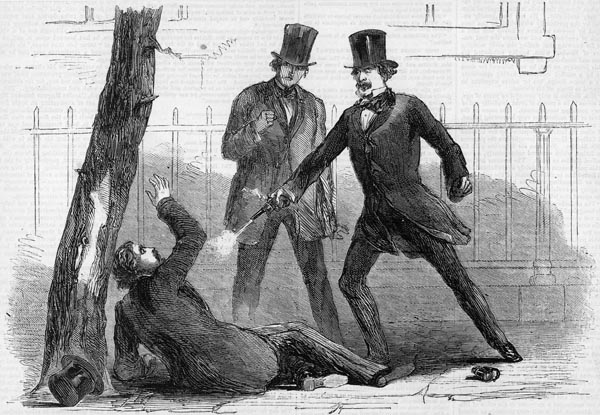
In 1859, in Lafayette Park, U.S. Representative Daniel Sickles shot and killed fellow lawyer Philip Barton Key II, son of Francis Scott Key. Sickles was a talented, ambitious, somewhat shady and philandering Manhattan politician who counted President Lincoln among his many friends. He discovered that Key was having an affair with Sickles's young yet long-neglected wife, Teresa. During his life, Sickles made American foreign policy, helped create New York's Central Park, had a hand in the development of the modern insanity defense, and was a celebrated if controversial Union Army field general. The best book on Sickle's amazing, checkered and long public life is Thomas Keneally's American Scoundrel: The Life of the Notorious Civil War General Dan Sickles.
Posted by JD Hull. Permalink | Comments (1)
April 03, 2024
Another Holy Surprise: Georgetown's Potomac Boat Club.
Below is a photograph of Georgetown near Key Bridge (the bridge barely out of the picture on the right) on the Potomac River and Georgetown University taken from Virginia. Barely hidden and on M Street, which runs parallel to the river, are the terrifying stone stair steps used in the movie The Exorcist. A few hundred feet east down the shore--but also out of the picture--is northern side of the Key Bridge, finished in 1923. The building on the shore is the Washington Canoe Club (WCC), established in 1904, founded by members of the Potomac Boat Club (PBC).

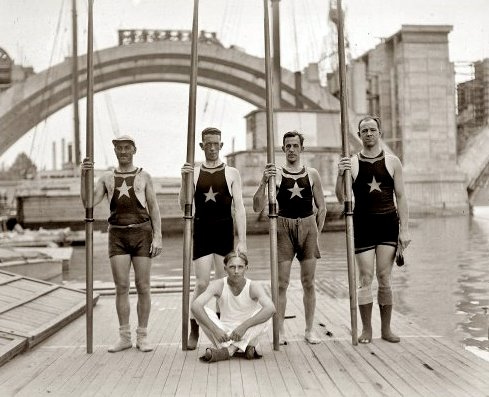
Potomac Boat Club members in 1921. Behind them is Key Bridge under construction.

The Potomac Boat Club, about 100 meters east of the WCC.
Posted by JD Hull. Permalink | Comments (0)
April 02, 2024
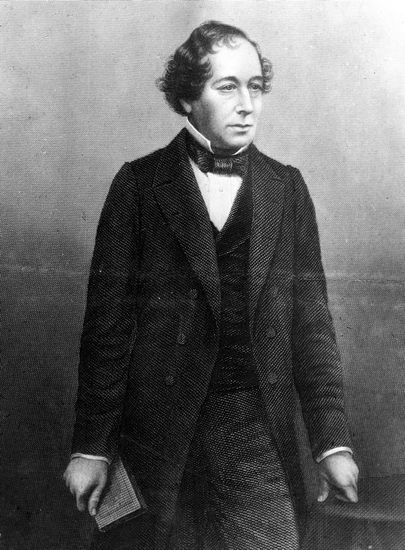
Young Ben Disraeli: On Writing Well.
When I want to read a good book, I write one.
--Benjamin Disraeli (1804-1881)
Posted by JD Hull. Permalink | Comments (0)
Euripides on Speech, Expression, Humor, Satire.
This is slavery, not to speak one's thought.
— Eurípides (480-406 BC)

Posted by JD Hull. Permalink | Comments (0)
April 01, 2024
Paul Cezanne: Les Joueurs de Carte.
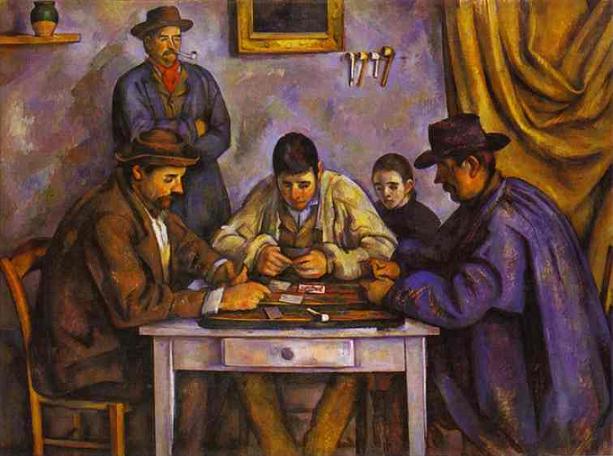
Paul Cezanne, Les joueurs de carte, 1890-1892
Posted by Holden Oliver (Kitzbühel Desk). Permalink | Comments (1)
March 31, 2024
The Judgment of Paris
Paris was a bold man who presum’d
To judge the beauty of a Goddess.
--John Dryden
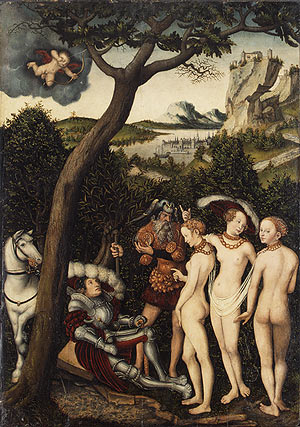
The Judgment of Paris, Lucas Cranach the Elder (1472-1553)
Posted by JD Hull. Permalink | Comments (0)
Easter
Happy Easter, y’all. The time of new beginnings. Step back from the canvas. Sharpen the tools. Get a religion. Call someone who needs help. Go outside. Dance around.

Posted by JD Hull. Permalink | Comments (0)
March 30, 2024
Charlotte Rampling: Still smoldering in three languages.

Great gifts, persistence and drive are hard to beat. If you don't know who Charlotte Rampling is, do find out.
Ah, Charlotte. You made up for many of the rest of us.
Posted by Holden Oliver (Kitzbühel Desk). Permalink | Comments (0)
We need Chuck Norris.
Just checked my news curator-aggregator (Flipboard) and every article says everything everywhere is all fucked up. We need Chuck Norris right now.

Posted by JD Hull. Permalink | Comments (0)
March 29, 2024
Jack London on Writing
You can’t wait for inspiration; you have to go after it with a club.
— Jack London

Posted by JD Hull. Permalink | Comments (0)
March 28, 2024
A Federal Discovery Rule Sleeper You Can Use: Rule 27, Fed. R. Civ. P.

You hosin' us, Mr. Hull?
Rule 27 of the U.S. Federal Rules of Civil Procedure is "Depositions to Perpetuate Testimony". It's not invoked that often. Subdivision (a) covers "Before an Action Is Filed":
(1) Petition. A person who wants to perpetuate testimony about any matter cognizable in a United States court may file a verified petition in the district court for the district where any expected adverse party resides. The petition must ask for an order authorizing the petitioner to depose the named persons in order to perpetuate their testimony. The petition must be titled in the petitioner's name and must show:
(A) that the petitioner expects to be a party to an action cognizable in a United States court but cannot presently bring it or cause it to be brought;
(B) the subject matter of the expected action and the petitioner's interest;
(C) the facts that the petitioner wants to establish by the proposed testimony and the reasons to perpetuate it;
(D) the names or a description of the persons whom the petitioner expects to be adverse parties and their addresses, so far as known; and
(E) the name, address, and expected substance of the testimony of each deponent.
(2) Notice and Service. At least 21 days before the hearing date, the petitioner must serve each expected adverse party with a copy of the petition and a notice stating the time and place of the hearing. The notice may be served either inside or outside the district or state in the manner provided in Rule 4. If that service cannot be made with reasonable diligence on an expected adverse party, the court may order service by publication or otherwise. The court must appoint an attorney to represent persons not served in the manner provided in Rule 4 and to cross-examine the deponent if an unserved person is not otherwise represented. If any expected adverse party is a minor or is incompetent, Rule 17(c) applies.
(3) Order and Examination. If satisfied that perpetuating the testimony may prevent a failure or delay of justice, the court must issue an order that designates or describes the persons whose depositions may be taken, specifies the subject matter of the examinations, and states whether the depositions will be taken orally or by written interrogatories. The depositions may then be taken under these rules, and the court may issue orders like those authorized by Rules 34 and 35. A reference in these rules to the court where an action is pending means, for purposes of this rule, the court where the petition for the deposition was filed.
(4) Using the Deposition. A deposition to perpetuate testimony may be used under Rule 32(a) in any later-filed district-court action involving the same subject matter if the deposition either was taken under these rules or, although not so taken, would be admissible in evidence in the courts of the state where it was taken.
And subdivision (c), equally as vague in some respects (but see the Committee Notes), states:
(c) Perpetuation by an Action. This rule does not limit a court's power to entertain an action to perpetuate testimony.
Posted by JD Hull. Permalink | Comments (0)
March 27, 2024
Holy Surprises & Saving Graces: Fed. R. Civ. P. Rule 56(d).
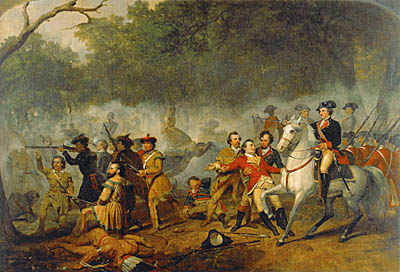
Early-in-the-case Rule 56 motion. Note well-dressed Brit General Counsel taking a bullet.
Rule 56
(d) When Facts Are Unavailable to the Nonmovant. If a nonmovant shows by affidavit or declaration that, for specified reasons, it cannot present facts essential to justify its opposition, the court may:
(1) defer considering the motion or deny it;
(2) allow time to obtain affidavits or declarations or to take discovery; or
(3) issue any other appropriate order.
Trial lawyers, in-house counsel and law students know that Rule 56 of the Federal Rules of Civil Procedure, or summary judgment, gives a litigant an opportunity to win on its claims or dispose of the opponent's claims relatively quickly and without trial. Accompanied by sworn affidavits, and most often discovery responses, a Rule 56 motion tries to show that there is no real dispute about key facts and that the movant is entitled to judgment under the law. If the trial court grants it, the movant wins on those claims.
But what if a summary judgment motion is brought against your client suddenly and early in the case and the local rules of the district court don't give you much time to develop and prepare an opposition? After all, Rule 56 lets a party who has brought a claim file for summary judgment after 20 days, and defendants can file "at any time".
It happens pretty frequently. Both plaintiffs and defendants make the motion early on. Defendants do it the most. No matter who moves early, or how it is eventually resolved by the district court, it's very disruptive. It will fluster even the most battle-hardened-been-there-seen-that GC or in-house counsel. It's an expensive little sideshow, too. Everyone in the responding camp hates life for a while.
Subdivision (d) of Rule 56, "When Facts Are Unavailable to the Nonmovant", provides a safeguard against premature grants of summary judgment. Some good lawyers seem either to not know about--or to not use--subdivision (d) of Rule 56. In short, you file your own motion and affidavit--there are weighty sanctions if you misuse the rule, so be careful--stating affidavits by persons with knowledge needed to oppose the motion are "not available", and stating why. (More senior lawyers may know this provision as Rule 56(f); it was re-lettered in the 2010 amendments to the federal rules.)
The federal district court can then (1) deny the request and make you oppose the motion, (2) refuse to grant the motion or do what you really want it to do: (3) grant a continuance so that you can develop facts and, better yet, take depositions or conduct other discovery. Granted, it's a rule that delays, but if used correctly, Rule 56(d) can give you the breathing room and time you need to develop the client's case--not to mention avoiding the granting of summary judgment.
Posted by JD Hull. Permalink | Comments (0)
Mary Harris Jones, "Grandmother of All Agitators"
Big ones. School teacher, seamstress, businesswoman, community organizer, Chicago girl and Ireland-born, Mary Harris "Mother Jones" (1837-1930) had big ones. What a resume, most of it built after she turned 50.
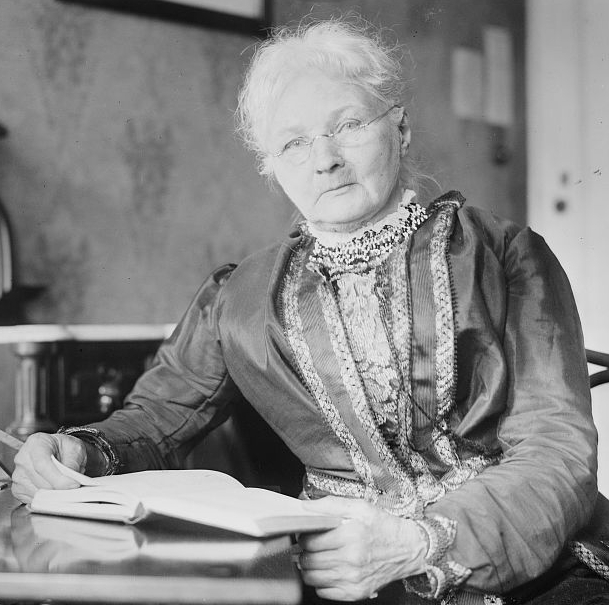
Denounced on the U.S. Senate floor as the "grandmother of all agitators."
Posted by JD Hull. Permalink | Comments (0)
St. Genevieve saves us all.
“I know it, I see it. The Huns will not come.”
Sainte Genevieve (422-512) saved Parisians from the Huns, the legend goes, in 451. People had started to flee Paris in anticipation of the invasion led by Attila--but stopped when she told them she had a vision that the Huns would not enter Paris. “Get down on your knees and pray! I know it, I see it. The Huns will not come.“ She became the city's patron saint. In 1928, a grateful Paris erected a statue to her on the Pont de la Tournelle (now about 400 years old). Genevieve is facing east, the direction from which the Huns approached. She is also said to have converted Clovis, king of the pagan Franks, to Christianity. If you walk from the Right Bank to the Left Bank near the Ile Saint Louis, you walk right under her, with Notre Dame on your right.

Posted by JD Hull. Permalink | Comments (0)
March 25, 2024
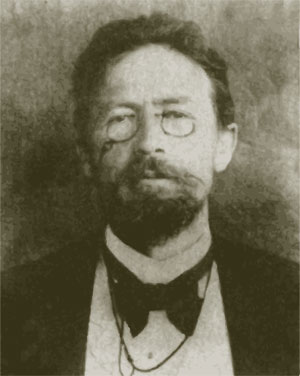
Storytelling
Don't tell me the moon is shining; show me the glint of light on broken glass.
--Anton Chekhov (1860-1904)
Posted by JD Hull. Permalink | Comments (0)
Dylan Thomas reading Fern Hill
Dylan Thomas (d. 1953) reads Fern Hill: "Now as I was young and easy under the apple boughs...." His voice--those Welsh pipes--was also one of his many gifts. A sad early death in Manhattan/So far away from his heart.
Posted by JD Hull. Permalink | Comments (0)
March 24, 2024
I'm OK - You're a Narcissist: “Narcissism” is the Newest Cooties
We all like to feel special, unique and, at times, superior. It doesn't mean we are insular, evil or bonkers. It doesn't mean you need to meet with your shrink Dr. Quaalude four rather two times a week. It means we are flawed, insecure, competitive and desperate for the Universe to acknowledge, and somehow validate, each one of us.
Narcissist. Narcissism. Narcissistic. These have been hot labels in the past few years. Lots of articles and pop psychology pieces in which writers bandy these terms around. There's been some name-calling, too. Boomers and Millennials are called narcissistic. So are certain bosses, public figures, artists, entertainers.
To name a few famous people who've been so accused: Pablo Picasso, Eva Peron, Warren Beatty, Sharon Stone, Charlie Chaplin, Margaret Thatcher, Christian Barnard, Donald Trump and William Shatner. Even Elvis. Then there are legions of more obscure folks who we see as uber-selfish, unfeeling, too full of confidence, grandiose. And a few who just make us feel uncomfortable or we just don't like.
What going on here? Is Narcissism the new Cooties, the dreaded but fictional disease you got from opposite sex classmates on the playground? If it is, let's find some other way to trash people. Let's trade in the entire narcissism lexicon for something that's fairer and we can all understand.
Because we are in over our heads, folks.
In conversation and writing, lots of non-experts--I am not an expert on this, are you?--employ the narcissism lexicon glibly and confidently to describe all kinds of bad behavior as if everyone knows exactly what they mean. One problem with this is that nearly everyone who does it (like Tony Blair's talented friend in the article linked to below) seems to have no idea what they're talking about. Even worse, people who use the terminology often lump everyone with narcissistic traits together without making distinctions between "healthy" narcissists, garden variety egotists and deeply malfunctioning humans.
Not making those distinctions is not just silly, sad, ignorant and irresponsible. Given the powerful stigma narcissism carries with some people who are just as clueless, it's a dangerous assessment.

Retired Alpha male pol having fun. Narcissist? (Adrian Wyld/AP)
You may think, as I do, that the American Psychiatric Association (APA) and other mental health authorities--which at this point have made almost every activity, eccentricity and wondrous human foible a "disorder" or condition which requires, or will soon require, professional treatment--went slightly batshit itself years ago. My favorite is the relatively recent addition to the Diagnostic and Statistical Manual of Mental Disorders (DSM) of caffeinism. There are five (5) types of caffeinism. One is Caffeine Withdrawal, which for a few years now has been a mental disorder. I expect to see jetlag very soon.
However, the APA and these other bodies continue to have the power to flag and define sickness and disorders. The power to define mental illness in our society is the power to suggest what is moral, immoral, good, bad, acceptable, unacceptable. With respect to medical expertise especially, we are at heart compliant and conformist. We remain happy to let others do the thinking for us.
And narcissists in the public mind are very bad. In addition to the usual suspects noted above, some of the worst villains and head cases in human history make the famous/infamous people list: Stalin, Hitler, Lee Harvey Oswald, Ted Bundy, Joseph Mengele, O.J. Simpson, Jim Jones, Ike Turner and, last but not least, Simon Cowell.
Although I will never be an expert on anything scientific, I did do some homework. Apparently, we should think of narcissists in three groups. The first group includes each human being who has ever lived. We all have a touch of narcissism--and we need it to survive. It's healthy.
The second group is actual narcissists. These are people who score high on tests based on traits (symptoms) listed in the DSM. Think politicians, many execs and entrepreneurs, 1980s-era bond traders, actors, writers, surgeons, go-getters, workaholics, a good chunk of the freshman class at Dartmouth College, all AUSAs and nearly every effective trial lawyer you will ever meet. You get the idea.*
The third group is comprised of those with a clinical diagnosis of Narcissistic Personality Disorder (NPD). These are the few, the miserable, the hardcore. See my listing in the paragraph above. It's the same kind of folks--but now, according to the psychiatric community, they're stuck in the wild blue yonder, and can't get out. Their selfishness and self-absorption prevent them from ever having a meaningful relationship with another human being.
The traits for this group: (1) expectation to be recognized as superior and special, without superior accomplishments, (2) expectation of constant attention, admiration and positive reinforcement from others, (3) envy of others and believes others envy him/her, (4) preoccupation with thoughts and fantasies of great success, enormous attractiveness, power, intelligence, (4) lacks the ability to empathize with the feelings or desires of others, (5) arrogant in attitudes and behavior and (6) expectation of special treatment that are unrealistic.
The problem? On any given day, the above traits/symptoms for NPD describe most of your "enemies", and certainly every one of the insane, miserable and unreasonable opposing counsel you are putting up with. It's the candidate you are running against. It's the woman who just dumped you.
In my reading, lack of empathy stands out as a key trait shared by at least those in the second and third groups. To be honest, in my life I've met no one with zero or little empathy. However, lots of people I know seem to have trouble, at least initially, of "feeling the pain" of others. Most of them are men. I doubt that anyone who has read this far considers empathy to be a male trait. It's clearly not. So are most men narcissists?
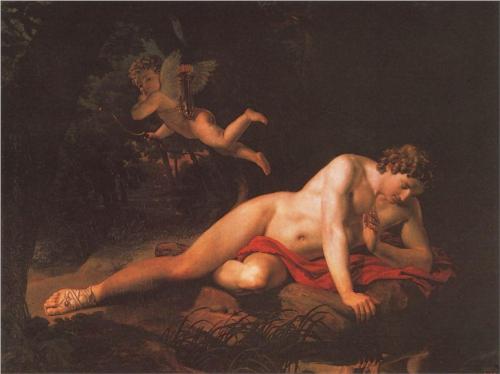
The Narcissus, Karl Bryullov, Russian, 1819
Posted by JD Hull. Permalink | Comments (1)
March 23, 2024
In Praise of Structure
.jpg)
Above: E practicing Structure. This 2006 post is from our famous Evergreen Collection. We haven't seen a need to revise it much.
Do we lawyers know how to get things done, done right and done on time? Do we even value that?
I wonder.
Is our standard for day-to-day working needlessly and embarrassingly low? Are we exporting that low standard whenever and wherever we can?
No, I am not talking here about the simple keeping face or survival requirements of meeting client deal or court deadlines, or even about the clichés of working hard, creative thinking, out of the box thinking, being persistent, or working smart.
I mean structure--a real standard for working--and "practicing structure" every day. It's the discipline of: (1) having a plan or strategy for any one project (client or non-client), (2) meeting internal project deadlines (not just jurisdictional ones) no matter what, and (3) insisting that everyone in your shop "buy into" the discipline of keeping to that overall plan or strategy and timetable.
"Structure" is not just the hard process of getting things done. It's a frame of mind and a value which must be sold to others in your shop--like the importance of making that 5 minute call to a client about a loose end at the end of the worst day you can remember, even while you could do it the next morning at 8:00. It's realizing that letting anything but emergency tasks "slide" makes you inefficient, unlikely to meet your real goals, and tired.
Do you go into work every day with a idea of what needs to be done on each project, and knowing the difference between "important" and "urgent"? Example: Monday is your deadline to have the final changes and notes to your web designer on your new firm website, an important but not urgent project you've talked about at internal meetings for months.
So far, for once, you have been on track. But on Monday a longstanding client calls with two new projects; the new projects are exciting but not THAT urgent in the sense they need to cut into internal deadlines and other goals for Monday. You need to take some first steps, though, to get on top of the new matters for your client. After all, these folks are the main event.
Key ongoing internal project v. new client project. Which gets the most attention that day? Which slides? Answer: they both get attention, and neither slides. The website (long-term important) and the new client project (short-term important) are both critical projects.
Years ago, the Stephen Coveys and Edwards Demings out there pointed out that business people burn themselves out by waiting around only for "the urgent" in a kind of manic crisis management that keeps other important things from ever getting done or ONLY getting them done when they morph into a crisis.
Posted by JD Hull. Permalink | Comments (0)
March 22, 2024
Newly Improved and Righteous: 107 Things Long-Divorced Amoral Lawyers Know

WJC and writer, January 1, 2009, noon, Charleston
1. Date no one named Zoe, Brigit or Natasha.
2. No one you just met can leave anything in your home or hotel room.
3. Don't do the au pairs.
4. All British women are named Lucy, Pippa or Jane.
5. British women never like British men.
6. The Bluebook: A Uniform System of Citation, the most widely used legal citation system in the United States, was first published in 1926. It is always important.
7. Legal or woke interviews don't tell you much.
8. Have a co-worker in same room if you interview someone.
9. Don't jump to hire law grads with blue collar backgrounds. Some think they've arrived and are done.
10. Women make better associate lawyers.
11. On documents, Rule 34 (Production of Documents and Things) and Rule 45 (Subpoena) of the Federal Rules of Civil Procedure do very different things. Know what they are.
12. Dogs are the best thing about this planet.
13. Cats not dogs if you travel.
14. Great looking women think they're ugly.
15. Pay attention to little things.
16. Irish, Welsh, Finnish, Ethiopian and Afro-American women are heroes. Forever in charge. Enduring.
17. A disproportionate number of Irish people are drunks.
18. A disproportionate number of Irish people are verbally or lyrically gifted.
19. Jewish doctors do not understand Irish, English, German or Russian drunks.
20. Jews and Italians are the best drinkers. They have the genes. They have rules.
21. The Jews are It. A consistently awesome and world changing tribe for 2500 years.
22. Russian women are cheap, treacherous and insane.
23. For decades the wrong people have gone to law school.
24. Lawyers are less well educated, less well rounded and less culturally literate every decade.
25. Narcissists get stuff done.
26. There are at about 40 exceptional American colleges and universities.
27. Do one absurd or silly thing every day.
28. Never be impressed by Phi Beta Kappas.
29. Always be impressed by Marshall scholars.
30. Have at least 3 impeccable suits.
31. Don't wear bow ties every day. Almost every day is fine.
32. Cuffs on all long pants except jeans and dinner jacket trousers.
33. Wear khaki pants and suits or seersucker suits in summer. Summer is Memorial Day to Labor Day.
34. Twice a month dress like a pimp from a New Orleans whorehouse.
35. Learn your family history on both sides back at least four generations. Know who you are.
36. Talk to people on elevators. All of them.
37. Don't do Europe with other Americans.
38. Just 2 cats.
39. If you drink, master Sheehan's Rule: "If I don't remember it, I didn't do it."
40. When in Rome, do as many Romans as you can. ~ Hugh Grant (b. 1960)
41. Always attribute. Especially when you think no one will notice.
42. Leave the campsite better than you found it.
43. Never let anyone tell you how to feel, think, act, write or speak.
44. Never let anyone tell you who you are.
45. One juror will always surprise you big time. Learn who that is before you close
46. Always talk to jurors post-verdict.
47. Never communicate in any manner ever with that one female juror who seemed to like you.
48. Women are meaner, more vindictive and more treacherous than men.
49. The dumbest woman is 100 times more complex than the smartest man.
50. Men are simple. There is not much going on.
51. Rule 36 (Requests for Admissions), my friend.
52. Rule 56(d) (When facts are unavailable to the non-movant) is misunderstood.
53. Civil RICO is an unintended consequence. Use it the right way.
54. Seldom watch television.
55. Every Mom suffers.
56. Your Mom is your best friend.
57. Buenos Aires has the best looking people on this planet.
58. Great lovemaking cannot be learned.
59. Love can be learned.
60. There are no lapsed or recovering Catholics.
61. Don't buy cheap shoes.
62. Shoe trees. Cedar.
63. Jewish women never have great legs.
64. Japanese women are the best helpmates.
65. Slightly insane WASP women are the best lovers.
66. People born after 1980 should not have babies, jobs or dogs.
67. Brown shoes go well with gray suits. No one knows why.
68. Your handkerchief should never match your tie.
69. Nothing good takes just 10 minutes.
70. Being right is expensive.
71. No prayer is imperfect.
72. The best prayer says thank you.
73. Not caring what people think is a superpower.
74. The English look down on anyone non-English. This will not stop.
75. The French and Irish are playful.
76. Eastern Europeans are not playful.
77. When your mouth is dry, you know you're plenty high. ~ George Thorogood
78. Don't tell people you just met your problems.
79. Copy someone on every letter.
80. Never write a letter. Never throw one away. ~ Unknown
81. Jewish men are overly-suspicious. There are reasons for it. Work with it.
82. Irish men talk too much. There are no reasons for it. Work with it.
83. Never needlessly anger the Irish, the Welsh, Scots or Sicilians.
84. Be nice to people who just had a downfall. Don't pile on. They'll be back.
85. Avoid people with no enemies.
86. Beware of the lily white. ~ J. Dan Hull, Jr. (b. 1900)
87. Employees who say they'll double-check never checked the first time.
88. Don't celebrate victories too long.
89. Jimmy Page and Eric Clapton worked harder than you did.
90. Attitude is more important than facts.
91. Employees either help you or hold you back. Nothing in between.
92. Persian women make too much noise.
93. Tribes are always important.
94. Dogs have owners. Cats have staff. ~ Ellen Jane Bry
95. Nothing is more important than a first kiss.
96. Don’t hire broke or broken people.
97. Write prompt handwritten thank you notes.
98. The arts are central to life. They are not optional. ~ Julian Barnes
99. Plan for surprises.
100. Resist perfectionism.
101. Each person has a thousand selves. ~ Hermann Hesse
102. Men say the vilest possible things to each other they don't mean.
103. Women say the nicest possible things to each other they don't mean.
104. Everyone you meet is not in your mood.
105. You will never know anyone's entire story.
106. End everything on a high note.
107. Trust no one in Budapest.
Posted by JD Hull. Permalink | Comments (0)
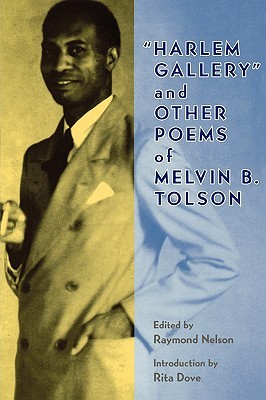
Melvin Tolson's Harlem Gallery
A funny, fearless and densely layered poem (1960s super-critic Karl Shapiro said the "baroque" style used made it funnier and more ironic), Melvin B. Tolson's Harlem Gallery was first published in 1965, shortly before Tolson's death in 1966. Nearly 160 pages long, it showcases and comments upon a wide variety of humans living in that pulsating, screaming, dancing and crying New York City neighborhood from the time of the Harlem Renaissance in the 1920s through the 1950s.
Twenty years before Harlem Gallery, Tolson had finally found the widespread recognition and praise through his customary shorter and more conventional verse forms. But Harlem Gallery surprised readers and critics with its novelty and verve.
A separate poem was crafted for each human subject in the gallery, based on encounters and informal interviews Tolson conducted when he lived in New York for a full year. In each poem, however, Tolson, who was ethnically both African-American and native American, continued to opine about race, and about the difficulty of squaring the actual experiences of American minorities with the idea of equality promised by the American experiment. True, the form of Harlem Gallery suggests that it is as least loosely modeled on Edgar Lee Master's Spoon River Anthology--to which Tolson's steady parade of characters has been favorably compared. Tolson's gallery characters, however, speak the many colorful and often-warring dialects one could hear on the Harlem streets.
Posted by JD Hull. Permalink | Comments (0)
March 21, 2024
Rule 7: Know Thy Client
See Rule 7: Know the Client. Every great client wants you to know him, her or it.
Take time out to learn the client's stock price, day-to-day culture, key management figures, industry players, industry reputation, overall goals and major things it tells the Securities and Exchange Commission. The client is publicly-traded, you say? Wonderful. You have much to read, friend. Also get a feel for what other credible sources--the client's website and public filings are not enough--are saying out there about your client.
Visit the client's offices and plants, too, especially if the client is small or privately held. Seeing live operations and key players moving around and interacting speaks volumes. Early on, and for every client, see as much as you can in 3D. Hey, it's fun. Do it free of charge.
Learn something about the client's history. Get a grip on its past and true origins. How your Houston-based petroleum or gas drilling client started out in 1884 in Indianapolis making pumps for bicycle tires will make sense, and maybe put a few things together for you. Even more importantly, history may tell you lots about the client's corporate "personality" and "culture", now and during the past 130 years. You may discover why the client now behaves as it does with its employees, and with vendors and competitors, or why it has a certain reputation in the marketplace.
By the way, in established and larger companies, my take is that corporate cultures and personalities--the Good, the Bad and the Strange--rarely bear any relationship to the make-up, character and day to day actions of individuals who currently lead and manage the company. And even if I'm wrong about that, personality, culture and atmospherics are certainly worth knowing about.
Finally, as you work for the client, does the talented in-house lawyer, GC or other client representative you must answer to actually pick up on your newly-acquired knowledge, nuances and insights? Yes. Absolutely.

Posted by JD Hull. Permalink | Comments (0)
March 20, 2024
Cultural Literacy. Is it time yet, America?
Education is not just about getting a job.

Posted by JD Hull. Permalink | Comments (0)
Ray Davies: A Nod to Old Blighty.
Ray Davies cries "Victoria", Glastonbury 2010
Posted by JD Hull. Permalink | Comments (0)
March 19, 2024
Michigan Links, Golf and Eddie Guest, the People’s Poet, 1919.
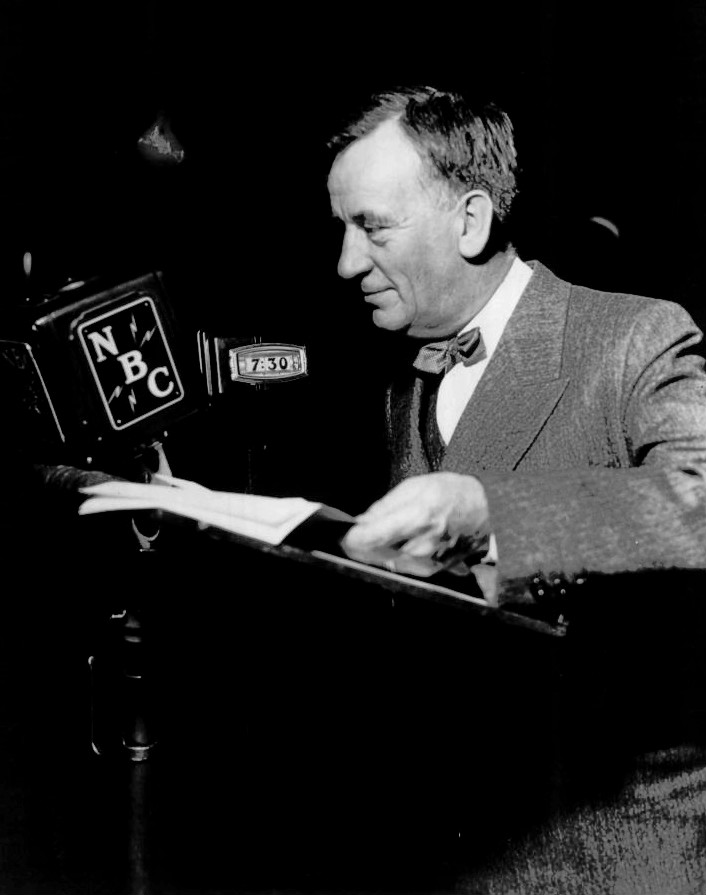
Guest in Detroit, 1935
Enormously popular for the first half of the 20th century, Detroit’s Edgar A. Guest (1881-1959) charmed America with simple and often funny upbeat poems celebrating Midwestern common sense and optimism. No. He’s not my favorite poet. But I’ve a special connection to Guest. He owned a house in a small but storied Michigan summer community where I spent Junes and Julys of the 1960s growing up in Michigan, Illinois and Ohio. He died just before my family’s first visit there. His house on Lake Huron was purchased by parents of one of my Detroit classmates. So I often played near and sometimes in that huge dark house made of large dark logs with the largest porch I’d ever seen at the top of Cliff Road. Guest was always closely connected to the place. It seems odd we never met. He was greatly loved and always somehow still alive in that place. At least it seemed that way to me.There was old golf course—one of Michigan’s first courses—nearby that my brother and I learned on. Guest played the game and wrote several fairly schmaltzy but fun poems about golf. This one appeared in 1919 as part of his highly popular “A Path Toward Home”.
“A Lesson From Golf”
He couldn't use his driver any better on the tee
Than the chap that he was licking, who just happened to be me;
I could hit them with a brassie just as straight and just as far,
But I piled up several sevens while he made a few in par;
And he trimmed me to a finish, and I know the reason why:
He could keep his temper better when he dubbed a shot than I.
His mashie stroke is choppy, without any follow through;
I doubt if he will ever, on a short hole, cop a two,
But his putts are straight and deadly, and he doesn't even frown
When he's tried to hole a long one and just fails to get it down.
On the fourteenth green I faded; there he put me on the shelf,
And it's not to his discredit when I say I licked myself.
He never whined or whimpered when a shot of his went wrong;
Never kicked about his troubles, but just plodded right along.
When he flubbed an easy iron, though I knew that he was vexed,
He merely shrugged his shoulders, and then coolly played the next,
While I flew into a frenzy over every dub I made
And was loud in my complaining at the dismal game I played.
Golf is like the game of living; it will show up what you are;
If you take your troubles badly you will never play to par.
You may be a fine performer when your skies are bright and blue
But disaster is the acid that shall prove the worth of you;
So just meet your disappointments with a cheery sort of grin,
For the man who keeps his temper is the man that's sure to win.
Posted by JD Hull. Permalink | Comments (0)
Pointe Aux Barques, Michigan
For me, it beats Big Sur and the Austrian Alps. My favorite place in the world, it is desolate in the winter and still beautiful. Not too many people live here year round: about 10, they say, and even that may be a U.S. Census error. No one around. PAB sits on the northern-most point of the Michigan Thumb, between Port Austin and Grindstone City, on Lake Huron. It was built as a resort community for St. Louis and Detroit business people in the mid-1890s. When I was growing up and we moved about after leaving the DC area--Chicago, Grand Rapids, Detroit, Chicago again, and finally Cincinnati--we spent June and July here no matter where we lived. Had my first "businesses" here (teaching tennis and later a carwash with my brother). This was the only constant place in my childhood. I still dream about the cliffs and the lake and smallmouth bass and our four dogs and my friends. Edgar Guest, the people's poet, a kind of lyrical Will Rogers, owned a cottage on the main still-nameless road. I used to sit on his porch with my first girlfriend, with whom I am still in touch. I've been here in the winter before, when I was in law school; yet being here during any season is hard to describe.

Posted by JD Hull. Permalink | Comments (3)
March 18, 2024
Redux: The War Against Legal-Speak
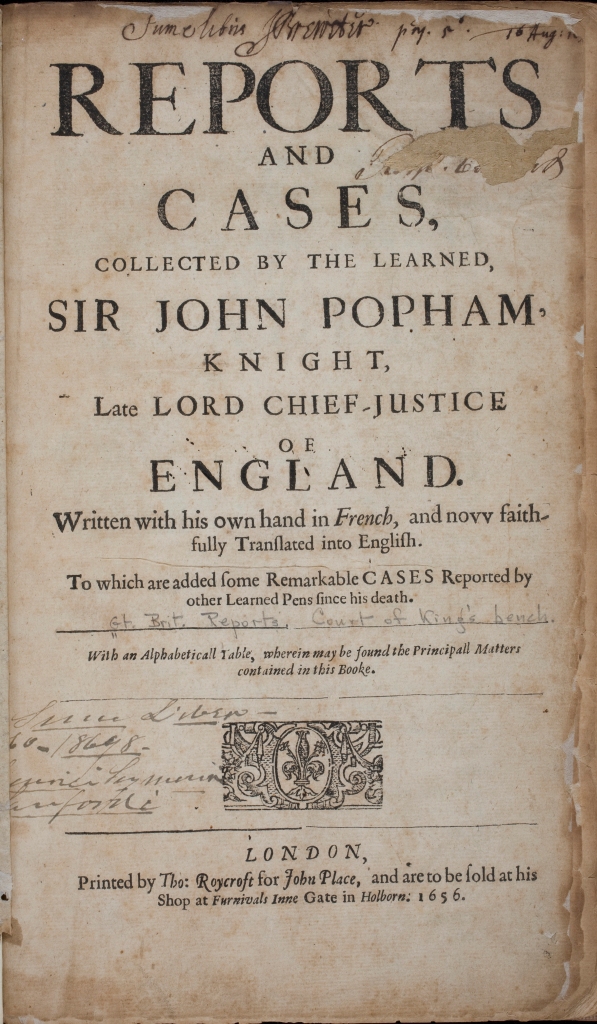
Sir John Popham (1531–1607) was an MP, Speaker of the House of Commons, and Lord Chief Justice of England. We think he would speak and write differently if he were alive today.
Lawyer-Speak and Legalese. Of the lamer lawyer-centric institutions, only "Professionalism" and "Work-Life Balance" are more embarrassing, abused and irrelevant, and more likely to undermine clients, than the way in which many lawyers continue to speak and write. At least those two prissy battle cries originally had a point. But Legalese never had a point.
A few years ago, a law firm sent us a draft of a simple housekeeping agreement. It was a 3-page confidentiality agreement used during talks for an acquisition. We responded by submitting our own draft because, among other things, the draft we had received (presumably a "model" they had around their office) contained this language:
"Effective on even date herewith, the parties hereto hereby agree to...".
Whoa. How about just one date at the top or bottom of the Agreement and then say "The parties agree..."? And if the whole thing is an "Agreement", with language showing that the parties intend to be bound, maybe you don't even need that?
Either would save trees, ink and space, and would get the idea of contract across, and out of the way. And either would help diminish the image of the self-important "I'm-special" lawyer rocking back and forth in his chair, and talking to himself like a mental patient.
(from past WAC? posts)
Posted by Holden Oliver (Kitzbühel Desk). Permalink | Comments (0)
March 17, 2024
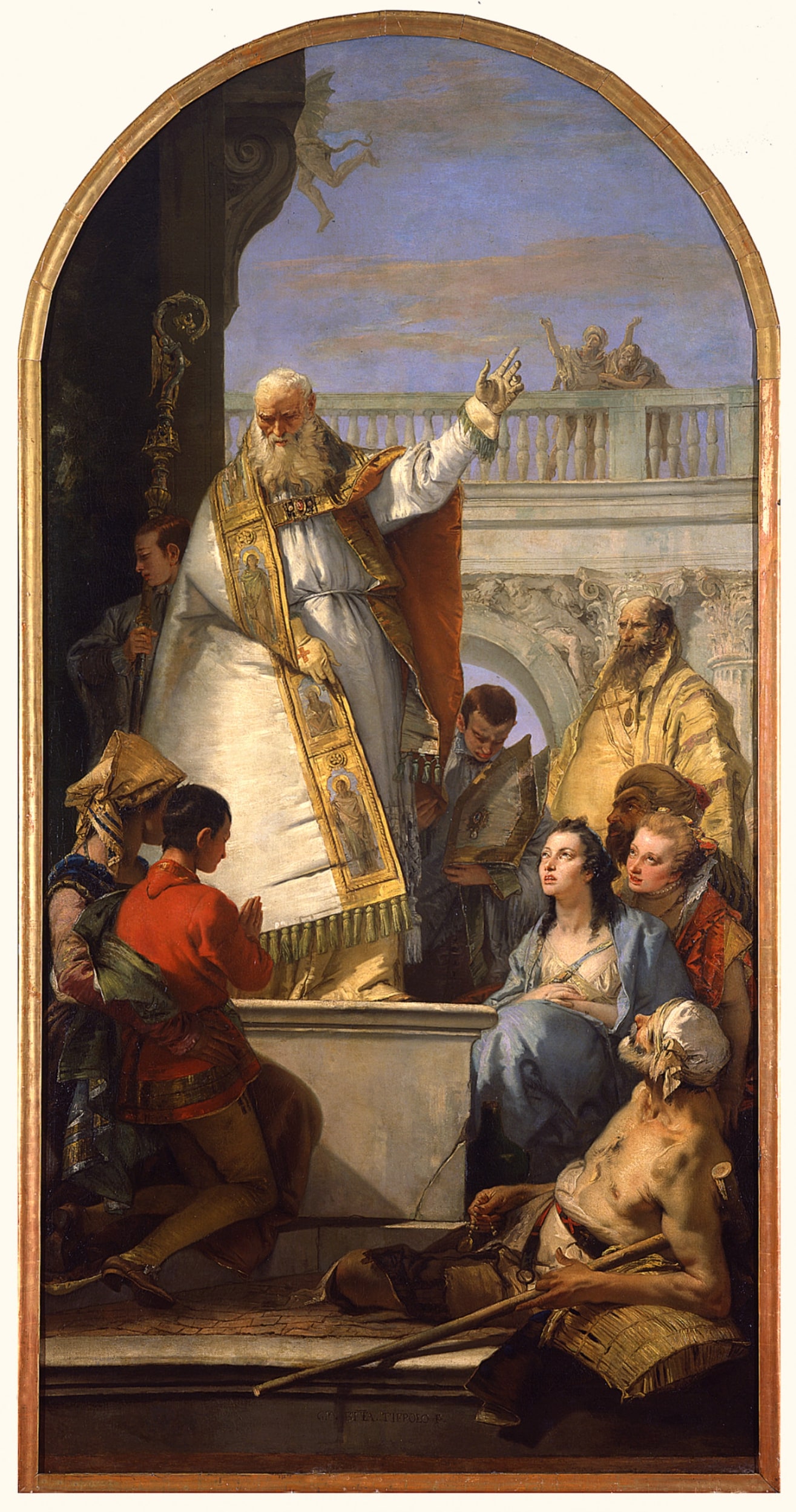
Saint Patrick, Bishop of Ireland , 1746, Giambattista Tiepolo
Posted by JD Hull. Permalink | Comments (0)
The Lorica of Patrick
I bind to myself today
The power of Heaven,
The light of the sun,
The brightness of the moon,
The splendour of fire,
The flashing of lightning,
The swiftness of wind,
The depth of sea,
The stability of earth,
The firmness of rocks.
I bind to myself today
The strong virtue of an invocation of the Trinity,
I believe the Trinity in the Unity
The Creator of the Universe.
from "St. Patrick's Breastplate", or The Lorica of Patrick
Posted by Holden Oliver (Kitzbühel Desk). Permalink | Comments (0)
March 15, 2024
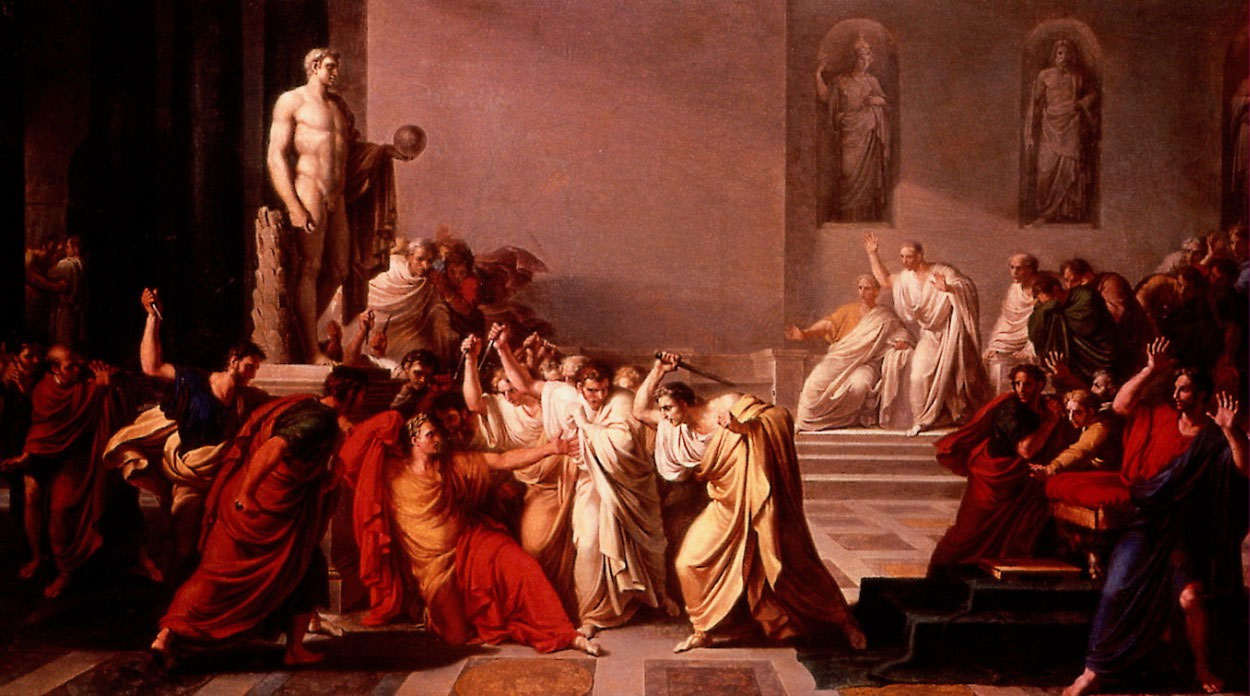
Vincenzo Camuccini, Mort de Caesar, 1798
Posted by JD Hull. Permalink | Comments (0)
Irish Guys: All The Wrong Stuff.
Saint Patrick's Day is on Sunday.
For starters, be advised that real Irish-American males do not wear green on March 17. They do the same things they do any other day, to wit:
A. Get up
B. Inhale aspirin
C. Dress as usual: Dockers, clean "Guinness"-emblazoned golf shirts if there's an important meeting
D. Work, kind of
E. Read, with difficulty (don't count on Ulysses)
F. Head to a real bar (not ones with faux-Irish names like "The Dubliner" or the generic "Irish Bar")
G. Tell stories
H. Listen to some music (rarely Irish tunes)
I. Get drunk; and
J. Fall down on the floor.
I happen to know I'm Irish--maybe too Irish--and as Irish as they come. One great-grandmother, a Belfast Protestant named McQuitty, provides most of the DNA there. In my case, that's 7% of my genetic makeup and, believe me, it's enough. If you're not a slam dunk at proving you're Really Irish--e.g., your parents' names are Flanagan and Murphy, and those are their first names--and want to know for sure if you've got All The Wrong Stuff, here's a test you can take and decide for yourself:
1. All your brothers and sisters are in Alcoholics Anonymous.
2. You talk incessantly and in your sleep and for no reason.
3. Captivated audiences--e.g., juries and Rhodes and Marshall scholarship selection committees--take months and often years to realize that nothing you said made sense.
4. Your idea of foreplay is '"I'm home! Brace yourself, Brigit!"
5. Distant relatives in County Cork list "wearing trousers" and "dwarf-tossing" on resumes.
6. You once read "Angela's Ashes" and secretly dread the first day your wife or girlfriend humiliates you in front of your kids, your mates and the rest of the neighborhood.
7. For years after your last appointment psychiatrists beg you to take your money back.
8. You've spent 20 minutes on the phone giving long-distance relatives about to visit you a detailed report on the weather. You hang up, look out the window and see if you were right.
9. You make fun of Welsh people because they drink too much.
10. You're available at any time to speak at any length about any subject.
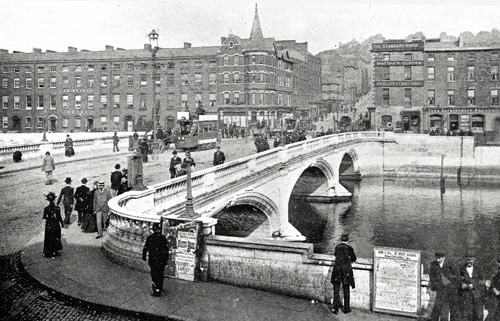
Pont Saint-Patrick, Cork 1900
Posted by JD Hull. Permalink | Comments (0)
March 14, 2024
Hôtel du Jeu de Paume: 54, rue Saint Louis en l'Ile.
"Welcome back, Monsieur Hool." This is Hôtel du Jeu de Paume, the non-oath version. Erected in the 17th century, it once housed a tennis court built by Louis XIII, king from 1610 to 1643. Beams from the early 1600s cross the ceilings. An interior garden. The walls: old books, newer original art. Neither Left or Right bank. Save for your 5th trip to Paris. The longstanding and competent staff takes a "working" dim view of both Americans and Brits. They are wonderfully rude, Paris smart, and Yankee-style industrious. A haughty Labrador even lives here full-time. This is Hull McGuire's hands-down favorite since 2003. Brits never stay here twice. Too French. Be late to breakfast at your peril. The staff does not merely leer and grin when it is says "no" or "impossible!". They laugh, too.

Posted by JD Hull. Permalink | Comments (0)
March 12, 2024
The 7 Habits of Highly Clueless Corporate Lawyers.
Lawyers who won't take a stand is a time-honored tradition. Ernie from Glen Burnie, a lawyer and a life-long friend of mine, is not such a creature. It's just his nature. He's an activist in all matters. He'll stand up for people who pay him--and for people he just met on the subway. In late 1995, when the championship Netherlands Women's National Volleyball Team were staying at the Mayflower, Ernie, I and two lawyers from the DC office of [firm name deleted] met the four tallest at Clyde's.....sorry, we're getting sidetracked.
There are so many wonderful stories about Ernie from Glen Burnie. But read first the very short story about Ernie's big find circa 1990. We first reported on it in June of 2006. It's about an old parchment he claims was discovered in Alexandria, Virginia, around the same time we both began practicing law in the District. Do see The Seven Habits of Highly Useless Corporate Lawyers. This is a true story, mostly. So listen up.
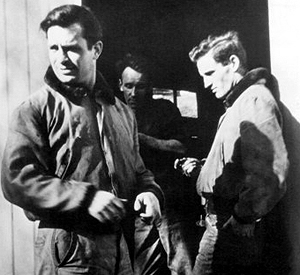
Stand-up guys: The author, then a dead-ringer for writer Jack Kerouac, and EFGB in their pre-lawyer and pre-Netherlands Women's National Volleyball Team years.
Posted by JD Hull. Permalink | Comments (0)
O Rare Partner Emeritus Redux
If you work for a peer firm, you will encounter me or someone very much like me. [Y]ou cannot avoid the essence of my character if you aspire to succeed... I or some form of my embodiment will exist to make your existence as uncomfortable and unpleasant as it can be. Welcome to the legal profession you self-entitled nimrods have created.
--Partner Emeritus, Above The Law, 2009
‘O Rare Ben Jonson’
--Words on the gravesite slab of eccentric English dramatist and poet Ben Jonson (1572-1637) in Westminster Abbey. Jonson also was buried upright.
Twenty-five years ago, before The Great Neutering, before attorney gene pools started to dilute, when service professionals were well-rounded, if not classically-educated Renaissance people, when it meant a great deal to be a lawyer, and indeed to be a man, we had practitioners like Partner Emeritus. That is the nom de plume of a retired Brahmin New York City lawyer with an impressive following on the internet and who many culturally illiterate people--i.e., most lawyers these days (sorry, but that is the perfect truth)--apparently simply do not get. He's intimidating and spine-tinglingly scary to the maggotry, a comedic genius and WASP Yoda to the urbane.
Whoever he is--I sense pretty much everything about the way he portrays himself is authentic save his real name--PE has been there and done that (his legal breadth intrigues me) in upper-tier corporate law. And, perhaps, in life. Like me, he is an accomplished and unapologetic philanderer. A cad. Color him, too, a bit picaresque. Well-read. Well-traveled. He acquired and trained two Afghan show hounds. He even played polo, for fuck's sake. And like me, he does love the law, and this profession, which he worries about. Partner Emeritus is also an accomplished satirist. A Lenny Bruce for those with Mayflower DNA. Governor-for-Life of Upper Caucasia. A Dean Swift for modern Manhattan.
PE entertains in two distinct, interchanging, modes. You commend his taste, and judgment, when he shifts gears from Satirist to Learned Critic. (You don't know when that is? That shifting? Your problem. Start getting a real education by attending the theatre, visiting art museums and reading Tom Jones, Candide, Huckleberry Finn. Devour Miller, Kubrick, Pope, Orwell. Behold Nabokov, Heller, Huxley, Mencken. View Pieter Bruegel. Listen to Gilbert & Sullivan. Will take years--but it's worth it.) Ninety-five percent of the time--no, I do not agree with his every assessment--he's right on the money about people, places and things. His writing is art. Class art. Informed art. Funny art. He disturbs, and brilliantly.
PE's best gift? It is his instinct for detecting two related (I think) qualities he detests: hypocrisy and mediocrity.
Watch him each week expose the growing cadre of bad actors--i.e., twinkies, teacups, imposters, poseurs, plagiarists, thieves--who regularly shill on ATL's eclectic pages, Partner Emeritus has an instinct for the jugular that is dead-on, lightning fast and funny. If you think--and not merely react--you will learn something. You may feel a bit uncomfortable about how you stack up in this universe. But you should learn something about yourself. Otherwise, try not to blow a tube, or pull a hamstring, laughing.
You can read him and howl along with me most weekdays to his comments to certain articles at Above the Law. For many people, PE is the best thing about David Lat's celebrated and storied website. Excerpts from one wistful ATL comment last week:
Prior to owning a 1981 DeLorean DMC 12, I owned a gorgeous 1979 BMW M1. One Saturday, while my wife was with her family at Martha's Vineyard, I took my car into the city and decided to visit the old Copacabana. There, I met a woman named "Sophia." We drank Dom Perignon and danced Salsa and some disco (I was a maven on the dance floor and could have given John Travolta a run for his money during his "Saturday Night Fever" phase). During that evening, Sophia slipped a drug into my drink. The next thing I know, I woke up with a throbbing headache and my lower body was in pain. Apparently, I had crashed my vehicle into a divider on the Long Island Expressway and Sophia was unconscious next to me. A police cruiser drove by and stopped. I explained to the officer that I had been drugged by the latina woman next to me and that she had robbed me (I made sure to place my wallet in her purse before she regained consciousness).
We were taken to the local police station where I filed a report against Sophia. My BMW M1 was totaled and impounded. After a few hours, Sophia and I were awkwardly outside the police station at 5AM. I was in excruciating pain but I had hungry eyes for her so I brokered a deal with Sophia. I offered to drop the charges against her if she agreed to get in a cab with me and go back to my estate and make love to me. She agreed. I will never forget that night. I should have gone to an emergency room (pro-tip: cocaine is more effective at numbing pain than morphine) but all I could think of was being with Sophia, who resembled a young Maria Conchita Alonso.
What I would do to be 37 again.
There are times when I think whether I regret that night. A vintage 1979 BMW M1 would fetch me a cool $750K today but then I would have no memory of Sophia. You could say Sophia was probably one of the most expensive hookers in the history of mankind (despite that my insurance carrier covered the NADA value of that beast of a vehicle at the time, it did not compensate me for the future vintage value of that car which I believe only 500 were made), well next to the women who divorce their wealthy husbands and take them to the cleaners.
Note: Original post July 6, 2015

Partner Emeritus, New York City. Circa 2008.
Posted by JD Hull. Permalink | Comments (0)
March 11, 2024
Happy Birthday, J. Dan Hull, Jr.
John Daniel Hull, II, 1900 - 1987. My grandfather - always a class act. I spent his last 15 or so Thanksgivings with him in Missouri with just him and my grandmother Alene, who died in 1998 at 101. J. Dan had quiet energy, poise and quality. Elegant. Author, educator, JFK administration mainstay. Cosmos Club. Ozark boy who wanted to go to Yale. He did it all.

John Daniel Hull, II, 1933, New Haven, Connecticut
Posted by JD Hull. Permalink | Comments (0)
March 10, 2024
Racehorse Haynes on Imperfections
“I would have won them all if my clients hadn’t kept reloading and firing.”
--Richard "Racehorse" Haynes (1927-2017). Trial Lawyer.

Posted by JD Hull. Permalink | Comments (0)
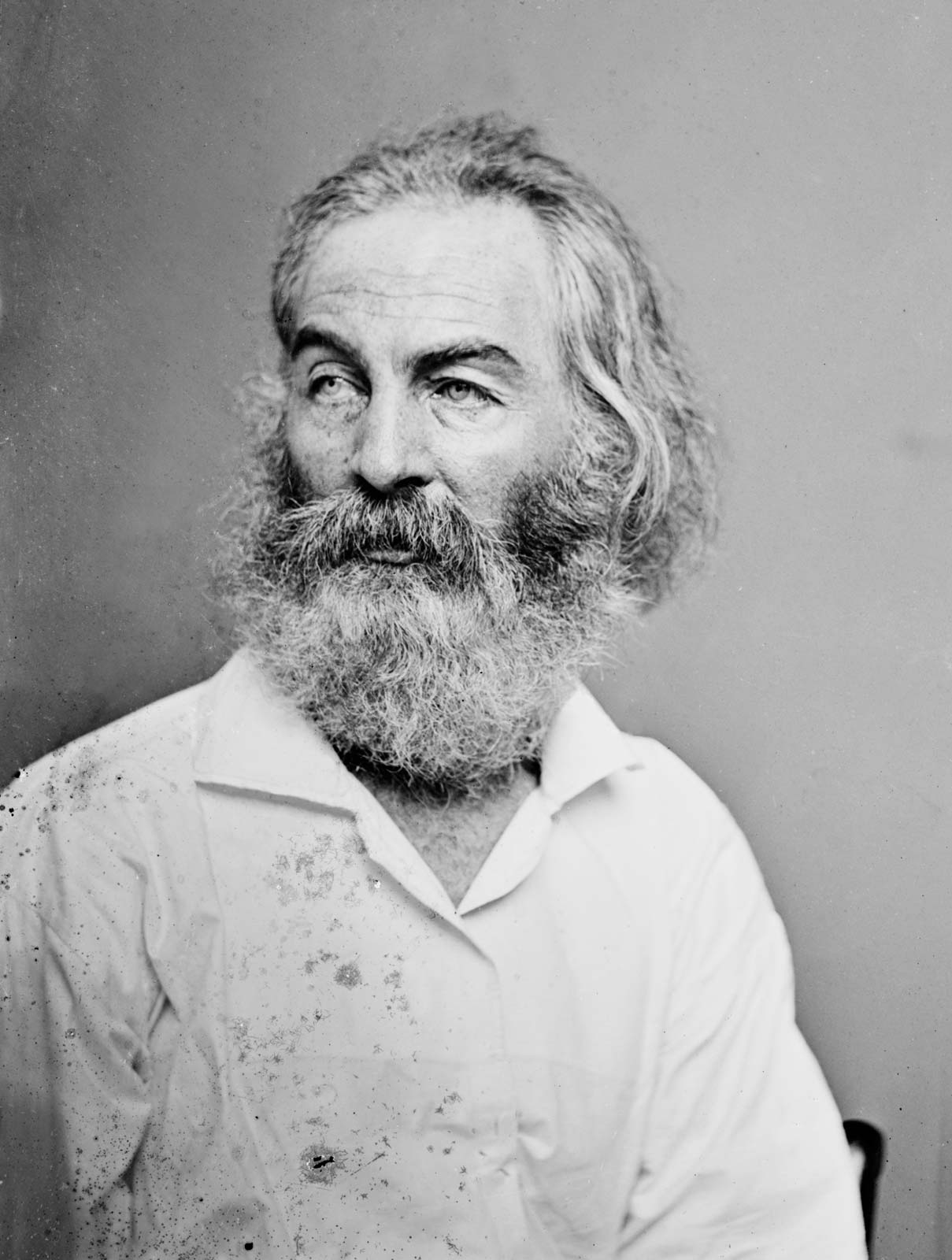
Whitman channels Emerson
“I was simmering, simmering, simmering. Emerson brought me to a boil.”
--Walt Whitman (1819-1892)
Writer Jack London thought you could not wait for it. You needed, he thought, to go out and hunt inspiration with a club. Walt Whitman, however, was luckier. He was a relatively young man when Ralph Waldo Emerson was thinking and writing. Emerson set off the young printer and hack writer, hurling him into an exuberant and celebratory realm, where no one American had ever been.
 Posted by JD Hull. Permalink
| Comments (0)
Posted by JD Hull. Permalink
| Comments (0)
March 09, 2024
Badness in Depositions: "Stop me before I coach again."
An objection must be stated concisely in a nonargumentative and nonsuggestive manner.
--from Rule 30(c)(2), Fed. R. Civ. P.
Defending lawyers who testify are bad. And let he or she without sin cast the first stapler. In defending in a deposition, giving speeches and coaching your witness on the record is "bad" because it may be suggestive of the answer the witness should give. We could go on and on and on about this--but we'll just be quiet and let you read it.
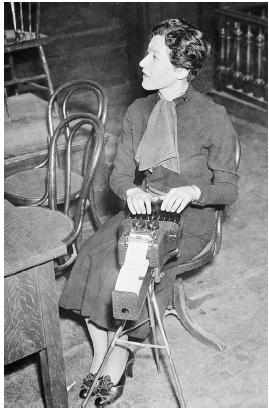
(Does this guy ever shut up?)
Posted by JD Hull. Permalink | Comments (0)
March 08, 2024
Daniel Patrick Moynihan: The Irish.
“There's no point in being Irish if you don't know that the world is going to break your heart eventually.”
--Daniel Patrick Moynihan, Assistant Secretary for Labor, a few days after November 22, 1963.
.jpg)
Posted by JD Hull. Permalink | Comments (0)
March 07, 2024
Dan Hull’s Rum Diary: Growing up Hunter Thompson.

Kurtz. He got off the boat. He split from the whole goddamn program.
--Captain Willard, Apocalypse Now (1979)
Thompson had a way of keeping anyone unfriendly to the very idea of him beyond even mere curiosity. Just unaware. In that case, you were a nice person doing the best you could. You didn't "need it"--anymore than you needed to become good friends with Andy Warhol, Ralph Nader, Harry Dean Stanton, or Dr. John the Night Tripper, whoever they were.
--A Fan
Twenty years ago, when I was an associate in D.C. sweating everything, I worried a lot about something hanging in my office: a framed black, white and red "Hunter S. Thompson for Sheriff" election poster for a 1970 election in Aspen, Colorado.
The poster bore a Harvard Strike fist. Inside the fist there appeared to be what someone explained was a drawing of a plant which bad or crazy people chewed on to "get high". But I quickly realized that anyone who actually knew about Thompson and his books and articles on presidential politics, Las Vegas and the Kentucky Derby--the event in his hometown of Louisville was "decadent and depraved"--would likely like me for having it.
I was right. The poster meant nothing to most people who visited my office, and it even helped me make friends. In the 1970s and 1980s, people read and loved him or had never heard of him.
So you either "knew" HST--or you didn't.
He either delighted, or was too disturbing to explore. A talented and comical writer, he drank too much, really did like chemicals, hated Richard Nixon, upset people on the press entourage, freaked out editors, showed up drunk for "speeches", and arranged for Ed Muskie to be severely menaced on a train by one seriously funny outlaw rich kid named Peter Sheridan.
He liked weapons. He was once accused of firing a military rocket at a snowmobile. According to a friend of mine who worked for one of the TV news networks, Thompson once mysteriously and suddenly showed a handgun to Secret Service agents and reporters sitting in a booth in a famously silly Capitol Hill singles bar, mumbling "just in case there's a firefight..."
Even with that public life, Thompson had a way of keeping anyone unfriendly to the very idea of him beyond even mere curiosity. Just unaware. In that case, you were a nice person doing the best you could. You didn't "need it"--anymore than you needed to become good friends with Andy Warhol, Ralph Nader, Harry Dean Stanton, or Dr. John the Night Tripper, whoever they were.
Even after Thompson became a character in Garry Trudeau's Doonesbury, saw two movies based on his work, and died by his own hand in early 2005, most people didn't have a clue or want to. One exception in later years: "beer hippies" and GenX stoners finally discovered Thompson--"Gonzo, drugs, liberal stances, hey Hunter's my man"--and my guess is that he secretly looked down on them.
Well, anyone can be in his club at this point. But I needed it all along. He was an angry but fine writer, a humorist, an innovator--and a big hillbilly like me who grew up on the Mason-Dixon line and all along just wanted to fall in love. He still makes me laugh and cry.
Maybe there is no Heaven.
Or maybe this is all pure gibberish — a product of the demented imagination of a lazy drunken hillbilly with a heart full of hate who has found a way to live out where the real winds blow — to sleep late, have fun, get wild, drink whiskey, and drive fast on empty streets with nothing in mind except falling in love and not getting arrested.
Original post: 11.29.2013
Posted by JD Hull. Permalink | Comments (0)
March 06, 2024
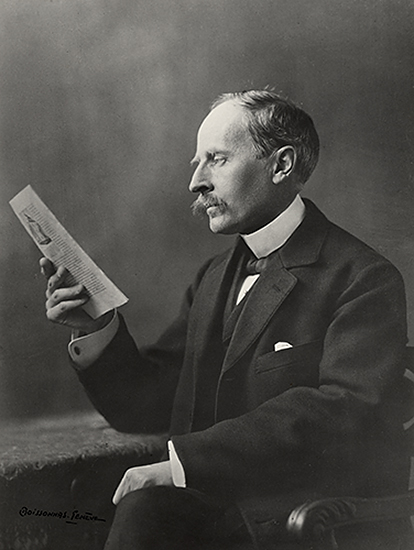
Romain Rolland on Creation
There is no joy except in creation. There are no living beings but those who create. All the rest are shadows, hovering over the earth, strangers to life. All the joys of life are the joys of creation: love, genius, action.
--Romain Rolland (1866-1944) in "Lightning Strikes Christophe"
Posted by JD Hull. Permalink | Comments (0)
March 05, 2024
Am rethinking 6-month employee performance reviews.
Posted by JD Hull. Permalink | Comments (0)
March 04, 2024
Les Bouquinistes, part deux
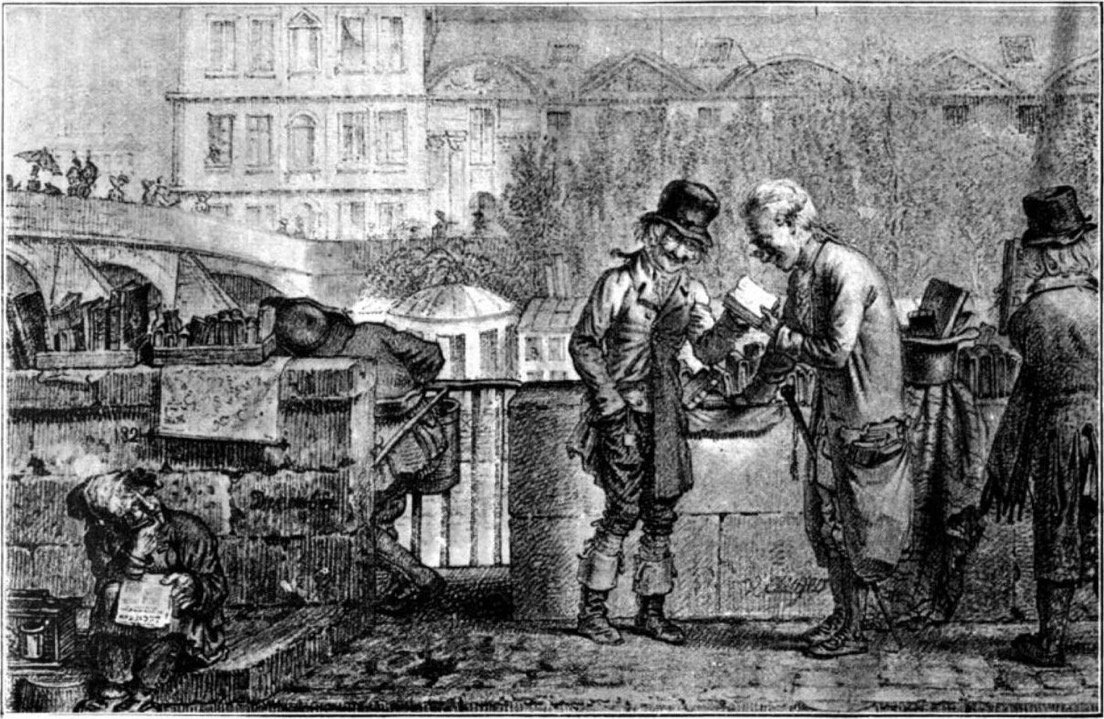
More than a tower or a statue, or an artist's or soldier's name on a plaque or street post, the green bookstalls of Paris are the city's most apt and enduring mark. It's hard to say what's better: the hundreds of paintings and etchings of les bouquinistes in the last 400 years, the thousands of photos of them in the past 100, or one glimpse on any day you could almost take them for granted.

Posted by JD Hull. Permalink | Comments (0)
March 03, 2024
We do love books: Les Bouquinistes.
Those now green Paris book stands lining the Seine go back. 500 years at least. You don't read? Go there alone. Any time of day. You'll meet women named Belle, Luz or Anelise. They'll make you see Jesus by the end of the week.
Below: Jean Henry Marlet, "Bouquiniste quai Voltaire 1821"
Posted by JD Hull. Permalink | Comments (0)
Hermann the German
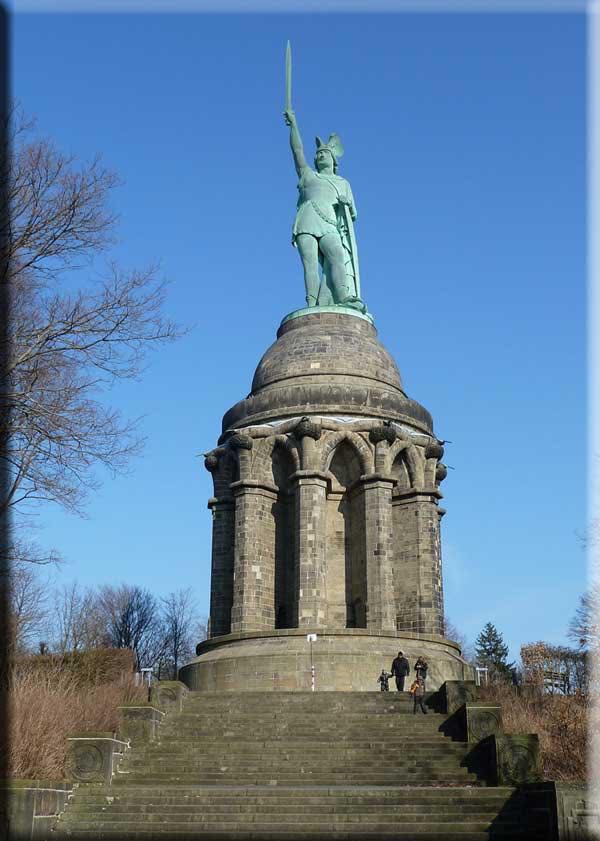
Hermann the German, or Arminius, was a leader of Roman Auxiliary Cavalry in the 9th Century AD. In the three-day battle known as the Varus Schlact, which took place in a dense forest, he switched sides, led the destruction of three Roman Legions (about 10,000 in number) and stopped Roman expansion into what is now Germany.
 Posted by JD Hull. Permalink
| Comments (0)
Posted by JD Hull. Permalink
| Comments (0)
Balking at America
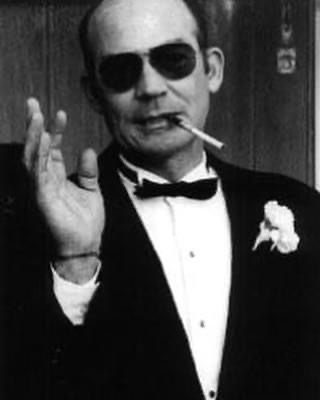
“Once they let you get away with running around for ten years like a king hoodlum, you tend to forget now and then that about half the people you meet live from one day to the next in a state of such fear and uncertainty that about half the time they honestly doubt their own sanity. These are not the kind of people who really need to get hung up in depressing political trips. They are not ready for it. Their boats are rocking so badly that all they want to do is get level long enough to think straight and avoid the next nightmare.”
--Thompson in Fear and Loathing on the Campaign Trail '72
Posted by JD Hull. Permalink | Comments (0)
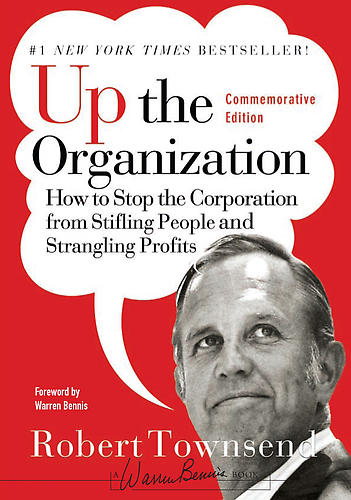
Robert C. Townsend: Lawyers, Guns and Politics.
Lawyers take to politics like bears to honey. Other things being equal, try to pick lawyers who are active in politics. The best ones won't try or be able to "fix" things. But they're great antennae.
--Robert C. Townsend, former Avis CEO in chapter "Lawyers Can Be Liabilities", Up The Organization (1970)
Posted by JD Hull. Permalink | Comments (0)
March 02, 2024
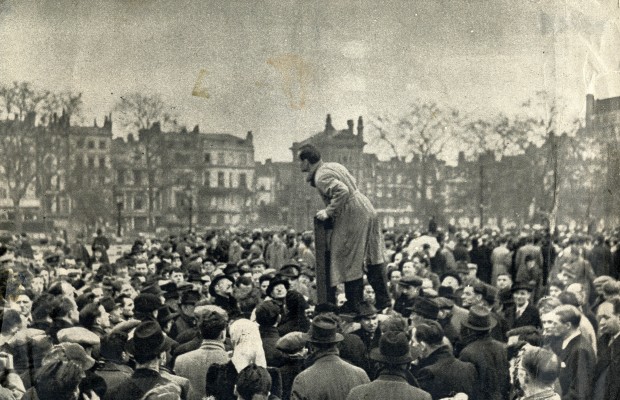
Speakers Corner, Hyde Park, London
Posted by JD Hull. Permalink | Comments (0)
March 01, 2024
Redux Online Lolita: Real Life Facebook Messenger Romances.
A youngish, attractive female human —between 18 and 25 from “her” photo — recently friended me on Facebook. I apparently accepted thinking she had some personal connection to me; she does not. Today she privately messaged me to chat via Facebook Messenger. We chatted while I was still at my office--I'm a youngish energetic Boomer lawyer; we're all like this, even on Friday nights--in my last half-hour at work. I unfriended her at 7:26 PM.
Look, there is nothing more dangerous/ unsexy than this kind of human you meet on the Net. Okay, a bit funny to me maybe. However, if you're a regular homely and/or sexually-frustrated married guy unskilled in philandering, or a part-time or novice cad, this is NOT fun, funny or safe. Do not try this at home; you'll just screw it up, end up on a Chris Hansen NBC show. Am correcting typos/punctuation of her English prose for clarity in this post. Otherwise verbatim:
(Chat Conversation Begin 6:56PM)
HER: Hi
ME: Hi, what's up? Can I help you?
[longish pause]
HER: How are you doing?
ME: Fine. And you?
HER: I am doing well. I am looking for a good man.
ME: That would not be me. I have had 2 or maybe 3 wives and scores of girlfriends and cheated on every one of them. Besides you are way too young for me. Way.
[moderate pause]
HER: You mean you cheated on your wives and GFs?
ME: Yes. I just typed that. Every one of them. I think there's something wrong with me.
[No pause at all but then this non-sequitur response...]
HER: But I believe with love 2 people can overcome age and distance.
ME: Well, I don't. I'm looking for (1) Smith College, (2) brilliance, (3) wit, (4) Anglo-Gaelic breeding, (5) athleticism, (6) world-class beauty, (7) a flat in London and (8) really big trust funds. And (9) right here in DC. Must have all 9.
[another longish pause]
HER: Really?
ME: Yes. Absolutely. How did we get to be FB friends? I may be the wrong Dan Hull. There are lots of Dan Hulls and most are lazy hillbillies like me. Half of us are in jail.
[short pause]
HER: Uhhh...ok.
[Chat Conversation End 7:25pm]

Original post: September 5, 2018
Posted by JD Hull. Permalink | Comments (0)
The Book of Kells
Is anything human-made more beautiful? Below is Folio 292r (circa 800) of The Book of Kells, an illuminated manuscript of the four Gospels of the New Testament. This page opens the Gospel of John. Illustrations in the Book of Kells mix pagan, Celtic and Christian symbols and motifs covering nearly 8000 years of Irish history. The result is an ancient montage of mixed media that's playful, quirky, sexual, mystical and yet deeply Christian. A masterwork of Western calligraphy. 680 pages of the book survives. Housed at Trinity College Library in Dublin.
.jpg)
Posted by JD Hull. Permalink | Comments (0)
“Nice Smart American Kids Make Lousy Lawyers”

Image: Ragdoll Productions for BBC TV
What kind of human makes a great lawyer?
I don't mean a go-through-the-motions lawyer, a tell-you-what-the law-is lawyer (dipstick variety) or even a yeoman lawyer here. I mean a solid and effective advocate-adviser you can count on when money, reputation, freedom and sometimes life itself is at stake.
People who work every day for 40 years for each client as if it's their first day working on their first real client assignment. Sure, some of the details get to be tedious or old hat after a while--but those juices are always flowing. They are always tuned into their responsibilities to others. They take great pride in it. People, if you will, who were born to be lawyers.
"Nice, smart" kids, maybe?
No. In fact, "nice, smart" kids including scads of first-borns who were always great students, maybe elected Senior Class President in high school or on the debating team in college--they come in droves to the legal profession every year and have done that for generations--almost always make shitty lawyers.
"Smart" is a prerequisite. "Nice" is okay--"happy" is more important--but you meet few sane clients who insist on "nice".
To be an effective lawyer, you need a lot more going on, whether you are doing litigation, transactional work, regulatory matters and even legislative/lobbying kinds of projects. I'm not an expert on personality types. But in my view you probably ought to have all of the following: (1) more energy than most people have, (2) stamina (good physical health, perhaps better than average health), (3) persistence, (4) ambition, (5) resilience, (6) competitiveness and a (7) mean streak a mile wide you can turn off and on. And that's for starters. Here are two more: (8) a natural tendency to thrive on and even relish conflict (no, not "embrace", I said relish) and (9) a natural tendency to regard "stress as kind of fuel".
So with that in mind, we've renamed our blog, starting two days ago--until the day after Labor Day--What About Clients/Paris? will be known as "It's Not About the Lawyers, Teacups." As most of our seven or eight regular readers we've picked up since our launch 10 years ago already know, we think there is currently in the legal profession an alarmingly undue emphasis on concepts like:
(a) lawyer comfort and satisfaction generally,
(b) lawyer self-esteem,
(c) lawyer "resilience" (N.B. "lawyer resilience"; this is a subtopic if there ever was one that is certain to make a lot of sophisticated clients look suddenly like they've lost several pints of blood the first time they hear it),
(d) lawyer "mindfulness" and other pop-Zen faux-Eastern notions of well-being, calm, repose, serenity and right state of mind which are taught by people who have no idea what they're talking about to often youngish lawyers who don't know the difference and which would have Alan Watts, Eknath Easwaran or Gautama Himself rolling agonizingly in their graves;
(e) lawyer mental health, and
(f) the new "Lawyer Patienthood", especially underemployed or unemployed younger lawyers who are desperate to make the profession "fit them" even if in the best of economic times it would be painfully apparent to them and many others that they are wonderful, important and talented creatures who deserve to be happy but were simply not cut out to be lawyers in the first place. "Nice, smart kids" can certainly do many other things.
I think that the wrong humans have been entering law school for some time now, from the oldest Baby Boomers to the youngest of Gen-Ys. Somehow we need to attract those who are born with the basic mental, emotional and physical makings of the kind of person clients and customers can rely on with confidence. There are lots of these folks--and we need to start attracting them to this profession. For the last three decades, at least, they have not appeared in great numbers. Let's develop more sophisticated ways of identifying them--and for the sake of clients everywhere somehow start getting them here.
Original post: September 3, 2015
Posted by JD Hull. Permalink | Comments (2)
February 29, 2024
Naked Lunch, first printing, Grove Press, 1959.

Posted by JD Hull. Permalink | Comments (0)
February 28, 2024
Like to thank the little people
Taken in 2023, this is the most unflattering Marco Island birthday photo I could find. There isn’t even a beach in it. I didn’t get to MI for my birthday this year. But, even better, I did get to see my energetic peripatetic way-youthful mom Penny Hull in Atlanta last month. Penny looks better than I do. She’s also nicer. And thank you everyone for the great birthday greetings yesterday and today. Appreciated. I like birthdays. Well, mine, anyway.

Posted by JD Hull. Permalink | Comments (0)
February 27, 2024
Herman Hesse jokes with The Immortals
Eternity is a mere moment--just long enough for a joke.
--Hermann Hesse's version of Goethe, dead, possessed of a superior perspective, and speaking to Harry Haller, in Steppenwolf (1927).

Posted by JD Hull. Permalink | Comments (1)
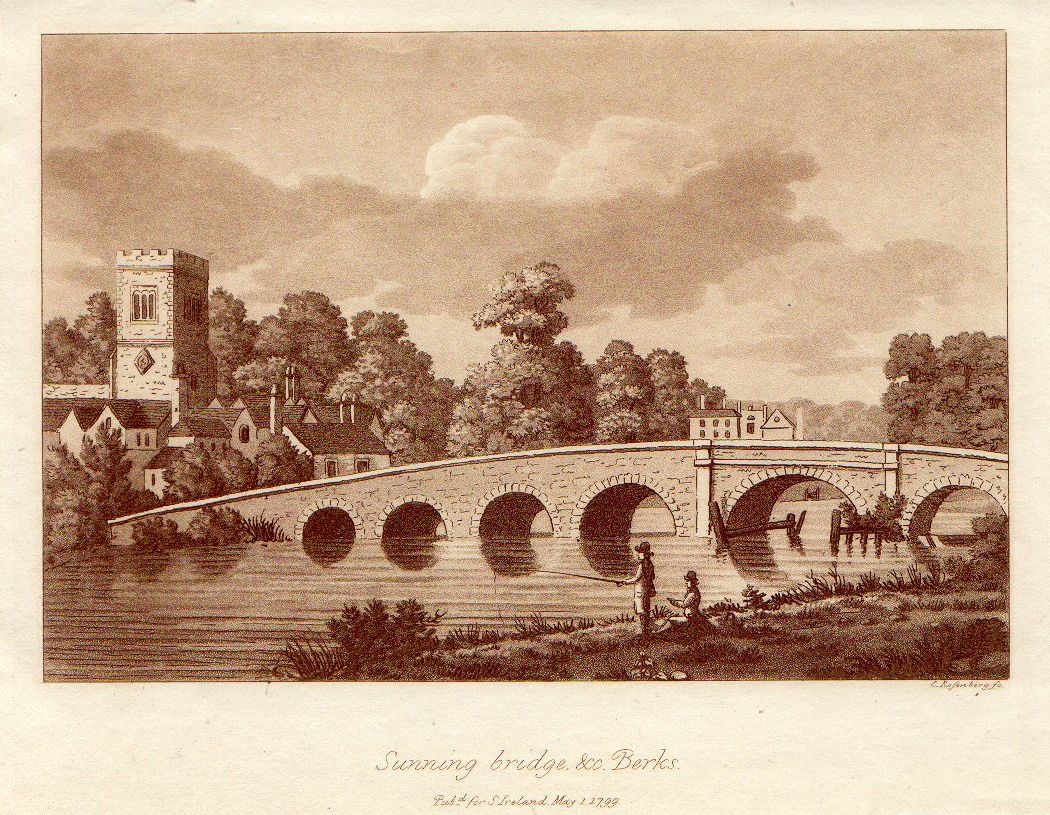
Print of Sonning Bridge, River Thames, England. Charles Rosenberg. Published for S. Ireland, 2 May 1799.
Posted by JD Hull. Permalink | Comments (0)
February 26, 2024
James Baldwin’s “Tell Me How Long The Train's Been Gone."
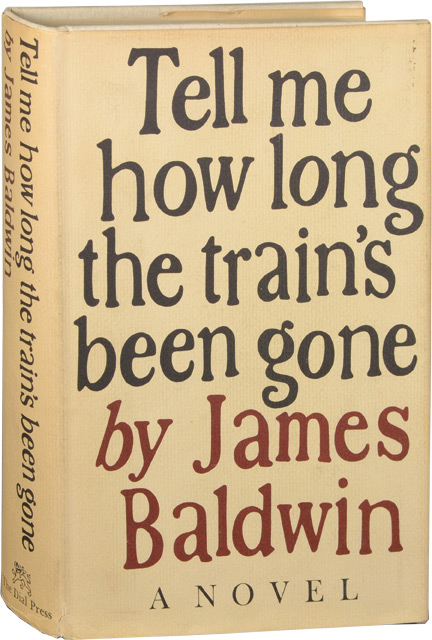
An essayist at heart, American novelist, poet and playwright James Baldwin (1924-1987) wrote his experimental fourth novel about the life of Leo Proudhammer, a black stage actor raised in Harlem who moves to Greenwich Village. Proudhammer has a heart attack on stage. Published in 1968, and panned by critics but widely read, "Tell Me How Long The Train's Been Gone" is an incredibly intense coming of age story set the 1930s and 1940s about racial prejudice, the American experiment, family, faith and sexuality.
Posted by JD Hull. Permalink | Comments (0)
February 24, 2024
World Famous, Highly Correct, Way-Annoying 12 Rules of Client Service
.jpg)
1. Represent only clients you like.
2. The client is the main event.
3. Make sure everyone in your firm knows the client is the main event.
4. Deliver legal work that changes the way clients think about lawyers.
5. Over-communicate: bombard, copy and confirm.
6. When you work, you are marketing.
7. Know the client.
8. Think like the client--help control costs.
9. Be there for clients--24/7.
10. Be accurate, thorough and timely--but not perfect.
11. Treat each co-worker like he or she is your best client.
12. Have fun.
Copyright 2005-2022 John Daniel Hull and Julie Elizabeth McGuire. All Rights Reserved.
Posted by JD Hull. Permalink | Comments (0)
Redux: In Praise of Structure
Do lawyers know how to get things done, done right and done on time? Do we even value that?
I wonder.
No, I am not talking here about the simple "keeping face" or survival requirements of meeting client deal or court deadlines, or even about the clichés of "working hard", creative thinking, "out of the box" thinking, being persistent, or "working smart".
I mean structure--a real standard for working--and "practicing structure" every day. It's the discipline of: (1) having a plan or strategy for any one project (client or non-client), (2) meeting internal project deadlines (not just "jurisdictional" ones) no matter what, and (3) insisting that everyone in your shop "buy into" the discipline of keeping to that overall plan or strategy and timetable.
"Structure" is not just the hard process of getting things done. It's a frame of mind and a value which must be sold to others in your shop--like the importance of making that 5 minute call to a client about a loose end at the end of the worst day you can remember, even while you could do it the next morning at 8:00. It's realizing that letting anything but emergency tasks "slide" makes you inefficient, unlikely to meet your real goals, and tired.
Do you go into work every day with an idea of what needs to be done on each project, and knowing the difference between "important" and "urgent"?
Example: Monday is your deadline to have the final changes and notes to your web designer on your new firm website, an important but not urgent project you've talked about at internal meetings for months. So far, for once, you have been on track.
But on Monday a longstanding client calls with two new projects; the new projects are exciting but not THAT urgent in the sense they need to cut into internal deadlines and other goals for Monday. You need to take some first steps, though, to get on top of the new matters for your client. After all, these folks are the main event.
So we have a key ongoing internal project v. new client project. Which gets the most attention that day? Which slides?
Answer: they both get attention, and neither slides. The website (long-term important) and the new client project (short term important) are both critical projects.
Years ago, the Stephen Coveys and Edwards Demings out there pointed out that business people burn themselves out by waiting around only for "the urgent" in a kind of manic crisis management that keeps other important things from ever getting done or ONLY getting them done when they morph into a crisis.
For lawyers, other examples would be only respecting deadlines like transaction closing dates and court-filing deadlines--to hell with everything else.
For a long time I've thought that American business schools and the training programs of global and often publicly-traded companies do a much, much better job than do law firms of training recruits to value and adhere to the structure of a plan on an item for action. It's almost as if law school and firms deem us all such "professionals" and "artists" that we are beyond learning skills of project planning and execution.
What a crock. Because you're a lawyer, or other professional (MD, CPA, engineer, broker), you now have a license to be incompetent, semi-competent, or a chronic screw-up on the details of getting much (if not most) of your work done? You're special? An artiste?
Of course not.
Not learning the value of pushing non-urgent but important things along at a steady pace has cost us dearly. As motivated as lawyers often are, our discipline for sticking to anything and seeing it through is often poor; again, unless it's urgent, we just don't see its value. Do our best clients run their businesses that way?
This attitude is the norm, and we lawyers--who rarely innovate or take a leadership position on anything in commerce--are just fine, thank you, with it. After all, "all the other law firms" are mediocre on the discipline of getting things done, and have "crisis-only" mentalities. "Why shouldn't we be that way?"
So we waste time blowing off important, but longer-term projects. Worst of all, we send to others in our firms, and especially to younger lawyers, the message:
"No worries--just work on a barely adequate level; don't do things until you have to; and if it's not urgent, let it slide."
From earlier JDH WAC/P? posts, beginning 2007.
Posted by JD Hull. Permalink | Comments (0)
February 23, 2024
'Oh New York City you talk a lot...'
It's not too far back on the highway not so long a ride.
You park the car out in the open you can walk inside.
A little cutie takes your hat and you can thank her ma'am,
'Cause every time you make the scene you find the joint is jammed.--Charles Edward Anderson Berry (1926 - 2017)
Posted by JD Hull. Permalink | Comments (0)
February 22, 2024
London’s Geeklawyer

@Geeklawyer on Dan Hull and What About Clients/Paris?
“Hull? A depraved evil sociopathic neocon beast pretending to love clients to get into their wallets. Then there's his dark side.”
—Geeklawyer, London, 2019
Posted by JD Hull. Permalink | Comments (0)
Anglos, Saxons, Franks, Frisii: Good at Government?
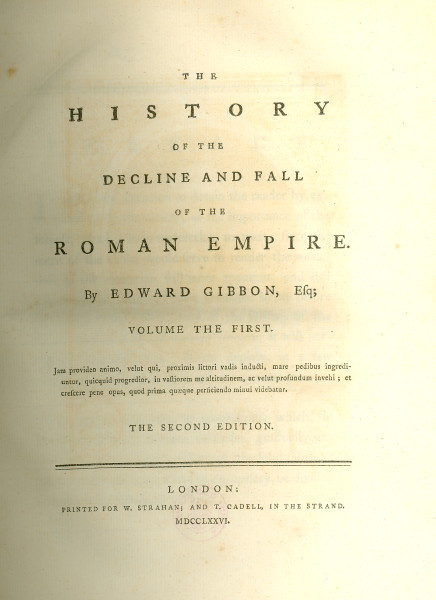
The most civilized nations of modern Europe issued from the woods of Germany; in the rude institutions of those Barbarians we [received] the original principles of our present laws and manners.
--Edward Gibbon, The Decline and Fall of the Roman Empire, Chapter IX (1782)
Posted by JD Hull. Permalink | Comments (0)
February 21, 2024
Partner Emeritus: On the Sanctity of Associate Lawyer Privacy Rights.
If you work for a peer firm, you will encounter me or someone very much like me. I or some form of my embodiment will exist to make your existence as uncomfortable and unpleasant as it can be.
-- Partner Emeritus, New York City, September 3, 2009
 PE.jpg)
I've loved practicing law. After three years of working on Capitol Hill, I became one of two associates in the small DC branch office of a now-defunct Pennsylvania firm. They gave me a wonderfully eclectic mix of work to do: environmental litigation, energy law, U.S. Supreme Court practice and lobbying for coal companies and banks. In two years the DC office merged with a bigger DC-based firm. We went from 10 to 35 lawyers. And I went from a window office on Eye and 15th, N.W. off McPherson Square to a smaller no-window office three blocks down the street at International Square. I was a 4th or 5th year associate. I didn't complain. I drew a picture of a sun and posted it on the wall.
Meanwhile, up in New York City, and at about the same time, Partner Emeritus' white shoe firm was negotiating a lease renewal--and the Great Man would have gone one step further:
Back in the early '80s when my firm negotiated its lease renewal, I ardently advocated to take less space as I thought placing associates in offices was a waste of resources. Offices are for closers and relevant playmakers who need personalized space to entertain clients. Given that young associates are not permitted to directly interact with clients, there is simply no need for them to have offices.
One of my pet peeves when I was at the firm was the contumacious habit of associates who closed their doors. Whenever I saw an associate's door closed, I assumed he/she was doing one of the following: 1) taking a nap; 2) checking their private email account (e.g., Ashley Madison, etc.); 3) masturbating; 4) engaging in personal phone calls; or, 5) watching internet porn.
As far as I am concerned, associates do not require privacy unless they are on the commode. I personally took a note of all the associates who closed their doors and would often reprimand them or make a notation on their annual review. If it were up to me, I would have had the building maintenance crew remove the doors off of the hinges but I was outvoted on the matter.
I prefer that associates and non-equity partners share the window cubicles. This way, the partners and staff can easily monitor how busy associates are. Moreover, the window cubicles will keep associates on their toes and prevent them from slacking off.
And please spare me the argument that window cubicles dehumanizes associates by making them feel like zoo animals on display. Unlike the animals in the zoo, trust me, no one wants to waste time watching troglodytes push paper.
--Comment by Partner Emeritus to an article by my friend boy wonder David Lat on August 28, 2015 at Above the Law entitled "More Bad News For Biglaw Associates?"
3rd year associates share 'premium' window cubicle in 1987 (J. Riis).
Copyright 2015 J. Daniel Hull, Ellen Jane Bry, ____ Doe. Best of Partner Emeritus (#6)
Posted by JD Hull. Permalink | Comments (0)
Lower England: Are you a Man of Kent?
As with London, and with the County of Suffolk to the north, from where my mother's family came to Massachusetts via Ipswich 389 years ago, I am completely and hopelessly in love with Kent, mainly the eastern ("Men of Kent") part. The County of Kent is the southeastern doorway to the British Isles--it has even more history, legend and myth than London. Lots, and maybe even too much, has happened here during the past 2500 years. Eventually, in 51 BC, Julius Caesar called it Cantium, as home of the Cantiaci. Augustine founded what became the Anglican Church here in about 600 AD. And of course Thomas Becket, Chaucer's "holy blissful martyr", was killed here (Canterbury) in 1170.

St. John the Baptist, The Street, Barham, Kent
Posted by JD Hull. Permalink | Comments (0)
February 20, 2024
Stand-up Guys: Daniel O'Connell, Trial Lawyer.
Daniel O'Connell (1775-1847), the "Liberator of Ireland", led a movement that forced the British to pass the Catholic Emancipation Act of 1829, allowing Catholics to become members of the British House of Commons. History knows him as a witty, eloquent and formidable politician, and the Member of Parliament for Clare. The English found him infuriating. But O'Connell was first and foremost a consummate and thorough trial lawyer, called to the bar at age 23 in 1798. As a cross-examiner, one modern writer has said, "he had no equal at the Irish bar." And not surprisingly O'Connell was a bit of a showman. In lectures published in 1901, Prof. John L. Stoddard said of him:
He was a typical Irishman of the best stock--wily, witty, eloquent, emotional and magnetic. His arrival in town was often an occasion for public rejoicing. His clever repartees were passed from lip to lip, until the island shook with laughter.
In court, he sometimes kept the spectators, jury, judge and even the prisoner, alternating between tears and roars of merriment. Celtic to the core, his subtle mind knew every trick peculiar to the Irish character, and he divined instinctively the shrewdest subterfuges of a shifty witness.
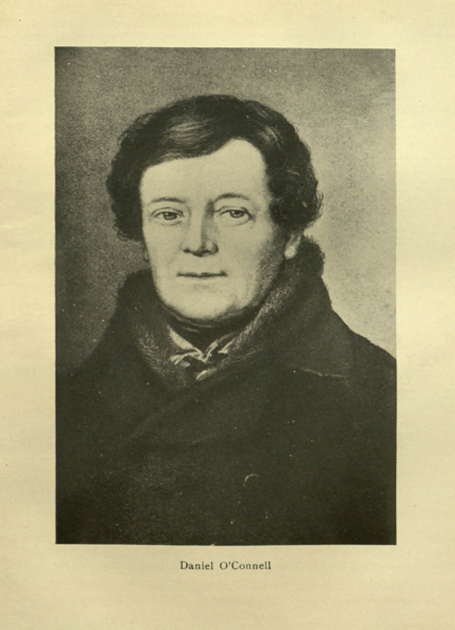
Posted by JD Hull. Permalink | Comments (0)
Tavern Scene, David Teniers, c. 1658
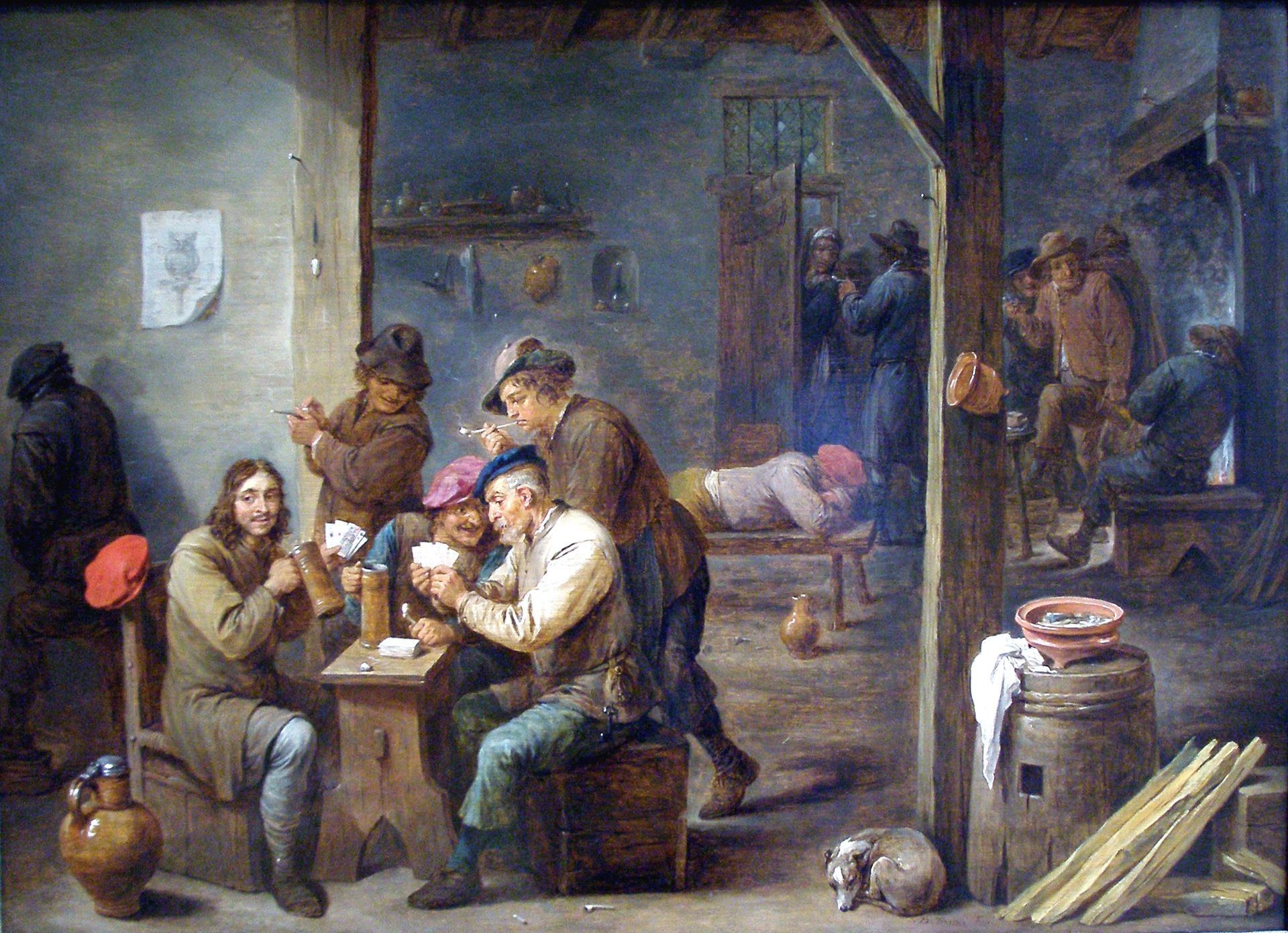
Posted by JD Hull. Permalink | Comments (0)
February 19, 2024
Wordsworth
We no longer require humor in poets. We demand salvation.
— Mark Van Doren, 1950, commenting on the subtle graduation of William Wordsworth (1770-1850) from his role as "nature poet" to one of philosopher who offered hope and reassurance to troubled Europe.
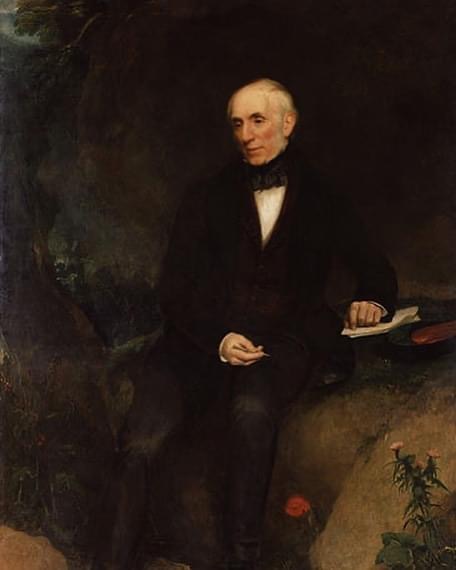
Posted by JD Hull. Permalink | Comments (0)
February 18, 2024
Work-Life Sir Thomas Malory
No one really knows who wrote “Le Morte d’Arthur.“ The best bet is Sir Thomas Malory, a mid-15th century knight and rogue’s rogue. I won’t summarize his crimes and exuberances here but an English nobleman and knight named Malory who died in 1471 was jailed frequently and certainly had time to write. My version (Modern Library, 1999) is nearly 1000 pages long. Its editor Elizabeth Bryan wrote in the introduction that though he “may have been a scoundrel, Malory was also, it seems clear, a man of ideals who believed in courage and loyalty, and who mourned the passing of chivalry.”
Below: Page one from the original manuscript of ‘Le Morte d’Arthur’ published in 1485.
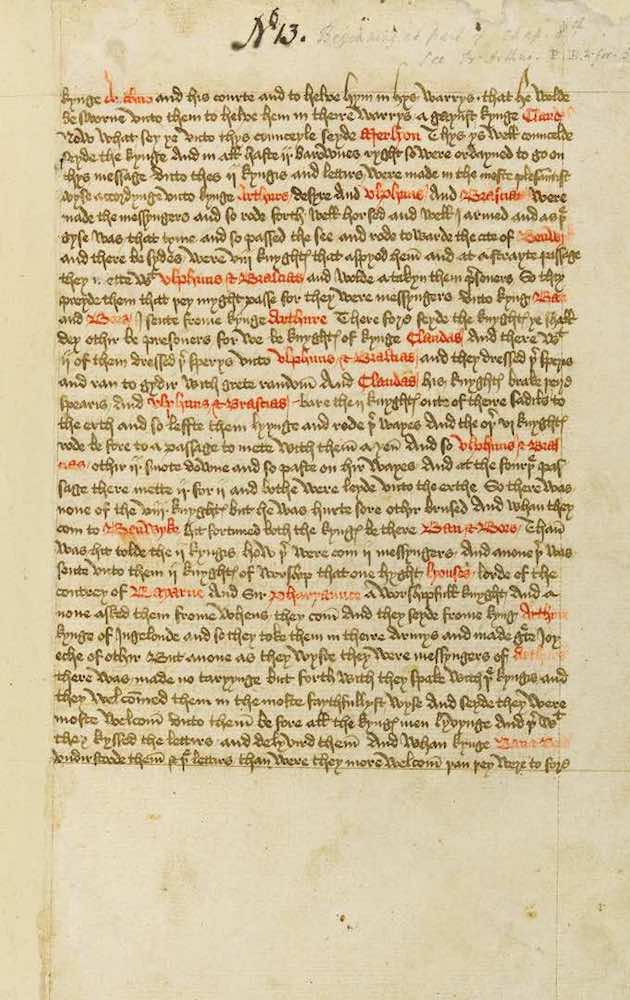
Posted by JD Hull. Permalink | Comments (0)
February 17, 2024
Kundera on Political Obsessives
Immortality, the 1990 novel by the late Czech writer Milan Kundera (1929-2023), is the one book everyone should read to understand ultra-political ‘single-issue’ humans. It’s also been said that “reading it might make you a better lover.” For real.

Posted by JD Hull. Permalink | Comments (0)
Stepping away from mediocrity.
This is a 2020 book by an angry, misguided, talented black woman. Some good points here on white male mainstream mediocrity. Assuming she’s right—white dudes are flukes and unwitting scumbags—why not a repatriation or segregation movement by 14% of America? Who needs whites around?

Posted by JD Hull. Permalink | Comments (0)
February 16, 2024
Aldeburgh, Suffolk, East Anglia
Go somewhere different. Meet someone different. Aldeburgh, Suffolk, East Anglia. Always a festival.

Posted by JD Hull. Permalink | Comments (0)
February 15, 2024
The Holy Surprise of Thinking on Your Own
He was a loner with an intimate bond to humanity, a rebel who was suffused with reverence. An imaginative, impertinent patent clerk became the mind reader of the creator of the universe, the locksmith of mysteries of the atom and the universe.
--Walter Issacson, in Einstein: His Life and Universe (Simon & Schuster, 2007)
Children come with Imagination. It's standard issue.--Holden Oliver in 2009
"E" at the beach: Another fresh take.
Try this at home and work: The Holy Surprise of a Child's First Look. Forget for a moment, if you can, about Clients and Paris. This blog is at heart about Quality, Old Verities, and Values--the things no business, government, non-profit group, religion, politician or leader (a) wants to give you or (b) can give you. No, not even family and friends can. You have to find them on your own. Work and Service, whether you are paid for them or not, are inseparable from these things.
At the blog, at our firm, and in our lives, we seek--in the largest sense--serious overachievers, and aficionados of life, past and present: identifying them, learning from them, having them as friends, hiring them and above all, never holding them back. It is often hard to find these people--or even to remember that they once existed. We do, after all, live in a cookie-cutter world. Originality, intuition, authentic spirituality, and even taste are not valued--these traits are often feared and attacked--in most of the West. This is especially true in America, where we continue to be geographically, culturally and (some think) cosmically isolated. The United States, despite its successes, high standard of living and exciting possibilities, has become world headquarters of both moral pretension and dumbing life down. Besides, fresh thinking leads to painful recognitions. It's easier to let something else do the thinking for us.
"Fragmentation" is a word some people (including those with better credentials than the undersigned to write this) have used for decades to describe modern humans all over the world: lots of wonderful, intricate and even elegant pieces--but no whole. So, in our search for coherence, we look for clues. We look to television, advertising, and malls. To work, and to professional organizations. To secondary schools, universities, and any number of religions (none of the latter seem "special"--they say identical intuitive and common sense good things, but just say them differently), and to an array of other well-meaning institutions. In fairness, all of these have their moments (hey, we all like our insular clubs).
Posted by JD Hull. Permalink | Comments (0)
Rule 7: Know Thy Client.
Rule Seven: Know the Client
The "12 Rules of Client Service" I have been posting one-by-one starting on November 19 [2006] appear in a booklet Julie McGuire and I prepared internally 5 years ago for associates and non-lawyer staff. We just call it Hull McGuire Practice Guide* (*or how to become a productive associate or paralegal). In the Guide, we call the same rules "Blackletter Rules for Practicing Law". The idea is that each of the twelve overall practice rules harks back to the idea that the client comes first. Clients, clients, clients. For us, that is practicing law. Except for some rewording, the 2 sets of rules are substantially the same. The first six rules are reproduced here.
Several lawyer-bloggers I respect have posted--and in some very eloquent and interesting ways--on the idea of Rule 7, really knowing the client and its culture. I think they say it all. See Tom Kane, Patrick Lamb, Tom Collins and Arnie Herz. Some of the discussion lately was triggered by the nerve jangling report of complaints of some GCs at a Fulton County, Georgia CLE conference in early December 2005. I've chimed in on that, too--here and here.
The client, it seems, actually wants you to know him, her or it. Take time out to learn the stock price, industry, day-to-day culture, players and overall goals of your client. Visit their offices and plants. Do it free of charge. Associates in particular need to develop the habit of finding out about and keeping up with clients (and a client's trials and tribulations) in and out of the areas they are working in. Learn about your client--and keep learning about it. Devise a system to keep abreast.

Original post February 3, 2006
Posted by JD Hull. Permalink | Comments (0)
February 14, 2024
“Romeo and Juliet" by Ford Madox Brown (1821-1893)
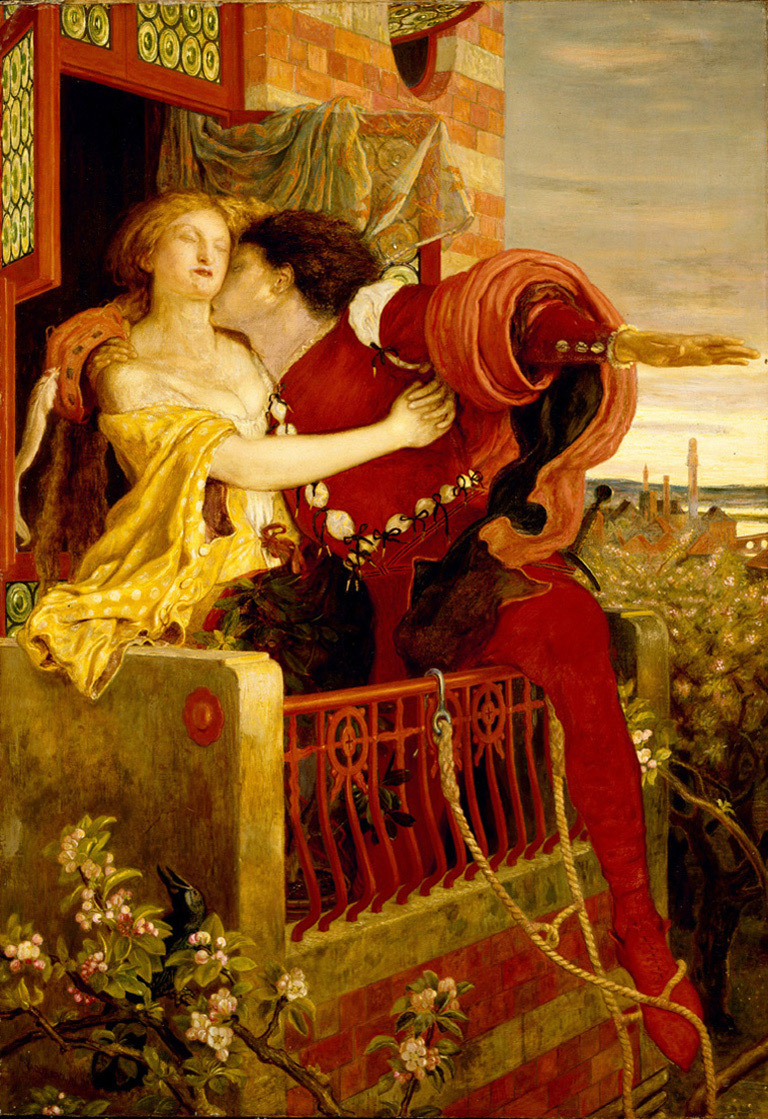
Posted by JD Hull. Permalink | Comments (0)
February 13, 2024
Fat Tuesday
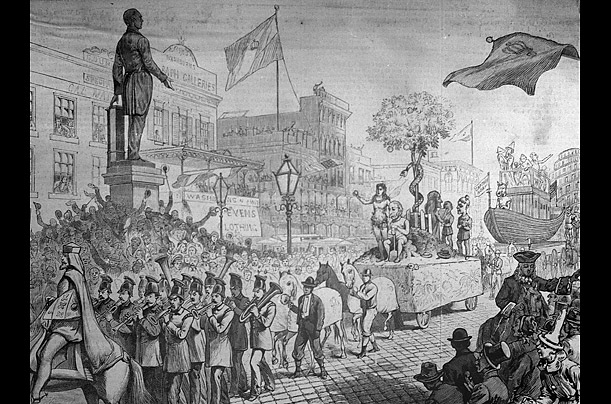
Mardi Gras, New Orleans, Louisiana, 1879
Posted by JD Hull. Permalink | Comments (0)
Catherine Deneuve, 1995.
.jpg)
Catherine Deneuve, 52, in 1995.
Posted by JD Hull. Permalink | Comments (0)
February 12, 2024
State of the West
Based on my various news aggregators and feeds, Western culture is now so fragmented and degraded that we’ve raised minutia and trivia to high art forms, and made heroes out of turds. Am going to ditch my devices and spend more time outside. You’re welcome.
Posted by JD Hull. Permalink | Comments (0)
February 11, 2024
Disraeli on Lawyering: Is law just life on the sidelines?

Young Ben Disraeli: "I rust like a Damascus sabre in the sheath of a poltroon."
Is being a good lawyer enough?
Consider what the young, precocious, mega-talented, persistent and world class pain-in-the-ass Benjamin Disraeli (1804-1881) thought--years before becoming Prime Minster of England--as he abandoned his legal career before it really started, in favor of writing and politics. According to one biographer, he exclaimed:
The Bar: pooh! law and bad tricks till we are forty, and then, with the most brilliant success, the prospect of gout and a coronet. Besides, to succeed as an advocate, I must be a great lawyer, and to be a great lawyer, I must give up my chance of being a great man.
--A. Maurois, Disraeli (Random House 1928)
Sidelined? Hobbled? Self-discarded in the great race of life? Maybe it's true. Hard-driving lawyer friends (both in-house and in law firms) do articulate a feeling of being "sidelined"--yet they are very proud of what they do as lawyers. They may think: Why merely advise--when you could lead, create boldly, and command? And do that every day? Lots of lawyers are Type-As. Yes, some of us who advise great companies really end up as officers, CEOs, and COOs? Sure, many more of us run for office.
But most of us are at best mousy posturing technicians. Should more and more of us throw our golfing hat in the ring of other life, the fields of commerce, and bigger--or at least different--ponds? Does law school and the profession make many of us so risk-averse, passive and routinely academic in our approach to life that it knocks the will and energy to lead out of us?
Or were we just that way from the beginning?
Original post: 5.28.06
Posted by JD Hull. Permalink | Comments (0)
Super Bowl Now
I raptly watched the first Super Bowl with my dad and brother in 1967. To us, a jock clan, nothing was cooler. Now Americans also celebrate passivity and sloth. But some violence, even in play, is what humans do, and have always done. Below: Jack Kerouac playing for Columbia
Posted by JD Hull. Permalink | Comments (0)
February 10, 2024
Modern Alcoholics Anonymous: Springboard? Or Permanent Cocoon?

When will my beloved AA get back to getting people clean and sober to participate in real life?
Posted by JD Hull. Permalink | Comments (1)
February 09, 2024
Storytelling for trial lawyers, writers and actual humans in 16 words.
Don't tell me the moon is shining; show me the glint of light on broken glass.
--Anton Chekhov (1860-1904)
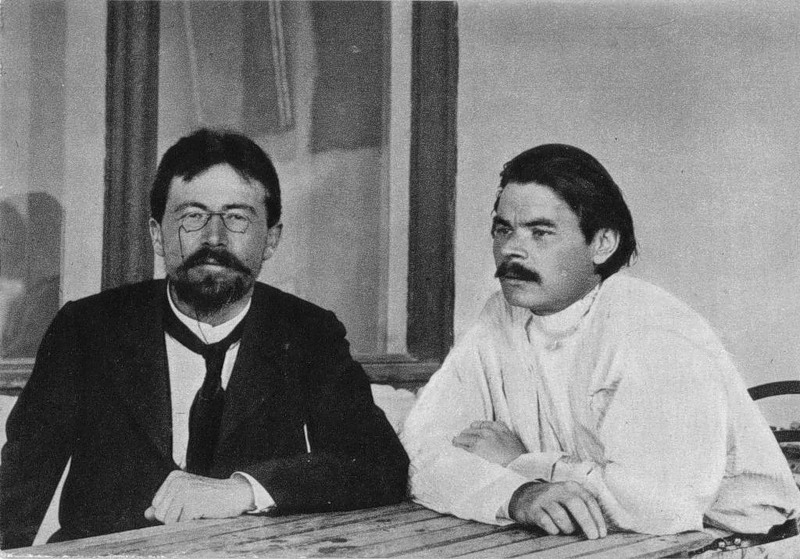
Chekhov with Maxim Gorky in Yalta, probably 1900
Posted by JD Hull. Permalink | Comments (0)
February 08, 2024
Euripides: On Dog Fights
Ten soldiers wisely led, will beat one hundred without a head.
--Euripides (480-406 BC)
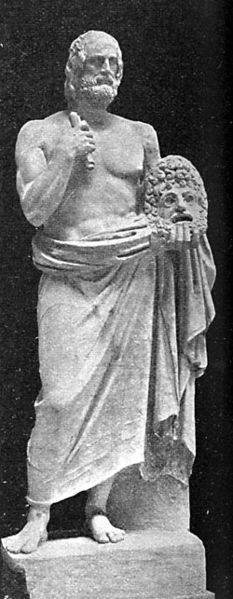
Posted by JD Hull. Permalink | Comments (0)
February 06, 2024
This is East Anglia. Suffolk County. I start here.
Neither the tiny rural village of Lindsey nor the surrounding countryside has changed much since 1634, when one side of my family called Holden left there via Ipswich on the River Orwell for Massachusetts and, in time, a new "Groton", named after another small village near Lindsey. Three hundred and eighty-six years later, Lindsey is pastoral, green, mainly un-peopled and fairly remote. No visible overt 21st century commerce. Some farming. No tourists.
St Peter, a rough Anglican church, at one time Catholic, the one my ancestors attended, built in the 1300s, and even older church ruin, St James (1200s), are the only man-made constants. Still a "parish", Lindsey is on the B1115 Hadleigh-to-Bury road.
This is part of East Anglia--coveted, held and loved for so long by the Danes. The region's been victor and victim over and over again. Mainstream tribes from all over Europe battled here for centuries. It is storied. It is still beautiful. Nothing compares to it.
And it is a key "feeder" region in the English migration to America. From 1625 to 1640, Charles I had tried to rule England without calling the Puritan-dominated Parliament. Puritan dissenters, lots of them, lived in the area around Lindsey, and
from here hundreds of families fled across the Atlantic to the new world. The Winthrops, of tiny Groton, would become founders of the State of Massachusetts. But most of the settlers were poor, working families, and they would devote themselves to quiet, prayerful unpersecuted lives, and of work hard to build new communities. Of course, they would never see Suffolk or the valley of the gentle Brett again.
--Simon Knott

St. Peter in Lindsey
Posted by JD Hull. Permalink | Comments (0)